DPP-4, SGLT-2 & GLP-1
DPP-4
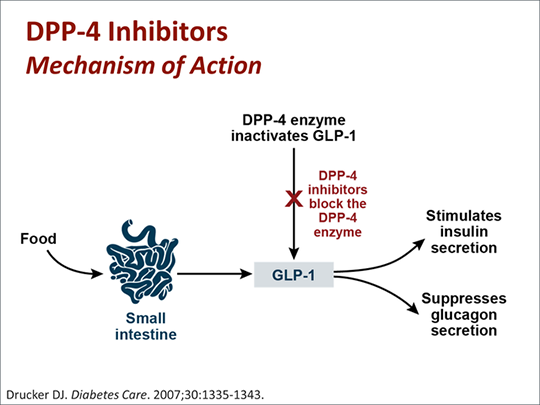
These drugs inhibit the inactivation of Glucagon-like peptide-1 (GLP-1) and glucose-dependent insulinotropic polypeptide (GIP), increase the levels of endogenous GLP-1 and GIP, promote the release of INSULIN from pancreatic beta cells, and inhibit the secretion of glucagon from pancreatic alpha cells, thereby increasing insulin levels and lowering blood glucose, and are less likely to induce hypoglycemia and weight gain. Dipeptidyl peptidase has several products on the market, such as sitagliptin, saxagliptin, vincristine.
SGLT-2
Sodium-dependent glucose transporters 2 inhibitors inhibit the reabsorption of glucose by the kidneys, allowing excess glucose to be removed from the urine and lowering blood glucose. It is a new class of anti-diabetic drugs.
GLP-1 receptor agonist
Glucagon polypeptide, GLP-1 receptor agonists are the two main enterotropins of the glucose-dependent insulinotropic polypeptide GIP.GLP-1 receptor agonists augment insulin secretion in a glucose concentration-dependent manner, inhibit glucagon secretion, delay gastric emptying, and reduce the amount of food consumed through central appetite suppression. GLP-1 has weight-loss effects and may be promising in areas such as lowering blood pressure.The presence of GLP-1 is essential for beta cell regeneration.In 2004, it was found that the use of GLP-1 enhanced beta cell regeneration while inhibiting apoptosis and promoted differentiation of pancreatic ductal stem cells into beta cells.GLP-1 analogues are known as beta cell differentiation factors (which increase de novo birth), growth factors (which enable replication), and growth factors (which enable replication). In 2005, the FDA approved the use of subcutaneous formulations such as exenatide, liraglutide, and somalutide for patients with type 2 diabetes whose blood glucose is not adequately controlled by the combination of Metformin and sulfonylureas.

You May Interested In


High Quality β-Nicotinamide adenine dinucleotide CAS 53-84-9 NADwith ready stock and best price
$3/UNIT FOB


2026-10-14
Trade Alert
Delivering the latest product trends and industry news straight to your inbox.
(We'll never share your email address with a third-party.)

Related News
-
GLP-1 API Route to U.S. Abruptly Narrows: FDA Heavily Penalizes U.S. Compounding Pharmacy and Bypasses Warning Letter to Ban Chinese Factory
-
Medicare’s $50 GLP-1 Door Opens: Weight-Loss Drug Demand Just Got Bigger
-
China’s Hybio Takes Generic Tirzepatide to FDA: Lilly’s GLP-1 Fortress Gets a Warning Shot
-
Can New Entrants Succeed in the Competitive GLP-1 Drug Market?
-
The Growing Market Potential of GLP-1 Drugs in China's Obesity and Diabetes Landscape
-
Preliminary clinical success of Pfizer's oral GLP-1 agonist
-
Lianhua Qingwen's Road to Internationalization is Getting Wider and Wider
-
Antidiabetic drugs are involved in the 'price reduction' storm!
-
All you need to know about Antidiabetes Drugs in World Diabetes Day’ WDD
-
Glyphosate Faces New UK Pressure as EU Trade Alignment Returns to the Debate
Recommend Reading
-
![U.S. API Dependence Turns Pharmaceutical Ingredients Into a National Security Issue]()
U.S. API Dependence Turns Pharmaceutical Ingredients Into a National Security Issue
-
![FDA Dye Phase-Out Push Opens a Bigger Window for Natural Color Solutions]()
FDA Dye Phase-Out Push Opens a Bigger Window for Natural Color Solutions
-
![Behind Arkema’s ¥430 Million Claim: A Patent War Over Acrylic Acid Is Tearing Off the “Technical Fig Leaf” of China’s Chemical Giants]()
Behind Arkema’s ¥430 Million Claim: A Patent War Over Acrylic Acid Is Tearing Off the “Technical Fig Leaf” of China’s Chemical Giants
-
![European Chemical Firms Face Pressure on First-Quarter Earnings as the War Shock Continues to Spread]()
European Chemical Firms Face Pressure on First-Quarter Earnings as the War Shock Continues to Spread
-
![Pharma Tariff Risk Pushes Global Drugmakers to Rebuild U.S. Supply Chains]()
Pharma Tariff Risk Pushes Global Drugmakers to Rebuild U.S. Supply Chains
-
![Business Society’s Market Outlook for Soda Ash on August 14, 2026: Volatile but Tending Toward Stronger Consolidation]()
Business Society’s Market Outlook for Soda Ash on August 14, 2026: Volatile but Tending Toward Stronger Consolidation
-
![Business Society’s BDO Market Outlook on August 14, 2026: Narrow-Range Consolidation]()
Business Society’s BDO Market Outlook on August 14, 2026: Narrow-Range Consolidation
-
![Business Society’s Ethanol Market Outlook on August 14, 2026: Clearly Downward]()
Business Society’s Ethanol Market Outlook on August 14, 2026: Clearly Downward
-
![Business Society’s PTA Market Outlook on August 14, 2026: Volatile]()
Business Society’s PTA Market Outlook on August 14, 2026: Volatile
-
![Business Society’s Market Outlook for Natural Rubber on August 14, 2026: Short-Term Volatility to Continue]()
Business Society’s Market Outlook for Natural Rubber on August 14, 2026: Short-Term Volatility to Continue