European chemical companies face production cuts
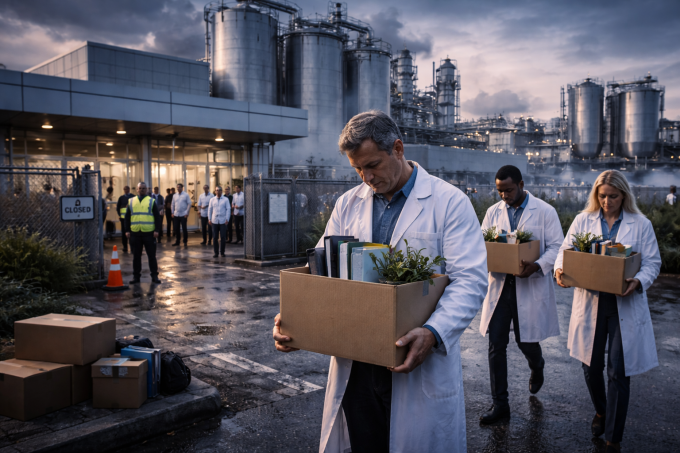
Recently, ICIS released a report stating that the year-long conflict between Russia and Ukraine has exposed deep-seated structural weaknesses in the European chemical industry. Against the background of the Russia-Ukraine conflict, the global competitiveness of the European chemical industry has fallen to the lowest level. Energy costs and disruptions to trade flows are hampering the European chemical industry's ability to cope with international oversupply and tough environmental and climate regulations. Recently, the decline in energy prices has temporarily eased the cost pressure of European chemical manufacturers, but the high energy prices in 2022 will still have a negative impact on enterprises, and many enterprises are still planning to reduce production or even stop production.
Energy costs remain high
Currently, the European TTF natural gas price has fallen below 50 EUR/MWh for the first time since 2021. In March, when winter is coming to an end, Europe's average gas storage remains high at around 64%. This was mainly due to a mild winter, as well as government and industry efforts to boost natural gas storage levels, reduce consumption and increase imports of liquefied natural gas (LNG). In addition, electricity prices in Europe have fallen back to the pre-Russian-Ukrainian war level, about 200 Euros/MWh.
However, European chemical companies cannot relax yet. At present, European natural gas and electricity prices are still at historically high levels, which still pose continuous cost challenges to the European chemical industry.
Brudermüller, Chairman of the Executive Board of BASF Group, pointed out in the company's 2022 fourth quarter analyst conference call on February 24 that the natural gas consumption of BASF's complex in Ludwigshafen, Germany accounts for about 4% of Germany's total consumption. He said: "Given the large amount of gas we consume, it is not surprising that our competitiveness in Ludwigshafen suffers when energy prices rise. European gas prices soared to unprecedented levels in August 2022. Since then, gas Gas prices have been falling, but we expect gas prices to remain relatively high for a long time compared to the past few years. In addition, the slowdown in European market growth has negatively affected the supply and demand dynamics of parts of the value chain.” BASF expects that natural gas prices It is likely to remain high for a year, and in the foreseeable future, related costs may still appear structurally high, which will make European chemical producers take a hard look at their chemical production and energy and raw material status.
Responding to production reduction in European chemical companies
At present, the European chemical industry is still taking some temporary measures to reduce natural gas demand, such as reducing the operating rate of factories or even stopping production, or increasing the use of alternative energy sources.
The most recent example is Huntsman's announcement that it will reduce the company's diphenylmethane diisocyanate (MDI) production capacity in Rotterdam by 1/3. Huntsman CEO Peter Huntsman said on the company's fourth quarter 2022 earnings call on February 22 that the shut down MDI production line will only restart "when conditions permit." Huntsman said European energy prices had eased in the first quarter, but that was the result of a mild winter and shrinking industrial demand. It is expected that European oil and gas prices will remain high in the next few years, so the company may further restructure its European business.
Yara International slashed ammonia production in Europe last year due to high natural gas prices. The company said its weighted-average natural gas cost in Europe was $31.5/MMBtu in the fourth quarter of 2022, up from $22.7/MMBtu a year ago. Yara International confirmed that its ammonia production was gradually recovering as gas prices fell this year, but as of the end of January, 35% of the company's European ammonia capacity and 28% of its European fertilizer capacity remained idle. S&P Global's Fertecon said many other European producers' ammonia plants were still offline.
BASF Chairman Brudermüller told analysts: "European chemical production has fallen sharply. Falling demand and rising energy prices have led to some plant closures, especially in the second half of 2022. This is particularly evident in Germany, where chemical production in 2022 will fall by around 12% According to data from the European Commission, the average capacity utilization rate of the European chemical industry in the third quarter of 2022 was 76.4%, which was lower than the 83.2% in the same period in 2021. Many companies have tried to increase selling prices to offset rising costs, but weaker economic conditions have sapped demand, especially with high inflation exacerbating the situation.
Chemical enterprises promote production transformation
In addition to temporary measures, the European chemical industry is currently taking permanent measures to deal with high energy costs. Especially for those installations that previously had competitiveness challenges, European chemical companies either chose to close capacity or shift production to other regions.
Analysts believe that Europe's position in the global chemical industry is further declining. According to statistics from the European Chemical Industry Council (Cefic), in 2021, the sales of the EU chemical industry will be 594 billion euros, and the sales of chemicals in other parts of Europe will be 167 billion euros. However, due to the rapid development of the chemical industry in China and other emerging economies, the EU's share in the world chemical market has declined sharply in the past 20 years, from 27% in 2001 and 19% in 2011 to 15% in 2021.
To a certain extent, this reflects the lack of competitiveness of European naphtha raw materials to produce petrochemicals. According to S&P Global data, the cost of ethylene production in Europe was slightly more than $900/ton in January, while the cost of ethylene production from ethane feedstock in the United States was only $250/ton. Because of this, European chemical companies are making huge investments in other regions while reducing production in Europe. Hans Ulrich Engel, Chief Financial Officer of BASF, said: "Balancing the different regional production footprints is very important for the company's risk management. Therefore, we will continue to strengthen our business growth outside Europe and at the same time adjust our business in the European region." From 2023 to 2027, 47% of BASF's capital expenditure of 28.8 billion euros will be in Asia, while Europe will only account for 36% and North America will account for 15%.
Petrochemical producers, including INEOS, have switched some ethylene crackers from naphtha to use ethane and liquefied petroleum gas (LPG) imported from the United States. This strategy has been successful. In January, average ethylene production costs for European crackers using U.S. ethane were about $450/ton, well below the $900/ton cost for naphtha crackers in the region, S&P Global said. Rob Ingram, CEO of INEOS Olefins and Polymers Europe, said: "Over the past 10 years, we have been making major investments in feedstock flexibility for key production assets. Looking ahead, we will also focus on LNG Further investment to meet our electricity supply."

You May Interested In


Glow70/KLOW80 99% China Peptides Warehouse Direct Delivery Lyophilized Powder in Stock
$1.8E+2/UNIT FOB



2026-08-31
Trade Alert
Delivering the latest product trends and industry news straight to your inbox.
(We'll never share your email address with a third-party.)

Related News
-
U.S.-Iran Détente Triggers Oil Price Plunge, Energy and Chemical Sectors Tumble
-
"Zipper-Like" Opening and Closing of Hormuz Coupled with Russian Export Ban Send Energy and Chemical Prices Soaring
-
Global Countries Impose Tariffs on Chinese Chemical Products
-
AUTOMA Chem 2026: Powering Industry 4.0 in Chemistry
-
Chemical Raw Materials: How to Source Quality Suppliers & Understand Grades
-
Big adjustment! Basf quietly closed 11 factories in Germany and transferred to China for plant investment!
-
Fluorine chemical: profit generally declined, under the pressure to expand profit space
-
Chemical production in the 27 EU countries has continued to recover, and the market recovery is still cautious
-
China: The development of green agricultural is the trend, and the future focus is on innovation and quality
-
Bayer: Revenue of 13.765 billion euros( Q1)was in line with expectations
Recommend Reading
-
![COSMAX Acquires 51% Stake in Keminova, Establishes First European Production Base]()
COSMAX Acquires 51% Stake in Keminova, Establishes First European Production Base
-
![Merck to Lay Off 150 Workers at US Gardasil Plant Amid Sales Weakness]()
Merck to Lay Off 150 Workers at US Gardasil Plant Amid Sales Weakness
-
![From Desert Sands to Dining Tables: Arab Food & Beverage Sector Emerges as Investment Powerhouse]()
From Desert Sands to Dining Tables: Arab Food & Beverage Sector Emerges as Investment Powerhouse
-
![The Pill That Could Swallow the Needle: Novo Nordisk Launches Oral Wegovy in U.S. Weight-Loss Revolution]()
The Pill That Could Swallow the Needle: Novo Nordisk Launches Oral Wegovy in U.S. Weight-Loss Revolution
-
![Korea’s Petrochemical Pivot: Industry Embraces Historic Restructuring to Slash Overcapacity]()
Korea’s Petrochemical Pivot: Industry Embraces Historic Restructuring to Slash Overcapacity
-
![Moving Average Bearish Signal Strengthens—Acrylic Still Has Downside Potential in the Future]()
Moving Average Bearish Signal Strengthens—Acrylic Still Has Downside Potential in the Future
-
![Rally and Retreat! Epichlorohydrin Falls Back to 10,000 Yuan per Ton]()
Rally and Retreat! Epichlorohydrin Falls Back to 10,000 Yuan per Ton
-
![Inventory Accumulation Expectations Remain, PTA Prices Continue to Fluctuate and Weaken]()
Inventory Accumulation Expectations Remain, PTA Prices Continue to Fluctuate and Weaken
-
![Urea Market Prices Decline in the First Week After the Holiday (May 1–May 12)]()
Urea Market Prices Decline in the First Week After the Holiday (May 1–May 12)
-
![Bearish Factors Exhausted, Hydrogen Peroxide Prices Still Have Room to Rise in Late May]()
Bearish Factors Exhausted, Hydrogen Peroxide Prices Still Have Room to Rise in Late May