Health Guide: Natural Food Emulsifiers List Recommendation
Are you looking for the natural food emulsifiers list? We are increasingly concerned about the safety of our food - and that certainly includes the additives in it. Emulsifiers are a very common type of food additive, keep reading to learn more.
What is an Emulsifier?
In simple terms, emulsification refers to the process where two immiscible liquids come together to form a stable liquid state under certain conditions.
From a more professional standpoint, in a dispersed system, one liquid (the dispersed phase) is dispersed in the form of small droplets within another continuous liquid (the dispersion medium). This system is referred to as an emulsion, and the two liquids that form it are typically water and a substance collectively referred to as "oil." If the dispersed phase is oil and the dispersion medium is water, it's known as an oil-in-water (O/W) emulsion; conversely, it's termed a water-in-oil (W/O) emulsion.
Emulsifiers are commonly used food additives in food processing. Similar to surfactants, they work by enveloping the dispersed phase's tiny droplets, preventing them from coalescing and maintaining a stable colloidal dispersion within another immiscible or partially miscible liquid.
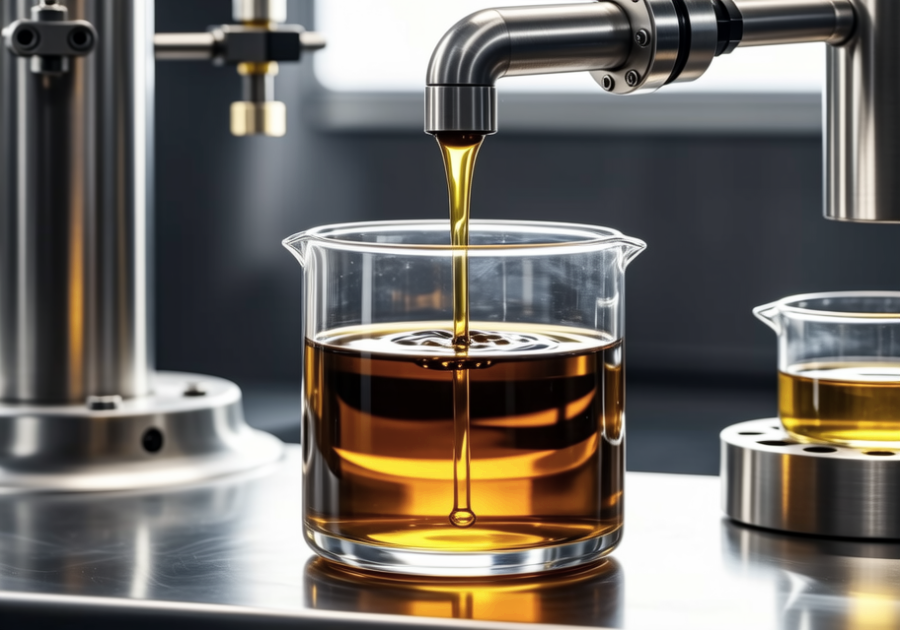
You can think of emulsifiers as peacemakers. Picture having a glass of water and some oil, which are inherently incompatible, akin to two opposing teams. Emulsifiers step in as mediators, building a bridge between these two teams. This bridge consists of tiny particles made up of emulsifier molecules that surround and stabilize the oil droplets, allowing water and oil to coexist harmoniously. This bridge is what creates the emulsion.
What Are the Types of Emulsifiers?
Emulsifiers primarily fall into four categories:
1. Anionic Emulsifiers: Anionic emulsifiers are a class of emulsifiers with molecular structures containing one or more hydrophilic groups with negative charges. These negatively charged hydrophilic groups can attract water molecules, while the hydrophobic groups interact with oil or lipid substances.
2. Polymeric Emulsifiers: Polymeric emulsifiers encompass natural substances derived from animals and plants, as well as synthetic compounds like polyethylene glycol. They can enhance the stability of O/W emulsions by increasing water phase viscosity.
3. Natural Products: Natural emulsifiers include high-molecular-weight compounds found in natural sources and amphiphilic compounds present in animal and plant tissues. Examples of natural high-molecular-weight emulsifiers include gelatin, gum arabic, cellulose, starch, and phospholipids like lecithin. Wool wax and sterols such as cholesterol are emulsifiers found in animal and plant tissues and are suitable for W/O emulsions.
4. Solid Powders: Solid powder emulsifiers are typically used when coarse but stable emulsion droplets are acceptable. Common examples include clay (particularly montmorillonite), silica dioxide, metal hydrides, carbon black, graphite, and calcium carbonate.
Natural Food Emulsifier List:
1. Olive-derived Emulsifier: This is a natural O/W (Oil/Water) emulsifier sourced entirely from renewable olives, free from harmful components like PEG. It boasts exceptional stability, whether under high or low-temperature conditions. This emulsifier imparts a remarkably light, silky-smooth texture to products and exhibits excellent spreadability during application. They are usually made from natural ingredients extracted from olive oil or olives and are therefore widely used in the food industry. They act as emulsifiers, stabilizers, and texture improvers in food manufacturing and are commonly used in the preparation of a wide range of products, including sauces, salad dressings, pastries, pastries, ice creams, and others.
2. Sodium/Calcium Stearoyl Lactylate (SSL/CSL): SSL/CSL serves as a potent preservative. It interacts strongly with proteins, forming complexes that enhance gluten networks, thereby increasing the volume and elasticity of bread. Simultaneously, it interacts with straight-chain starch, inhibiting starch aging and preserving the freshness of bread. SSL/CSL can elevate the softness of bread, although its effects may diminish when combined with other emulsifiers.
3. Diacetyl Tartaric Acid Esters of Monoglycerides (DATEM): DATEM forms robust interactions with proteins, improving gas retention in dough, and resulting in increased bread volume and elasticity. Its effects are particularly pronounced when using soft flours. DATEM excels at enhancing bread volume and serves as an ideal alternative to potassium bromate.
4. Sucrose Esters (SE): Sucrose monofatty acid esters are among the most commonly used emulsifiers in bread improvers. They enhance the crispiness of bread, improve starch viscosity, and increase bread volume and honeycomb structure, all while exhibiting anti-aging properties. When preparing bread with chilled dough, adding sucrose esters effectively prevents dough deterioration.
5. Distilled Monoglycerides (DMG): DMG primarily functions as a softening agent for bread texture while also contributing to anti-aging and preservation effects. It is often used in conjunction with other emulsifiers, synergistically enhancing its efficacy.
The natural food emulsifiers list could help you identify natural products, which may be beneficial for the health of you, and your family.
Looking for chemical products? Let suppliers reach out to you!
You May Interested In


Glow70/KLOW80 99% China Peptides Warehouse Direct Delivery Lyophilized Powder in Stock
$169/UNIT FOB


2026-10-19
Trade Alert
Delivering the latest product trends and industry news straight to your inbox.
(We'll never share your email address with a third-party.)

Related News
-
Methanol Methyl Alcohol vs Ethanol: Toxicity, Fuel Uses, and Industrial Solvent Safety
-
Glycopyrronium: Pharmaceutical Applications, Mechanism, and Chemical Specs
-
Sodium Nitrate: Fertilizer, Food Preservative, and Chemical Properties
-
What is Sodium Hipoklorit? (Definition, Uses & Safety)
-
Cytosine: Structure, DNA Pairing, and Role in Genetics
-
Bovine Serum Albumin (BSA): Role in Cell Culture & Laboratory Applications
-
Applications of Diphenyl Cyanide
-
Chemical Properties of Dibenzylideneacetone
-
Chemical Reactions and Uses of Stilbene
-
Uses of Dithiothreitol in Laboratories
Recommend Reading
-
![What is HCO3? (Bicarbonate Ion Function & Normal Levels)]()
What is HCO3? (Bicarbonate Ion Function & Normal Levels)
-
Sodium Metabisulfite: Properties, Uses, and Safety
-
![PEG (Polyethylene Glycol): Uses in Pharma, Cosmetics, and PEGylation]()
PEG (Polyethylene Glycol): Uses in Pharma, Cosmetics, and PEGylation
-
![Isopropyl Alcohol (IPA) vs Ethanol: Which Solvent or Disinfectant is Better?]()
Isopropyl Alcohol (IPA) vs Ethanol: Which Solvent or Disinfectant is Better?
-
![Key Reactions and Uses of Lithium Aluminum Hydride]()
Key Reactions and Uses of Lithium Aluminum Hydride
-
![Premium Global Chemical Sourcing Requests (11-13May, 2026)]()
Premium Global Chemical Sourcing Requests (11-13May, 2026)
-
![Weather Themes Remain; Palm Oil Futures Expected to Rise]()
Weather Themes Remain; Palm Oil Futures Expected to Rise
-
![Polyester Bottle Flakes Slightly Lowered on May 13, Showing Weak and Volatile Trends]()
Polyester Bottle Flakes Slightly Lowered on May 13, Showing Weak and Volatile Trends
-
![Supply-Demand Contradiction Continues, Acrylonitrile Market Prices in China Decline Further]()
Supply-Demand Contradiction Continues, Acrylonitrile Market Prices in China Decline Further
-
![BDO Market Trends Show Narrow Upside Movement]()
BDO Market Trends Show Narrow Upside Movement