Analysis of China's surfactant import and export in 2020
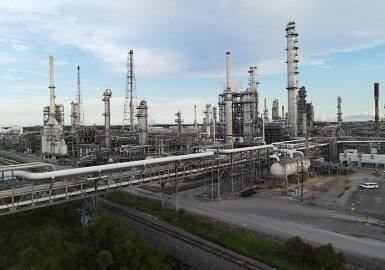
Surfactants are known as "industrial monosodium glutamate" and are located in the middle of the chemical industry chain. The specialty surfactant industry belongs to the fine chemical industry. The upstream is the production industry that uses petroleum as the basic raw material and natural oil as the raw material, and the downstream applications involve water treatment, glass fiber, coatings, construction, paint, daily chemicals, inks, electronics, Pesticides, textiles, printing and dyeing and other industrial products production industries.
Import and export analysis of Non-ionic Surfactants
According to customs statistics, my country's total imports of non-ionic surfactants in 2020 were 200829.39 tons, a year-on-year increase of 4.19% compared with the total exports in 2019. From the point of view of importing countries, the main importing countries of domestic non-ionic surfactants are from Singapore, which accounts for 29.66%, followed by Malaysia, which accounts for 21.32%. From the point of view of importing provinces, they mainly come from Shanghai, Guangdong, and Jiangsu, respectively. The ratio is 31.69%, 30.79%, 15.99%.
According to customs statistics, my country's total export volume of non-ionic surfactants reached 188,315.12 tons in 2020, a year-on-year increase of 19.43% compared with the total export volume in 2019. From the perspective of exporting countries, the main export destinations of domestic non-ionic surfactants are Vietnam and India, accounting for 8.00% and 7.64% of the total export volume respectively; from the perspective of exporting provinces, they are mainly from Shanghai, Jiangsu, Guangdong and Zhejiang, respectively Accounted for 27.53%, 26.39%, 15.81%, 13.15%.
Import and export analysis of Anionic Surfactants
According to customs statistics, my country's anionic Surfactant imports in 2020 amounted to 94229.18 tons, a year-on-year increase of 6.39% compared with the total imports in 2019. From the point of view of importing countries, the importing countries of domestic surfactants are mainly from South Korea, which accounts for 20.21%, followed by Vietnam, which accounts for 16.68%; from the point of view of importing provinces, they mainly come from Guangdong, Shanghai, Jiangsu, and Anhui, respectively. The ratio is 31.93%, 21.24%, 15.79%, 12.83%.
According to customs statistics, my country’s export volume of anionic surfactants reached 312,208.38 tons in 2020, a year-on-year increase of 9.26% compared to the total export volume in 2019. From the perspective of exporting countries, the main export destinations of domestic anionic surfactants are the United States and Pakistan, accounting for 6.68% and 5.72% of the total export volume respectively; from the perspective of exporting provinces, they are mainly from Zhejiang, Guangdong, Jiangsu and Shanghai, respectively. The ratio is 31%, 18.23%, 15.32%, 12.93%.
In general, in the global COVID-19 outbreak and recurring environment in 2020, the demand for hand sanitizer and other personal care and disinfection products has increased sharply, and even out of stock. The main raw material of personal care products such as hand sanitizer is surfactant, which has the functions of decontamination, foaming, dispersion, emulsification and wetting. At present, the addition amount of surfactants in various detergent formulations is 15-25%, which has caused the demand for surfactants to grow and the market is in short supply. At the same time, due to the serious overseas epidemic situation, the demand for surfactants has greatly increased, so the export volume of non-ionic surfactants and anionic surfactants in 2020 will increase by 19.43% and 9.62% compared with the same period in 2019. It is expected that the export volume of surfactants will continue to increase in 2021.

You May Interested In


High Quality β-Nicotinamide adenine dinucleotide CAS 53-84-9 NADwith ready stock and best price
$3/UNIT FOB


2026-10-07
Trade Alert
Delivering the latest product trends and industry news straight to your inbox.
(We'll never share your email address with a third-party.)

Related News
-
Crude Oil Tops $100, Asian Propylene Plants Undergo Concentrated Maintenance
-
Europe Faces 510,000-BPD Q4 Jet Fuel Deficit as ARA Stocks Hit Seven-Year Low
-
Saudi Aramco Weighs Discounts of Up to $9/Barrel on Oman STS Crude as Freight Costs Surge
-
"Zipper-Like" Opening and Closing of Hormuz Coupled with Russian Export Ban Send Energy and Chemical Prices Soaring
-
Germany Passes Healthcare Reform, Multinational Drugmakers Face 15.5% Mandatory Discount
-
Middle East Conflict Exposes Fragility of Global Fertilizer Supply Chains
-
Biologicals Move from Trial Plots to Real Distribution
-
Spain’s Data-Protection Confusion Hits Pesticide Competitiveness
-
Spain’s Data-Protection Confusion Hits Pesticide Competitiveness
-
Pfizer Warns Germany Over Drug-Pricing Policy
Recommend Reading
-
![New York Targets Additives and GRAS Disclosure]()
New York Targets Additives and GRAS Disclosure
-
![India Raises Cancer Drug Price Caps by 50%]()
India Raises Cancer Drug Price Caps by 50%
-
![Wacker Under Global Cost Pressure: Dual-Track Restructuring Through Layoffs, Consolidation, and Strategic Repositioning]()
Wacker Under Global Cost Pressure: Dual-Track Restructuring Through Layoffs, Consolidation, and Strategic Repositioning
-
![Chevron Opens Oilfield Chemical Technology to Rivals]()
Chevron Opens Oilfield Chemical Technology to Rivals
-
![What Can $3.4 Billion Buy? Shin-Etsu Chemical’s Answer: Upstream Control of PVC]()
What Can $3.4 Billion Buy? Shin-Etsu Chemical’s Answer: Upstream Control of PVC
-
![Polyester Bottle Flakes Surge First, Then Fall Back This Week (June 8–June 12)]()
Polyester Bottle Flakes Surge First, Then Fall Back This Week (June 8–June 12)
-
![November Benzene Market Overview (November 1-28, 2025) in China]()
November Benzene Market Overview (November 1-28, 2025) in China
-
![Natural Rubber Prices Up 30% Year-on-Year, Short-Term Fluctuations but Long-Term Potential for Further Increases]()
Natural Rubber Prices Up 30% Year-on-Year, Short-Term Fluctuations but Long-Term Potential for Further Increases
-
![November dichloromethane weak operation in China]()
November dichloromethane weak operation in China
-
![Rubber Cement: Applications and Safety Guidelines]()
Rubber Cement: Applications and Safety Guidelines