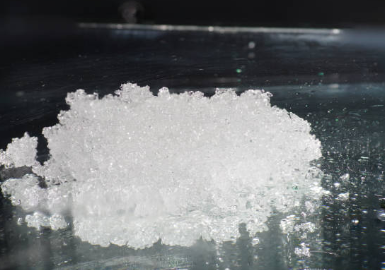
What happens when you mix Calcium Hydroxide and Sulphuric acid?
Calcium hydroxide, Ca(OH)₂, better known as slaked lime, is a strong base. It is produced when quicklime reacts with water and is widely used in construction, agriculture, and water treatment. Because of its alkalinity, it neutralizes acids efficiently, creating salts that are useful in many industries.
With Phosphoric Acid
Phosphoric acid (H₃PO₄) is a weak acid frequently used in fertilizers, beverages, and food technology. When mixed with calcium hydroxide, the following reaction occurs:
3Ca(OH)₂ + 2H₃PO₄ → Ca₃(PO₄)₂ + 6H₂O
The product, tricalcium phosphate (Ca₃(PO₄)₂), is insoluble and precipitates as a white solid. It is valued as a food additive to supply calcium and as a fertilizer to provide phosphorus for plant growth. This neutralization shows how acid–base chemistry produces compounds with nutritional and agricultural value.
With Sulphuric Acid
Sulphuric acid (H₂SO₄), one of the strongest mineral acids, reacts vigorously with calcium hydroxide:
Ca(OH)₂ + H₂SO₄ → CaSO₄ + 2H₂O
The reaction is highly exothermic. The resulting salt, calcium sulphate (CaSO₄), appears in hydrated form as gypsum (CaSO₄·2H₂O). Gypsum is essential for making cement, plaster, and drywall. This neutralization is also applied in treating acid waste streams safely.
Comparison of Both Reactions
| Reaction | Equation | Product | Applications |
|---|---|---|---|
| Ca(OH)₂ + H₃PO₄ | 3Ca(OH)₂ + 2H₃PO₄ → Ca₃(PO₄)₂ + 6H₂O | Tricalcium phosphate | Food additives, fertilizer |
| Ca(OH)₂ + H₂SO₄ | Ca(OH)₂ + H₂SO₄ → CaSO₄ + 2H₂O | Calcium sulphate (gypsum) | Construction, acid neutralization |
Industrial Importance
- Food and Agriculture: Tricalcium phosphate improves calcium levels in food and provides phosphorus in fertilizers.
- Construction: Gypsum is indispensable for plaster, cement, and drywall production.
- Environmental Protection: Calcium hydroxide neutralizes acid waste, helping maintain safe pH in industrial effluents.
Safety Notes
Both reactions release heat, and concentrated acids can cause serious burns. When handling calcium hydroxide with phosphoric or sulphuric acid, protective equipment—gloves, goggles, and proper ventilation—is essential. Reactions should be carried out slowly with good mixing to avoid splashing and overheating.
Conclusion
Calcium hydroxide reacts with phosphoric acid to form tricalcium phosphate and with sulphuric acid to produce calcium sulphate. These neutralization reactions create salts with wide industrial applications. From food technology to construction, their products remain vital, provided they are handled with appropriate safety measures.
Looking for chemical products? Let suppliers reach out to you!
You May Interested In


Glow70/KLOW80 99% China Peptides Warehouse Direct Delivery Lyophilized Powder in Stock
$169/UNIT FOB


2026-10-24
Trade Alert
Delivering the latest product trends and industry news straight to your inbox.
(We'll never share your email address with a third-party.)

Related News
-
Cytosine: Structure, DNA Pairing, and Role in Genetics
-
Bovine Serum Albumin (BSA): Role in Cell Culture & Laboratory Applications
-
PEG (Polyethylene Glycol): Uses in Pharma, Cosmetics, and PEGylation
-
What is HCO3? (Bicarbonate Ion Function & Normal Levels)
-
Chemical Properties and Uses of Caesium Fluoride
-
Uses and Properties of Chromium Oxide
-
What are Acetoglycerides? (Definition & Food Industry Uses)
-
What is Aconitic Acid? (Chemistry & Occurrence)
-
Uses of Sodium Citrate Dihydrate in Food Industry
-
Applications of Caesium Iodide
Recommend Reading
-
![Chemical Properties and Uses of Tetraetil]()
Chemical Properties and Uses of Tetraetil
-
![Key Reactions of Cobalt Chloride]()
Key Reactions of Cobalt Chloride
-
![Chemical Properties and Applications of Cyclopropen]()
Chemical Properties and Applications of Cyclopropen
-
![Uses and Properties of 3-Methyl-1-Butanol]()
Uses and Properties of 3-Methyl-1-Butanol
-
![Key Reactions and Uses of Lithium Aluminum Hydride]()
Key Reactions and Uses of Lithium Aluminum Hydride
-
![Coke market remains stable with a strengthening trend, many regions in China initiate price increases]()
Coke market remains stable with a strengthening trend, many regions in China initiate price increases
-
![Business Society’s PTA Market Outlook on September 9, 2026: Volatile]()
Business Society’s PTA Market Outlook on September 9, 2026: Volatile
-
![Business Society’s Diesel Market Outlook on August 19, 2026: Volatile Rise]()
Business Society’s Diesel Market Outlook on August 19, 2026: Volatile Rise
-
![Business Society’s Palm Oil Market Outlook on September 9, 2026: Clearly Upward Trend]()
Business Society’s Palm Oil Market Outlook on September 9, 2026: Clearly Upward Trend
-
![Business Society’s Market Outlook for Fuel Oil 180CST on August 19, 2026: Rising]()
Business Society’s Market Outlook for Fuel Oil 180CST on August 19, 2026: Rising