




Proposed Revision of Maximum Residue Limits for MCPA in Cultivated Fungi and Oyster Mushrooms in the European Union
The European Union (EU) is considering revising the maximum residue limits (MRLs) for the active substance mepiquat, commonly known as MCPA, in cultivated fungi and oyster mushrooms. The potential revision aims to ensure consumer safety and align with agricultural practices. This article provides an overview of the proposed changes and their implications.
The European Food Safety Authority (EFSA) recently announced its intention to revise the MRLs for mepiquat in cultivated fungi and oyster mushrooms. BASF SE, the applicant, submitted a request to modify the temporary MRLs to permanent ones, specifically for oyster mushrooms. However, the data provided by BASF SE were deemed insufficient to derive permanent MRL proposals.
EFSA's assessment of the available monitoring data suggests that the existing temporary MRLs for cultivated fungi, excluding oyster mushrooms, adequately account for residue uptake. The assessment also indicated the possibility of establishing lower temporary MRLs based on recent monitoring data. Nevertheless, a risk management decision is required to determine whether to maintain the current temporary MRL value.
Regarding oyster mushrooms, EFSA proposed various options for risk managers to update the temporary MRLs based on the most recent monitoring data from food business operators. The assessment concluded that the short-term and long-term intake of residues resulting from cross-contamination of untreated cultivated fungi, including oyster mushrooms, with mepiquat-treated cereal straw, is unlikely to pose a risk to consumer health.
It is essential to note that the proposed revision aims to ensure the safety of consumers by aligning MRLs with current agricultural practices and risk assessment findings. Adequate analytical methods are available to enforce the MRLs and control mepiquat residues in the commodities under consideration.
The EU is considering revising the MRLs for mepiquat in cultivated fungi and oyster mushrooms to enhance consumer safety. The proposed changes will align the MRLs with current agricultural practices and risk assessment findings. EFSA's assessment suggests that the existing MRLs for cultivated fungi, excluding oyster mushrooms, are sufficient, but lower MRLs could be considered based on recent monitoring data. The short-term and long-term intake of residues resulting from cross-contamination of untreated cultivated fungi with mepiquat-treated cereal straw is unlikely to pose a risk to consumer health.

You May Interested In


High Quality β-Nicotinamide adenine dinucleotide CAS 53-84-9 NADwith ready stock and best price
$3/UNIT FOB


2026-10-16
Trade Alert
Delivering the latest product trends and industry news straight to your inbox.
(We'll never share your email address with a third-party.)

Related News
-
MGC expands Texas plant capacity
-
Global Chemical Giants Light the Fuse: A TDI/MDI Price Storm Sweeps Asia and Europe—Who’s Fueling This “Cost Carnival”?
-
Global Bunker Fuel Deficit Widens, Raising the Risk of a Second Cost Shock for Chemical Shipping
-
Minoxidil Safety Under Global Review as Infant Exposure Risks Surface
-
Substandard Drug Findings Expose Deep Structural Gaps in Medicine Quality Control
-
Obesity Drugs Become Pharma’s Most Powerful Growth Engine
-
China Methanol Futures Hit Limit-Up as More Than 60% of Middle East Capacity Remains Offline
-
Indian Immunologicals Pushes Back on “Fake Vaccine” Claims Amid Global Supply Chain Scrutiny
-
Saudi Energy Facilities Hit as Middle East Feedstock Risk Spreads Toward the Red Sea
-
TSMC, Samsung, and SK Hynix Scramble for Electronic-Grade Hydrofluoric Acid as High-End Supply Tightens; Some Suppliers Raise Prices by 30% This Year
Recommend Reading
-
![Behind Japan's Tungsten Hexafluoride Crisis: Can China's Electronic Specialty Gases Seize a New Opportunity?]()
Behind Japan's Tungsten Hexafluoride Crisis: Can China's Electronic Specialty Gases Seize a New Opportunity?
-
![“Oil Sheikhs” Buy Germany’s Chemical Crown: A €14.7 Billion Green Gamble or a Power Play in the Age of Carbon Neutrality?]()
“Oil Sheikhs” Buy Germany’s Chemical Crown: A €14.7 Billion Green Gamble or a Power Play in the Age of Carbon Neutrality?
-
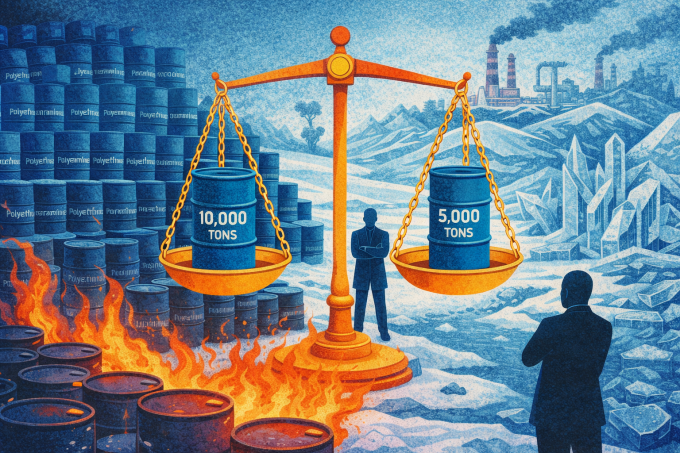
![From “10,000-Ton Bet” to “5,000-Ton Test”: Acore’s Polyetheramine Dilemma—Is This a Symptom of Industry Winter or the Prelude to Strategic Retreat?]()
From “10,000-Ton Bet” to “5,000-Ton Test”: Acore’s Polyetheramine Dilemma—Is This a Symptom of Industry Winter or the Prelude to Strategic Retreat?
-
![Lotte Chemical Jumps Nearly 13% as Korean Petrochemical Stocks Rally on Supply-Tightening Bets]()
Lotte Chemical Jumps Nearly 13% as Korean Petrochemical Stocks Rally on Supply-Tightening Bets
-
![Kumho Mitsui Chemicals to Further Expand MDI Production, Annual Capacity to Reach 710,000 Tons]()
Kumho Mitsui Chemicals to Further Expand MDI Production, Annual Capacity to Reach 710,000 Tons
-
![Business Society’s MTBE Market Outlook on September 7, 2026: Slightly Bullish with Volatility]()
Business Society’s MTBE Market Outlook on September 7, 2026: Slightly Bullish with Volatility
-
![Business Society September 24, 2026 PP (Fiber) Trend Analysis: Volatility]()
Business Society September 24, 2026 PP (Fiber) Trend Analysis: Volatility
-
![China's SBR Prices Rise Driven by Costs]()
China's SBR Prices Rise Driven by Costs
-
![Business Society’s September 8, 2026 Methanol Market Outlook: Volatile Consolidation]()
Business Society’s September 8, 2026 Methanol Market Outlook: Volatile Consolidation
-
![Following Cost Fluctuations, PTA Prices in China Rose First and Then Declined in September]()
Following Cost Fluctuations, PTA Prices in China Rose First and Then Declined in September







- Hot Searches
- zinc cromate
- reta weight loss where to buy
- propylene pricing
- retatrutide glp-3 for sale
- silver iodide for sale
- ammonia index price
- dipotassium phosphate distributor
- dapagliflozin propanediol 10 mg tablet
- 2 methylacetanilide
- mono propylene glycol for sale
- propene price
- hydroflurocarbon 152a