How do Ammonia and Sodium Hydroxide React?
You know that smell—the one that hits you halfway down the hallway before you even see the lab? Sharp, stinging, makes your eyes water just thinking about it. If you went to school in the last fifty years, there’s a solid chance that smell was ammonia, bubbling out of a test tube where someone mixed ammonium chloride and sodium hydroxide. It’s not a dramatic reaction—no flames, no fizzing rainbow—but it’s unforgettable. And quietly brilliant.
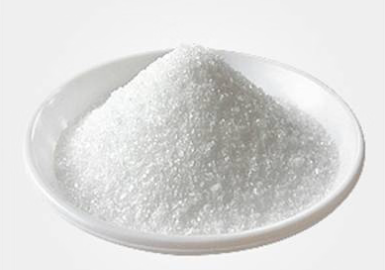
Ammonium chloride looks harmless enough. White, crystalline, almost like table salt. Toss it in water, and it vanishes—dissolving into NH₄⁺ and Cl⁻ ions without fanfare. But that ammonium ion? It’s got a secret: it’s a weak acid in disguise. Not strong like vinegar or battery acid, but enough to donate a proton if something stronger comes along asking for it.
Enter sodium hydroxide—the heavyweight champion of bases. In water, it doesn’t just dissolve; it unleashes hydroxide ions (OH⁻) like a faucet left wide open. These OH⁻ ions are relentless proton hunters. So when you mix the two solutions and apply a little gentle heat, the hydroxide swoops in and plucks a hydrogen right off the ammonium ion. What’s left behind? Ammonia gas (NH₃) and water.
The equation is clean, almost poetic:
NH₄⁺ + OH⁻ → NH₃↑ + H₂O
And because ammonia is a gas at room temperature, it doesn’t hang around. It escapes—fast—carrying that pungent warning with it. The sodium and chloride ions? They just stay put, drifting in solution as plain old saltwater. The full picture looks like this:
NH₄Cl + NaOH → NH₃↑ + NaCl + H₂O
No color change. No explosion. Just a rising cloud of invisible gas that announces itself the second it hits your sinuses.
What makes this reaction go so completely isn’t just the chemistry—it’s physics, too. Once ammonia leaves the liquid phase, it’s gone for good. That pulls the whole system forward, thanks to Le Chatelier’s principle: remove a product, and the reaction keeps making more to compensate. Heat just speeds up the getaway.
Here’s a twist people don’t always expect: even if you start with liquid ammonia cleaner—the kind under your sink—adding NaOH will still force more gas out. Why? Because ammonia in water is never fully “just ammonia.” It’s in a constant tug-of-war:
NH₃ + H₂O ⇌ NH₄⁺ + OH⁻
Add extra OH⁻ from sodium hydroxide, and the balance tips hard to the left. Suddenly, the solution can’t hold onto its dissolved ammonia anymore, and it starts bubbling off. Chemists have used this trick for over a century to pull ammonia out of any ammonium salt—whether it’s chloride, sulfate, or nitrate.
In classrooms, this reaction is a rite of passage. Students learn ionic equations, gas tests (hello, damp red litmus paper turning blue), and why you never sniff a test tube directly. In industry, it’s quieter but no less useful—adjusting pH in wastewater, stripping ammonia from process streams, even helping fine-tune fertilizer blends.
But respect is due. Sodium hydroxide burns skin. Ammonia gas chokes lungs. Do this in a closed room, and you’ll regret it fast. Always use a fume hood—or at the very least, crack a window and stand upwind.
At its heart, this reaction is a masterclass in simplicity. No fancy catalysts. No rare metals. Just ions doing what they’re wired to do: exchanging, shifting, escaping. A proton jumps ship. A molecule takes flight. And in that moment, the invisible world of chemistry steps boldly into the air you breathe.
Looking for chemical products? Let suppliers reach out to you!
You May Interested In


SS-31 Cosmetic peptides, discounted price improving cognitive impairment factory supply
$8E+1/UNIT FOB


2026-09-16
Trade Alert
Delivering the latest product trends and industry news straight to your inbox.
(We'll never share your email address with a third-party.)

Related News
-
Nature’s Blueprint, Science’s Edge: Corteva Unveils Twin Breakthroughs to Tackle the $70 Billion Insect Threat
-
Permanganate: Properties, Uses, and Safety
-
Chemical Properties of Dibenzylideneacetone
-
Applications of Diphenyl Cyanide
-
Uses of Sodium Acetate Trihydrate
-
Key Reactions and Uses of Allene
-
Applications of Copper Sulfate Pentahydrate
-
Chemical Reactions and Uses of Stilbene
-
Iohexol: Properties, Uses, and Safety
-
Uses of Dithiothreitol in Laboratories
Recommend Reading
-
![Uses and Properties of Chromium Oxide]()
Uses and Properties of Chromium Oxide
-
![Chemical Properties and Uses of Caesium Fluoride]()
Chemical Properties and Uses of Caesium Fluoride
-
![Reactions and Uses of Ammonium Dichromate]()
Reactions and Uses of Ammonium Dichromate
-
![Applications of Aluminium Orthophosphate]()
Applications of Aluminium Orthophosphate
-
![Isobutyl: Properties, Uses, and Industrial Applications]()
Isobutyl: Properties, Uses, and Industrial Applications
-
![Business Society’s Market Outlook for Polyester Staple Fiber on September 8, 2026: Volatile]()
Business Society’s Market Outlook for Polyester Staple Fiber on September 8, 2026: Volatile
-
![Business Society’s Market Outlook for Acrylonitrile on September 8, 2026: Clearly Downward]()
Business Society’s Market Outlook for Acrylonitrile on September 8, 2026: Clearly Downward
-
![Business Society’s PTA Market Outlook on September 8, 2026: Volatile]()
Business Society’s PTA Market Outlook on September 8, 2026: Volatile
-
![Business Society’s August 20, 2026 Melamine Market Outlook: Fluctuating Trend]()
Business Society’s August 20, 2026 Melamine Market Outlook: Fluctuating Trend
-
![Business Society’s Market Outlook for Polyester Staple Fiber on September 7, 2026: Volatile]()
Business Society’s Market Outlook for Polyester Staple Fiber on September 7, 2026: Volatile