Understanding Diatomaceous Earth Food Grade Uses
Food-grade diatomaceous earth is a naturally permeable soil. It is primarily made up of diatom shell remnants. Its porous structure increases its adsorption capability, making it an effective adsorbent and filtering agent with multiple applications in various fields. Let’s explore diatomaceous earth food grade uses together through this passage.
Understanding diatomaceous earth
Diatomaceous earth is a fossilized deposit of diatom-accumulated soil that formed after the demise of single-celled diatoms. The period of its formation is around 10 to 20,000 years. Diatoms is a unicellular aquatic plant that has the remarkable property of absorbing free silicon in water to construct its skeleton, which is then deposited when its life is over. The remains of it gradually formed diatomaceous earth deposits under particular geological conditions.
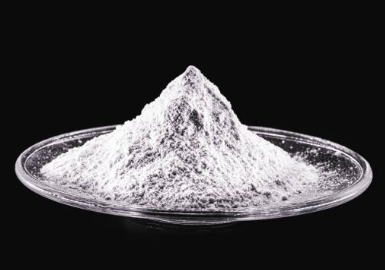
Diatomaceous earth contains minor amounts of Al2O3, Fe2O3, CaO, MgO, K2O, Na2O, P2O5, and organic substances. SiO2 content typically exceeds 80%, with the highest reaching 94%. High-quality diatomaceous earth usually contains 1–1.5% iron oxide and 3–6% aluminum oxide. The mineral composition of diatomaceous earth is mostly opal and its variations, followed by clay minerals such as mica, kaolinite, and mineral debris. Mineral detritus consists of quartz, feldspar, smectite, and organic materials. The color of diatomaceous earth could be white, off-white, grey and light grey-brown. Its features include being loose, light, porous, absorbent, and permeable. The majority of diatomaceous earth's silicon oxide is amorphous, and the content of soluble silicic acid in alkali is 50~80%. Heating amorphous SiO2 to 800-1000°C to crystallize it, the soluble silicate in alkali can be reduced to 20~30%.
Diatomaceous earth food grade uses in different fields
One of the most prevalent diatomaceous earth food grade uses is prevention of pests. In animal care, diatomaceous earth can be used to treat internal parasites, fleas and ticks, and pests on and near livestock. Besides pest controlling, food grade diatomaceous earth is also used in the food, chemical, and cosmetic sectors due to its unique qualities, which include porousness, low density, large specific surface area, relative incompressibility, and chemical stability.
In food industry
Diatomaceous earth food grade uses in food industry derive from the features of porousness, absorbency and low density. In this field, diatomaceous earth can be applied as a preservative, a thickener, and an anti-caking agent.
1. As a preservative. Food grade diatomaceous earth can be used to preserve items like fish, meat, and bread by absorbing moisture and maintaining air circulation, hence extending storage duration.
2. As thickeners: Food-grade diatomaceous earth can be used as a thickening in beverages, candies, dairy products, and seasonings to improve their texture and consistency.
3. As an anti-caking agent: Diatomaceous earth can prevent the caking phenomena in food. For example, some micro-fine powder foods are prone to dense caking, which diatomaceous earth can successfully prevent.
In the medicine industry
Diatomaceous earth food grade uses in medicine industry are due to its large surface area and chemical stability.
1. As a medicine stabilizer: In cases of excessive oxidation or photolysis, food-grade diatomaceous earth can be used to keep medications from losing their effectiveness.
2. A component of suspension stabilizers: Diatomaceous earth of food grade plays a vital role in several suspension stabilizers. It supports the stability and fluidity of emulsions.
3. As a filler: Diatomaceous earth can be used in pharmaceutical operations to increase handling capacity, fluidity, and stability.
In the cosmetics
Food-grade diatomaceous earth is white in color and has a smooth texture. These features make it an ideal thickening, moisturizing, and oil-controlling ingredient for daily cosmetics.
1. As an oil control agent: Food-grade diatomaceous earth can be used as an oil control agent since it has strong oil adsorption qualities.
2. As a moisturizing agent: The high moisture absorption capacity of diatomaceous earth's spongy structure can enhance the moisturizing effects of cosmetic goods.
3. As a thickening agent: Cosmetics can be made easier to apply by altering the feel and texture using food-grade diatomaceous earth.
Conclusion
This section primarily introduces the diatomaceous earth food grade uses in the fields of food, medicine, and cosmetics. With people's increasing concern for their health and the environment, the potential market of food-grade diatomaceous earth will be more and more broad in the future.
Looking for chemical products? Let suppliers reach out to you!
You May Interested In


Glow70/KLOW80 99% China Peptides Warehouse Direct Delivery Lyophilized Powder in Stock
$169/UNIT FOB


2026-10-23
Trade Alert
Delivering the latest product trends and industry news straight to your inbox.
(We'll never share your email address with a third-party.)

Related News
-
Sulfuric Acid (H2SO4): Properties, Battery Uses, and Extreme Safety Hazards
-
What is Trametenolic Acid? (Structure, Sources & Research)
-
Key Properties and Applications of Para-Nitrophenol
-
Understanding Reactions Between Silver and Chloride
-
Calcium Hypochlorite: Properties, Uses, and Safety
-
Bivalirudin: Medical Uses, Properties, and Safety
-
Sodium Pentothal: Medical Applications and Safety
-
Ascorbyl Palmitate: Properties, Uses, and Benefits
-
What is Amylum Starch? (Old Terminology & Modern Equivalent)
-
What is Element Stibium? (Antimony Facts & Uses)
Recommend Reading
-
![Ethylene Glycol: Production, Uses, and Safety]()
Ethylene Glycol: Production, Uses, and Safety
-
![Fipronil: Uses, Safety, and Environmental Impact]()
Fipronil: Uses, Safety, and Environmental Impact
-
![Potassium Hydroxide (KOH): Soap Making, Batteries, and Safety]()
Potassium Hydroxide (KOH): Soap Making, Batteries, and Safety
-
![Applications and Safety of Sodium Dichromate]()
Applications and Safety of Sodium Dichromate
-
![Uses and Benefits of Sodium Selenite]()
Uses and Benefits of Sodium Selenite
-
![Business Society’s Lithium Carbonate Trend Analysis for September 20, 2026: Clearly Upward]()
Business Society’s Lithium Carbonate Trend Analysis for September 20, 2026: Clearly Upward
-
![This week (2026.2.2-2.6) polyester bottle chips first plummeted then stabilized in China]()
This week (2026.2.2-2.6) polyester bottle chips first plummeted then stabilized in China
-
![This Week's Polymeric MDI Market Narrowly Consolidated in China (9.14-9.18)]()
This Week's Polymeric MDI Market Narrowly Consolidated in China (9.14-9.18)
-
![This Week's PVC Market Rises and Then Falls (2.2-2.6)]()
This Week's PVC Market Rises and Then Falls (2.2-2.6)
-
![This Week's Caustic Soda Prices Show Strong Performance (9.14-9.18)]()
This Week's Caustic Soda Prices Show Strong Performance (9.14-9.18)