Facts about non-calcined petroleum coke
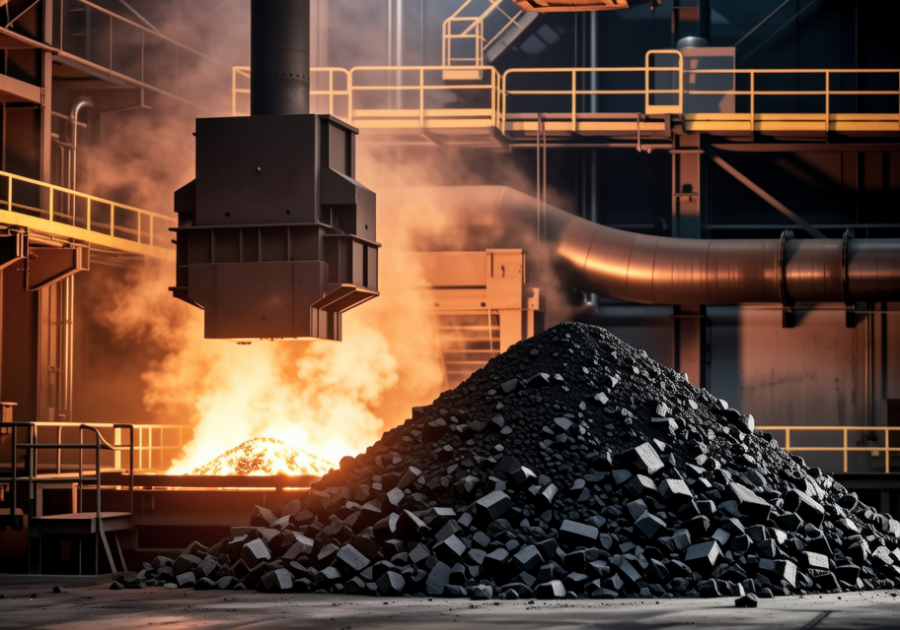
Non-calcined petroleum coke is a byproduct of petroleum processing. It is a black solid substance in appearance, with irregular shapes and sizes of black lumps (or particles) and metallic luster. Non-calcined petroleum coke particles have a porous structure and are usually used to make electrodes and casting materials. Compared with calcined petroleum coke, non-calcined petroleum coke has a lower quality, but it still has some important uses.
Non-calcined petroleum coke is made from high-temperature carbonized petroleum raw materials. 90-95% of its composition is carbon, with small amounts of sulfur, nitrogen and ash. It has high calorific value, low volatility and high carbon content, making it an important industrial raw material and energy source.
Non-calcined petroleum coke can be used to make various types of electrodes, including lead-acid batteries, lithium-ion batteries and supercapacitors. The conductivity of non-calcined petroleum coke is poor, but it can be improved by adding some conductive agents.
Non-calcined petroleum coke can also be used to make casting materials. Casting is a method of making metal parts, usually using plaster molds or sand molds. Non-calcined petroleum coke can be used as an additive to casting materials to improve the fluidity and wear resistance of casting materials.
In addition to the above uses, non-calcined petroleum coke can also be used to make products such as carbon black, activated carbon and graphite. Carbon black is a black powder that is usually used to make products such as tires, rubber products and inks. Activated carbon is a porous material that is usually used to purify water and air. Graphite is a material with good conductivity and thermal stability, which is usually used to make products such as electrodes, graphene and high-temperature materials.
Why should non-calcined petroleum coke be further processed?
Remove moisture and volatiles from the raw materials. Non-calcined petroleum coke usually contains a certain amount of volatiles. The volatiles can be removed after calcination, thereby increasing the fixed carbon content of the raw materials. Non-calcined petroleum coke generally contains 3~10% moisture. Removing moisture from the raw materials by calcination is conducive to operations such as crushing, screening, and grinding, improving its adsorption performance for binders, and improving product quality.
Improve the density and mechanical strength of the raw materials. Due to the removal of volatiles, the raw material volume shrinks, the density increases, the strength increases, and at the same time, it obtains better thermal stability, thereby reducing the secondary shrinkage of the product during calcination. The more fully the raw materials are calcined, the more beneficial it is to the quality of the products.
Improve the conductivity of the raw materials. After calcination, the volatiles of non-calcined petroleum coke are eliminated, the molecular structure is changed, and the resistivity is reduced, thereby improving the conductivity of the raw materials. Generally speaking, the higher the degree of calcination of the raw material, the better the conductivity of the calcined material.
Looking for chemical products? Let suppliers reach out to you!
You May Interested In


Glow70/KLOW80 99% China Peptides Warehouse Direct Delivery Lyophilized Powder in Stock
$169/UNIT FOB


2026-10-23
Trade Alert
Delivering the latest product trends and industry news straight to your inbox.
(We'll never share your email address with a third-party.)

Related News
-
Sodium Hydroxide Reactions: With Aluminum, Acids, and Metals
-
Gellan Gum (E418): Vegan Thickener vs. Xanthan Gum in Food
-
Key Reactions of Cobalt Chloride
-
Chemical Properties and Applications of Cyclopropen
-
Understanding Titanium Oxide: Properties and Uses
-
What is HCO3? (Bicarbonate Ion Function & Normal Levels)
-
PEG (Polyethylene Glycol): Uses in Pharma, Cosmetics, and PEGylation
-
Chemical Properties of Dibenzylideneacetone
-
Applications of Diphenyl Cyanide
-
Iohexol: Properties, Uses, and Safety
Recommend Reading
-
![Isobutyl: Properties, Uses, and Industrial Applications]()
Isobutyl: Properties, Uses, and Industrial Applications
-
![SiO2: Properties, Uses, and Applications]()
SiO2: Properties, Uses, and Applications
-
![Uses of Dithiothreitol in Laboratories]()
Uses of Dithiothreitol in Laboratories
-
![Chemical Reactions and Uses of Stilbene]()
Chemical Reactions and Uses of Stilbene
-
![Permanganate: Properties, Uses, and Safety]()
Permanganate: Properties, Uses, and Safety
-
![China's Marine Fuel Market Prices Slightly Increased in February]()
China's Marine Fuel Market Prices Slightly Increased in February
-
![Coke market conditions stabilize in China]()
Coke market conditions stabilize in China
-
![Focusing on the Risks of the Strait of Hormuz: Safety of Ethylene Glycol Imports to China and Price Trend Predictions]()
Focusing on the Risks of the Strait of Hormuz: Safety of Ethylene Glycol Imports to China and Price Trend Predictions
-
![Premium Global Chemical Sourcing Requests (10-13Sep.,2026)]()
Premium Global Chemical Sourcing Requests (10-13Sep.,2026)
-
![Supply Excess, DMF Market Shows Minor Fluctuations Amid Overall Stability]()
Supply Excess, DMF Market Shows Minor Fluctuations Amid Overall Stability