Sodium Hydroxide Reactions: With Aluminum, Acids, and Metals
When working with sodium hydroxide (NaOH), one of the most common questions is: How does it react with different metals and acids, and what should we expect in real-world conditions? The short answer is that sodium hydroxide behaves very differently depending on the material it encounters. With aluminum, it produces hydrogen gas. With hydrochloric acid, it undergoes a vigorous neutralization. With copper salts, it forms distinctive precipitates.
Understanding these reactions is essential not only in laboratories but also in water treatment, metal processing, cleaning formulations, and chemical manufacturing. Below is a practical, chemistry-grounded explanation of three frequently discussed reactions, supported by established chemical principles recognized by organizations such as the American Chemical Society.
1. What Happens in the Sodium Hydroxide and Aluminum Reaction?
The sodium hydroxide and aluminum reaction is notable because it generates hydrogen gas. While aluminum is usually protected by a thin oxide layer (Al₂O₃), sodium hydroxide dissolves this protective film, allowing the metal to react.
The balanced equation is:
2Al + 2NaOH + 6H₂O → 2Na[Al(OH)₄] + 3H₂↑
Key observations:
- Hydrogen gas is released (flammable and potentially explosive).
- The reaction is exothermic.
- Sodium aluminate (Na[Al(OH)₄]) forms in solution.
This reaction demonstrates aluminum’s amphoteric nature—it reacts with both acids and bases. In industrial practice, this chemistry is used in aluminum surface treatment and etching processes. However, uncontrolled mixing (for example, adding aluminum foil to drain cleaner) can rapidly generate heat and hydrogen gas, posing serious safety risks.
| Component | Role in Reaction | Result |
|---|---|---|
| Aluminum (Al) | Amphoteric metal | Forms soluble aluminate |
| NaOH | Strong base | Dissolves oxide layer |
| Water | Reaction medium | Enables hydrogen evolution |
2. What Occurs in Sodium Hydroxide and HCl Neutralization?
The reaction between sodium hydroxide and HCl is one of the most fundamental acid–base reactions in chemistry. It is a classic neutralization reaction:
NaOH + HCl → NaCl + H₂O + Heat
Important characteristics:
- Highly exothermic (releases significant heat).
- Produces sodium chloride (table salt) and water.
- Rapid and nearly complete under standard conditions.
Because both reactants are strong electrolytes, the reaction proceeds efficiently in aqueous solution. In industrial environments, this chemistry is widely applied in pH adjustment systems, wastewater treatment, and chemical manufacturing.
From a safety perspective, concentrated solutions can boil or splatter if mixed improperly. Best laboratory practice recommends adding acid to water (never the reverse) and controlling addition rates to manage heat evolution.
3. How Does Sodium Hydroxide React with Copper Sulfate?
The reaction between sodium hydroxide and copper sulfate is different from the previous examples because it forms a precipitate rather than gas or simple salt.
CuSO₄ + 2NaOH → Cu(OH)₂↓ + Na₂SO₄
What you observe:
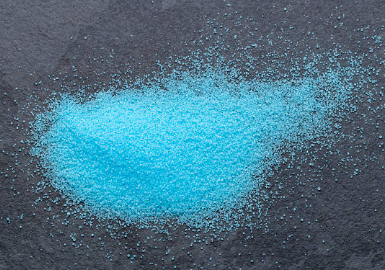
- A light blue precipitate of copper(II) hydroxide forms.
- The reaction occurs immediately in aqueous solution.
- No gas evolution under normal conditions.
Copper(II) hydroxide is insoluble in water and appears as a gelatinous blue solid. This precipitation reaction is commonly used in qualitative inorganic analysis to identify copper(II) ions. In water treatment processes, similar reactions are employed to remove heavy metals through hydroxide precipitation.
Comparison of the Three Reactions
| Reaction Partner | Reaction Type | Main Product | Hazard Level |
|---|---|---|---|
| Aluminum | Redox + Complex formation | Hydrogen gas + sodium aluminate | High (flammable gas) |
| HCl | Neutralization | Salt + water | Moderate (heat release) |
| Copper sulfate | Precipitation | Copper hydroxide | Low–Moderate |
Safety and Practical Considerations
Sodium hydroxide is a strong corrosive base. According to standard laboratory safety guidelines, including those referenced by OSHA, direct contact can cause severe chemical burns. When performing or scaling any of these reactions:
- Use chemical-resistant gloves and eye protection.
- Work in a well-ventilated area.
- Control addition rates to prevent overheating.
- Never seal systems generating hydrogen gas.
In industrial environments, process engineers calculate heat output and gas evolution rates to ensure safe reactor design. Even small-scale demonstrations require caution.
Conclusion
Sodium hydroxide demonstrates versatile and sometimes aggressive chemical behavior. The sodium hydroxide and aluminum reaction produces hydrogen gas through a redox process. Sodium hydroxide and HCl undergo classic exothermic neutralization. Sodium hydroxide and copper sulfate form an insoluble hydroxide precipitate.
Recognizing the reaction type—redox, neutralization, or precipitation—helps predict products, hazards, and industrial relevance. Whether in laboratory research, wastewater treatment, or metal processing, understanding these interactions ensures both effectiveness and safety.
Looking for chemical products? Let suppliers reach out to you!
You May Interested In


Glow70/KLOW80 99% China Peptides Warehouse Direct Delivery Lyophilized Powder in Stock
$169/UNIT FOB


2026-10-26
Trade Alert
Delivering the latest product trends and industry news straight to your inbox.
(We'll never share your email address with a third-party.)

Related News
-
What is Trametenolic Acid? (Structure, Sources & Research)
-
Sulfuric Acid (H2SO4): Properties, Battery Uses, and Extreme Safety Hazards
-
What is the Formula for Ammonia? (NH3 Structure & Properties)
-
Tert Butylate: Properties and Applications
-
Understanding PCl5: Compound Name and Uses
-
Sodium Nitrate: Fertilizer, Food Curing, and Explosive History
-
Aluminum Oxide (Al2O3): Abrasive Uses, Ceramic Applications, and Safety
-
Isoascorbic Acid: Uses and Safety
-
Applications and Safety of Sodium Dichromate
-
Silver Nitrate: Medical Uses, Photography History, and Staining Properties
Recommend Reading
-
![Uses and Benefits of Sodium Selenite]()
Uses and Benefits of Sodium Selenite
-
![Phosphoric Acid: Uses in Cola, Rust Removal, and Fertilizers Explained]()
Phosphoric Acid: Uses in Cola, Rust Removal, and Fertilizers Explained
-
![Uses and Properties of Copper Acetate]()
Uses and Properties of Copper Acetate
-
![Sulfur Hexafluoride (SF6): Applications and Safety]()
Sulfur Hexafluoride (SF6): Applications and Safety
-
![Sodium Alginate: Properties, Uses, and Benefits]()
Sodium Alginate: Properties, Uses, and Benefits
-
![Bull and Bear Factors Intertwined, Polyethylene at High Levels with Fluctuations]()
Bull and Bear Factors Intertwined, Polyethylene at High Levels with Fluctuations
-
![“全球展会数据”功能上线公告 Announcement on the Launch of the “Global Exhibition Data” Function]()
“全球展会数据”功能上线公告 Announcement on the Launch of the “Global Exhibition Data” Function
-
![International oil prices fall from high levels, polybutadiene rubber market weakens]()
International oil prices fall from high levels, polybutadiene rubber market weakens
-
![Business Society October 21, 2026 Palm Oil Trend Analysis: Volatility]()
Business Society October 21, 2026 Palm Oil Trend Analysis: Volatility
-
![Weakening Demand Causes Acrylonitrile Market to Continue Declining]()
Weakening Demand Causes Acrylonitrile Market to Continue Declining