Compounds that are insoluble in water | Detailed Explanation
In our daily lives, many compounds are insoluble in water. These water-insoluble compounds include, but are not limited to, the following categories: hydrocarbons, halogenated hydrocarbons, nitro compounds, esters, ethers, macromolecules or polymers, as well as specific inorganic compounds like aluminum oxide (Al2O3), copper oxide (CuO), iron oxide (Fe2O3, Fe3O4), mercury oxide (HgO), silver chloride (AgCl), calcium carbonate (CaCO3), etc., and organic compounds like cyclohexane (C6H12), styrene (C8H8), etc., which are insoluble in water. Today we will look at three standout compounds that are insoluble in water.
Compounds that are insoluble in water: calcium carbonate
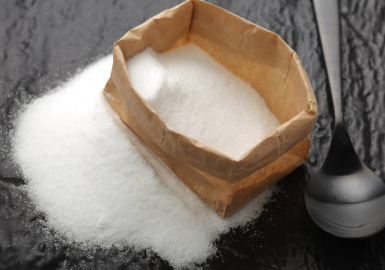
Calcium carbonate is mainly divided into light calcium carbonate, heavy calcium carbonate, colloidal calcium carbonate, and crystalline calcium carbonate. What appears to be an assortment is a demonstration of extreme plasticity, with mundane materials possessing extremely high ceilings.
As a kind of compound that is insoluble in water, calcium carbonate can be artificially regulated in terms of color, particle size, surface properties, dispersion, rheology, thixotropy crystalline form, etc. Moreover, calcium carbonate is chemically pure, chemically inert, thermally stable, and will not decompose at 400 degrees Celsius or below. In addition, calcium carbonate also has the advantages of low oil absorption rate, low hardness, small abrasion value, non-toxic, non-odor, tasteless, good dispersion, and so on.
Owing to the above special properties, the application of calcium carbonate has developed rapidly and is now widely used in industrial and agricultural fields. Such as rubber, plastics, paper, paint, paint, ink, cable, pharmaceuticals, fertilizer, feed, food, sugar, textile, glass, ceramics, sanitary products, sealants, adhesives, insecticides, and pesticides carriers, as well as flue desulphurization, water treatment, and other environmental protection aspects. In the papermaking industry, the use of calcium carbonate can make the paper bright, solid structure, writing, coating uniformity, low friction, easy to remove moisture, easy to dry, and so on. The production of paints is another important use of calcium carbonate. Calcium carbonate is an important filler in the production of paints, and the fineness and particle size distribution determine the transparency of paints. In addition, calcium carbonate has good weathering resistance, abrasion resistance, low electrolyte content, PH stabilization effect, improved corrosion resistance and rheology of paints, and other important properties.
Compounds that are insoluble in water: aluminum oxide
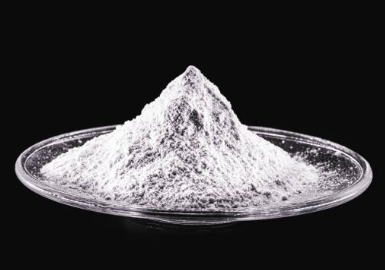
As a kind of compound that is insoluble in water, aluminum oxide is a stable oxide of aluminum, with a melting point of 2054℃ and a boiling point of 2980℃. Being ionizable at high temperatures, alumina is also known as bauxite in the mining industry, ceramics industry, and material science. From the point of view of physical properties, alumina is a white solid insoluble in water, the appearance of amorphous powder or sandy, odorless, tasteless, extremely hard, and easy to absorb moisture but not deliquescent. From the point of view of chemical properties, alumina is a typical amphoteric oxide, soluble in inorganic acids and alkaline solutions, almost insoluble in water, and non-polar organic solvents.
Aluminum oxide has excellent high-temperature stability and can remain stable at temperatures up to 2000℃. This makes it useful in a wide range of applications in high-temperature environments, such as refractory materials, ceramics, and additives in molten metals. Aluminum oxide does not react easily with other substances and has a high chemical stability. This makes it useful as a catalyst and adsorbent in the chemical industry.
Compounds that are insoluble in water: Styrene
Styrene is an organic compound that is formed by replacing one hydrogen atom of ethylene with benzene, with the molecular formula C8H8, a kind of aromatic hydrocarbon. It is a colorless liquid with a special aroma. Mainly produced by ethylbenzene, is an important monomer of polymers.
As a kind of compound that is insoluble in water, it is insoluble in water, but soluble in most organic solvents such as ethanol and ether. Styrene has a sweet-smelling viscous volatile liquid, but the odor becomes unpleasant when the concentration is too high. It is also toxic and has a peculiar odor. Styrene has strong chemical reaction properties because it has unsaturated double bonds and forms a conjugated system with the benzene ring, so it is easy to self-polymerize and polymerize, and generally free-radical polymerization of styrene occurs with heat or catalyst. Styrene is combustible and can form explosive mixtures with air.
Styrene is an important industrial raw material for the preparation of plastics, resins, and synthetic rubber monomers. Its self-polymerisation can produce polystyrene resins, and can also be copolymerised with many other unsaturated compounds to produce a wide range of engineering plastics and rubbers for different applications.
Conclusion
This article mainly talks about different types of compounds that are insoluble in water. Also, the different functions of these special materials are elaborated in detail. After knowing these materials, I believe you must understand how to choose them.
Looking for chemical products? Let suppliers reach out to you!
You May Interested In


Glow70/KLOW80 99% China Peptides Warehouse Direct Delivery Lyophilized Powder in Stock
$169/UNIT FOB


2026-10-25
Trade Alert
Delivering the latest product trends and industry news straight to your inbox.
(We'll never share your email address with a third-party.)

Related News
-
Magnesium Chloride (MgCl₂): Properties, Uses, and Applications
-
Flavin Adenine Dinucleotide (FAD): Functions and Applications
-
Dicalcium Phosphate: Properties, Uses, and Applications
-
Nature’s Blueprint, Science’s Edge: Corteva Unveils Twin Breakthroughs to Tackle the $70 Billion Insect Threat
-
Uses and Properties of Chromium Oxide
-
Chemical Properties and Uses of Caesium Fluoride
-
SiO2: Properties, Uses, and Applications
-
Applications of Copper Sulfate Pentahydrate
-
Key Reactions and Uses of Allene
-
Uses of Sodium Acetate Trihydrate
Recommend Reading
-
![Uses of Sodium Citrate Dihydrate in Food Industry]()
Uses of Sodium Citrate Dihydrate in Food Industry
-
![Uses and Benefits of Sodium Selenite]()
Uses and Benefits of Sodium Selenite
-
![Applications and Safety of Sodium Dichromate]()
Applications and Safety of Sodium Dichromate
-
![Chemical Reactions and Uses of Stilbene]()
Chemical Reactions and Uses of Stilbene
-
![Uses of Dithiothreitol in Laboratories]()
Uses of Dithiothreitol in Laboratories
-
![February Petrocoke Market Trends: First Decline, Then Rise]()
February Petrocoke Market Trends: First Decline, Then Rise
-
![US-Iran Signals Easing, Plasticizer Supply Chain Stabilizes]()
US-Iran Signals Easing, Plasticizer Supply Chain Stabilizes
-
![Coke market conditions stabilize in China]()
Coke market conditions stabilize in China
-
![Melamine Stops Falling and Begins to Rebound; Short-Term Trend Strengthens; Golden Cross Awaits Confirmation]()
Melamine Stops Falling and Begins to Rebound; Short-Term Trend Strengthens; Golden Cross Awaits Confirmation
-
![This Week's Isopropyl Alcohol Market Prices Continue to Fall (6.11-6.18)]()
This Week's Isopropyl Alcohol Market Prices Continue to Fall (6.11-6.18)