Reduction of Benzil With Sodium Borohydride | Detailed Explanation
Have you ever heard of the reduction of benzil with sodium borohydride? The experiment of reduction of benzil with sodium borohydride contains many chemical knowledge. In this article, we will talk about the reduction of benzil with sodium borohydride and explain the definition of reduction in chemistry for you.
What is benzil?
Benzil is a yellow crystal or powder at room temperature, melting point of 94.8 C. It can be used as an intermediate in organic synthesis. Under UV light irradiation, benzil can be cleaved to free radicals, which can initiate cross-linking between polymer chains, and therefore can also be used as a photoinitiator for polymer curing. Some studies have shown that benzil is a selective inhibitor of carboxylesterase.
What is sodium borohydride?
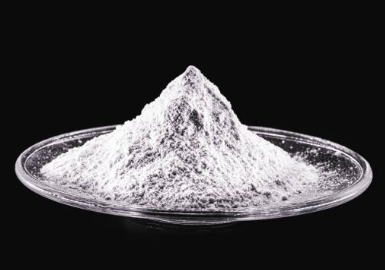
Sodium borohydride is a white solid powder or globule. It is stable in aqueous solutions at pH 14 and decomposes rapidly in neutral or acidic solutions. It is soluble in methanol and ethanol but decomposes to borates. It is soluble in polyethylene glycol, and isopropanol and stable in their solutions.
Sodium borohydride is a mild and chemoselective reducing reagent, a member of the borohydride family. It is widely used as a reducing agent in organic synthesis and has a very strong reduction of carbonyl groups. The selective reduction of functional groups can be realized by controlling the reaction conditions or choosing different reaction solvents.
What is a reduction in chemistry?
Reduction is a reaction process in which atoms and ions in the molecule of an inorganic substance add a negative charge; or in the molecule of an organic substance, hydrogen atoms are added and oxygen atoms are reduced.
A chemical reduction reaction is a process in which an atom or ion loses its oxidized state and gains a reduced state. In a chemical reaction, substances can undergo both oxidation and reduction. Oxidation is when a substance loses electrons, while reduction is when a substance gains electrons. In a chemical reduction reaction, one substance undergoes an oxidation reaction while another substance undergoes a reduction reaction, and there is an interconversion between the oxidized and reduced states of the two.
Chemical reduction reactions are widely used in the preparation of metals. For example, in ironmaking, iron ore is reacted with a reducing agent at high temperature to reduce the iron oxides in the iron ore to metallic iron.
Reduction of benzil with sodium borohydride
Benzil contains an aldehyde and a ketone. The aldehyde or ketone will be attacked by sodium borohydride from both sides, resulting in a racemic product of the R and S enantiomers. If only one carbonyl group is reduced, a racemic mixture of benzoin will result. The result of reducing both carbonyl groups is either meso-hydrobenzoin or a racemic mixture of hydrobenzoin. The molecule has a chiral center after the first reduction, which causes the second reduction to occur on one side of the ketone. Consequently, the racemic ormeso hydrobenzoin would be formed. As a result, five different goods might be produced.
This is a catalytic hydrogenation reaction to reduce benzil with sodium borohydride. Five different compounds could arise from a benzil reduction, in particular, meso-hydrobenzoin, racemic hydrobenzoin, and racemic benzoin.
Steps of reduction of benzil with sodium borohydride
1. Fill a 50-mL Erlenmeyer flask with 5 mL of 95% ethanol and 0.5g of benzil.
2. On a heated plate, reheat the mixture until the benzil dissolves. Avoid boiling!
3. After dissolving, run a cold tap over the solution in the E. flask.
4. To further dissolve the benzil, add 0.1g of excess NaBH4. This is where the redox reaction happens.
5. The solution will exhibit a yellow tint that will disappear after 10 minutes. When clear, pour in 5 milliliters of water and bring it to a boil.
6. Filter if the solution is unclear.
7. To fully saturate the solution, add 10 mL or less of water. Allow to solidify.
8. Use suction filtration to collect the white product.
9. The product was dried, the melting point was measured, and it was weighed to find the yield percentage.
10. Describe which isomer of the product is obtained and why, using the melting point as a guide.
Conclusion
After reading this article, you might know more details about the reduction of benzil with sodium borohydride. Perhaps the most interesting substance for the study of reduction is benzil itself since it yields a variety of compounds when employed in combination with other reducing agents or under different conditions.
Looking for chemical products? Let suppliers reach out to you!
You May Interested In


Glow70/KLOW80 99% China Peptides Warehouse Direct Delivery Lyophilized Powder in Stock
$169/UNIT FOB


2026-10-23
Trade Alert
Delivering the latest product trends and industry news straight to your inbox.
(We'll never share your email address with a third-party.)

Related News
-
What is HCO3? (Bicarbonate Ion Function & Normal Levels)
-
PEG (Polyethylene Glycol): Uses in Pharma, Cosmetics, and PEGylation
-
Chemical Reactions and Uses of Stilbene
-
Uses of Dithiothreitol in Laboratories
-
Calcium Hypochlorite: Properties, Uses, and Safety
-
Applications of Diphenyl Cyanide
-
Chemical Properties of Dibenzylideneacetone
-
Bivalirudin: Medical Uses, Properties, and Safety
-
SiO2: Properties, Uses, and Applications
-
Applications and Safety of Sodium Dichromate
Recommend Reading
-
![Uses and Benefits of Sodium Selenite]()
Uses and Benefits of Sodium Selenite
-
![Isopropyl Alcohol (IPA) vs Ethanol: Which Solvent or Disinfectant is Better?]()
Isopropyl Alcohol (IPA) vs Ethanol: Which Solvent or Disinfectant is Better?
-
![Sodium Hypochlorite: Uses, Concentration Guide, and Critical Safety Hazards]()
Sodium Hypochlorite: Uses, Concentration Guide, and Critical Safety Hazards
-
![What is Trametenolic Acid? (Structure, Sources & Research)]()
What is Trametenolic Acid? (Structure, Sources & Research)
-
![Sulfuric Acid (H2SO4): Properties, Battery Uses, and Extreme Safety Hazards]()
Sulfuric Acid (H2SO4): Properties, Battery Uses, and Extreme Safety Hazards
-
![Both Supply and Demand Weak, Toluene Market Experiences Volatile Decline]()
Both Supply and Demand Weak, Toluene Market Experiences Volatile Decline
-
![September Isooctanol Prices in China Surge Before Declining]()
September Isooctanol Prices in China Surge Before Declining
-
![August Isooctanol Market Prices Consolidate at High Levels]()
August Isooctanol Market Prices Consolidate at High Levels
-
![Polyethylene Rises First, Then Falls—High-Range Volatility]()
Polyethylene Rises First, Then Falls—High-Range Volatility
-
![Fundamentals Strengthen, Butadiene Market Rises in China]()
Fundamentals Strengthen, Butadiene Market Rises in China