Chemical Reaction Between Lithium Fluorine And Other Substances
Lithium fluoride is an inorganic fluorine product commonly used as a white powder at room temperature It is a very insoluble substance. Due to its good physicochemical characteristics, it has been extensively applied in aluminum, ceramics, optics, and many more industries. Here in this article, I am going to reveal the mystery of lithium fluorine and also let you know about some of the chemical reactions between lithium fluorine and other compounds.
Understanding lithium fluorine
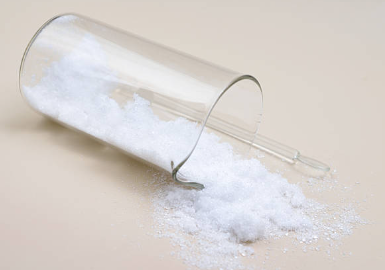
Before learning the chemical reactions between lithium fluorine and other compounds, let’s figure out what lithium fluorine is first. Lithium fluoride is an inorganic compound that crystallizes in the form of white crystals at room temperature and has been in great demand due to the play of many physicochemical properties in many fields.
In addition to being an excellent conductor and very chemically inert, it also has a very high melting and boiling point which enables it to be able to withstand various high temperatures. These are the properties that have lent lithium fluoride usage in many fields for example in the electronics industry, optical manufacturing industries, metallurgical technology, and so on.
Chemical reaction between lithium fluorine and H2O
First of all, lithium fluoride interacts with water; during the interaction, hydrogen is released. This is represented by the following reaction equation: This is represented by the following reaction equation:
2LiF + 2H2O → 2LiOH + H2
Hydrogen is one of the most inflammable things, and when dispersed in the air, it provides an inflammable oxygen-hydrogen gas mixture. When it happens, this mixture when exposed to an ignition source or spark leads to combustion, fire, or even an explosion as a result of flames.
Secondly, the reaction also produces hydrogen fluoride gas, which is represented by the following reaction equation:
2LiF + 2H2O → 2LiOH + H2↑
Hydrogen fluoride is a highly corrosive and strong acid as well as a toxic agent. It can have white fumes when mixed with water vapor and can cause skin, eye, and respiratory tract irritation.
Chemical reaction between lithium fluorine and acid
Lithium fluoride may react under acidic conditions, especially when encountering strong acids. This is because lithium fluoride is a weak acid salt, and when it encounters a strong acid, it may produce the corresponding acid salt or decompose further, depending on the strength of the acid and the reaction conditions. For example, although lithium fluoride is insoluble in hydrochloric acid at room temperature, it may dissolve or react in high concentrations of hydrochloric acid or strong acids such as nitric acid and sulfuric acid.
The reaction temperature can affect the rate of reaction and the formation of products. With high temperatures, the reaction of lithium fluoride with acids may be more violent. It can react with concentrated sulphuric acid at elevated temperatures to form lithium sulfate (Li₂SO₄) and hydrogen fluoride (HF) gas. The reaction equation is 2LiF + H₂SO₄ = Li₂SO₄ + 2HF↑. This is a typical acid-base reaction in which lithium fluoride as a weak acid salt reacts with a strong acid, sulphuric acid, to form the corresponding acid salt and gas.
Application of lithium fluoride
1. Ceramic industry: lithium fluoride has the function of a flux which can lower the combustion temperature in the ceramic industry and enhance the ability of the material to withstand rapid temperature changes, thereby helping to make the ceramic products possess higher quality and reliability.
2. Glass industry: lithium fluoride has significant uses in the glass industry as well; for example, it can be used to manufacture fluoride glass, and hence, fluoride glass has a higher quality, light transmission, and refractive index. High-purity lithium fluoride can also be used in applications such as in spectrometers and X-ray monochromator prisms.
3. Metallurgical industry: In the aluminum electrolysis process, lithium fluoride is added as an electrolyte constituent that enhances the conductivity of current and the efficiency of the current thereby making it possible to produce more aluminum and at the same time pay less for the raw materials. Further, it enhances the wetting characteristic of the carbon anodes making the electrolysis process more stable and efficient.
4. Electronics industry: Lithium fluoride is also known for its use in the electronics industry since it can be used as one of the raw materials in lithium-ion batteries which offers a stable energy supply for electronics products. It can also used as an analytical crystal in wavelength-analysis type X-ray fluorescence spectrometer which plays an important technical part in material analysis.
5. Other fields: Besides the above fields, lithium fluoride can also be used as a desiccant, a flux, and so on to assume an important position in the enamel industry and the manufacture of optical glass and other industries.
Looking for chemical products? Let suppliers reach out to you!
You May Interested In


Glow70/KLOW80 99% China Peptides Warehouse Direct Delivery Lyophilized Powder in Stock
$169/UNIT FOB


2026-10-25
Trade Alert
Delivering the latest product trends and industry news straight to your inbox.
(We'll never share your email address with a third-party.)

Related News
-
Flavin Adenine Dinucleotide (FAD): Functions and Applications
-
EFSA Reviews Clodinafop Risk
-
Vanillin: Properties, Uses, and Safety
-
Paraffin Wax vs. Beeswax: Candles, Cosmetics, and Industrial Applications
-
Lanolin: Benefits for Skin, Cosmetic Uses, and Allergy Risks
-
Isoascorbic Acid: Uses and Safety
-
Understanding PCl5: Compound Name and Uses
-
France’s Vineyards Find a New Shield: Eden’s Mevalone Enters the Frontline of a Changing Fungicide Era
-
India Unleashes a Triple-Action Defender: Parijat Introduces NILANIX SC into the Rice Battlefront
-
Sodium Hydroxide (Caustic Soda): Soap Making, Cleaning, and pH Control Guide
Recommend Reading
-
![Thymol Gel Wins EPA Approval for Beekeepers]()
Thymol Gel Wins EPA Approval for Beekeepers
-
![Nature’s Blueprint, Science’s Edge: Corteva Unveils Twin Breakthroughs to Tackle the $70 Billion Insect Threat]()
Nature’s Blueprint, Science’s Edge: Corteva Unveils Twin Breakthroughs to Tackle the $70 Billion Insect Threat
-
![Applications of Copper Sulfate Pentahydrate]()
Applications of Copper Sulfate Pentahydrate
-
![Key Reactions and Uses of Allene]()
Key Reactions and Uses of Allene
-
![Uses of Sodium Acetate Trihydrate]()
Uses of Sodium Acetate Trihydrate
-
![Premium Global Chemical Sourcing Requests (6-8July, 2026)]()
Premium Global Chemical Sourcing Requests (6-8July, 2026)
-
![In October, China's BDO market showed a weak consolidation]()
In October, China's BDO market showed a weak consolidation
-
![Business Society’s September 15, 2026, Petroleum Coke Trend Analysis: Volatile but Relatively Strong]()
Business Society’s September 15, 2026, Petroleum Coke Trend Analysis: Volatile but Relatively Strong
-
![EFSA Reviews Clodinafop Risk]()
EFSA Reviews Clodinafop Risk
-
![Costs Decrease, Weak Demand, October Isobutanol Prices Fluctuate and Decline in China]()
Costs Decrease, Weak Demand, October Isobutanol Prices Fluctuate and Decline in China