Environmental Impact Assessment Public Announcement for the 10,000-ton Xanthan Gum Project by Inner Mongolia Military Creation United Biological Technology Co., Ltd.
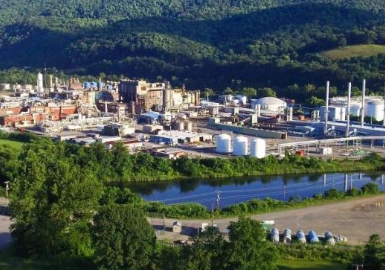
Recently, the environmental impact assessment information for the 10,000-ton xanthan gum project by Inner Mongolia Military Creation United Biological Technology Co., Ltd. has been publicly announced on relevant websites. The project is located in the Agricultural Industry Park of Jinshan Town, Guyang County, Baotou City, Inner Mongolia Autonomous Region, covering an area of 87.5 acres (approximately 56,695 square meters) with a building density of 1.0. The construction includes 45,000 square meters of factory space, 9,195 square meters for office and research areas, and a 2,400-square-meter energy center. Upon completion, the project aims to achieve an annual production of 10,000 tons of xanthan gum, along with by-products such as pectin, polysaccharides, fructose, and amino acids.
Xanthan gum is an extracellular acidic polysaccharide produced by the fermentation of Xanthomonas campestris. The production process involves multiple steps, including carbohydrate fermentation, ethanol extraction, drying, and pulverization, ultimately yielding high-molecular microbial polymers. Xanthan gum is considered one of the most superior biogums internationally due to its thickening, suspending, emulsifying, and stabilizing properties, and it is widely used in the food, pharmaceutical, fine chemical, agriculture, and petroleum drilling sectors.
From a market development perspective, the demand for xanthan gum has been steadily increasing in recent years. In 2021, the industry experienced a decline in production and capacity utilization due to the pandemic, but in 2022, the Russia-Ukraine war led to tightening global energy supplies, significantly increasing the demand for xanthan gum, which in turn raised prices. The petroleum and food industries are the main application fields for xanthan gum, accounting for approximately 55% and 35% of sales share, respectively. In the future, corn prices, oil production, and trade policies will be key factors influencing market development. According to industry forecasts, by 2030, China's xanthan gum market size is expected to reach 1.911 billion yuan, with an average annual compound growth rate of about 5.16% from 2024 to 2030.
In recent years, the competitive landscape of the xanthan gum industry has gradually intensified, with many domestic and international companies actively laying out new production capacities to increase market share. Major producing companies include domestic firms such as Fufeng Group, Meihua Biotechnology, Jianlong Biotechnology, Zhongxuan Biotechnology, and Hebei Xinhao Biological Chemical, as well as international giants like CP Kelco, Jungbunzlauer, ADM, Cargill, and Vanderbilt Minerals. From 2023 to 2024, various regions in China have successively launched a series of new xanthan gum projects. For example:
- Ningxia Benda Biotechnology plans to invest 380 million yuan to construct a 10,000-ton capacity project;
- Baotou Huazi Industry plans to invest 400 million yuan in the first phase of a 20,000-ton xanthan gum project;
- Xinjiang Meihua plans to invest 168 million yuan to increase its existing total capacity from 48,000 tons to 63,000 tons;
- Northwest Biotechnology (Ningxia) plans to invest 1.516 billion yuan to build a comprehensive project for producing 16,000 tons of xanthan gum and other gums annually;
- Yihai Kerry Biotechnology Co., Ltd. in Qiqihar, Heilongjiang, has also completed the filing and public announcement for its 20,000 tons/year xanthan gum phase one project.
The 10,000-ton xanthan gum project by Inner Mongolia Military Creation United Biological Technology Co., Ltd. is one of the significant new production capacities in China's xanthan gum industry, marking the further expansion of the industry to meet the growing market demand.

You May Interested In


High Quality β-Nicotinamide adenine dinucleotide CAS 53-84-9 NADwith ready stock and best price
$3E+1/UNIT FOB


2026-10-24
Trade Alert
Delivering the latest product trends and industry news straight to your inbox.
(We'll never share your email address with a third-party.)

Related News
-
India Launches Concentrated Anti-Dumping Actions Against Eight Categories of Chinese Chemicals, Covering APIs/Intermediates, Polyurethanes, and Refrigerants
-
Shandong’s Export Growth Is 2.8%; This Category Is 19%: Shandong Has a Chokehold on the Upstream of Global Manufacturing
-
Middle East Crude Exports Rebound Sharply in September as Saudi Arabia Returns to Market at 5.4 Million bpd
-
Saudi Aramco Weighs Discounts of Up to $9/Barrel on Oman STS Crude as Freight Costs Surge
-
Iran Closes Strait of Hormuz to All Vessels: Global Chemical Trade Gets Choked
-
Solvay's "Slimming Action": Soda Ash Production Capacity in Spain Slashed by 180,000 Tons, 77 Jobs to Go
-
U.S. Fighter Jet Strikes Commercial Cargo Ship in Gulf of Oman, Disabling Propulsion
-
Phillips 66 Locks Out 385 Workers at 275,000-bpd Bayway Refinery
-
Behind Japan's Tungsten Hexafluoride Crisis: Can China's Electronic Specialty Gases Seize a New Opportunity?
-
TSMC, Samsung, and SK Hynix Scramble for Electronic-Grade Hydrofluoric Acid as High-End Supply Tightens; Some Suppliers Raise Prices by 30% This Year
Recommend Reading
-
![Merck Wins Approval for the World’s First Oral PCSK9 Drug, with Potential Annual Sales of $5 Billion]()
Merck Wins Approval for the World’s First Oral PCSK9 Drug, with Potential Annual Sales of $5 Billion
-
![Celanese to Close Acetate Tow Plant in Lanaken, Belgium by 2026]()
Celanese to Close Acetate Tow Plant in Lanaken, Belgium by 2026
-
![Private Equity Firm Acquires Lyons Magnus for About $1 Billion as Beverage and Nutrition Ingredients Consolidate]()
Private Equity Firm Acquires Lyons Magnus for About $1 Billion as Beverage and Nutrition Ingredients Consolidate
-
![Kraton Announces Strategic Plan to Streamline Polymer Operations in Berre, France]()
Kraton Announces Strategic Plan to Streamline Polymer Operations in Berre, France
-
![Major Fire Hits China-Russia Joint 2.7 Million T/Y Polyolefins Project, Killing 6 Chinese Nationals and Injuring 152 People]()
Major Fire Hits China-Russia Joint 2.7 Million T/Y Polyolefins Project, Killing 6 Chinese Nationals and Injuring 152 People
-
![Shengyi Society’s Market Outlook for Caustic Soda on August 25, 2026: Volatile and Consolidating]()
Shengyi Society’s Market Outlook for Caustic Soda on August 25, 2026: Volatile and Consolidating
-
![Business Society’s Market Outlook for Caustic Soda on August 26, 2026: Volatile Consolidation]()
Business Society’s Market Outlook for Caustic Soda on August 26, 2026: Volatile Consolidation
-
![Business Society’s Market Outlook for Fuel Oil 180CST on August 25, 2026: Volatile]()
Business Society’s Market Outlook for Fuel Oil 180CST on August 25, 2026: Volatile
-
![Business Society’s Market Outlook for Polyester Staple Fiber on August 24, 2026: Volatile]()
Business Society’s Market Outlook for Polyester Staple Fiber on August 24, 2026: Volatile
-
![Business Society’s PTA Market Outlook for August 24, 2026: Volatile]()
Business Society’s PTA Market Outlook for August 24, 2026: Volatile