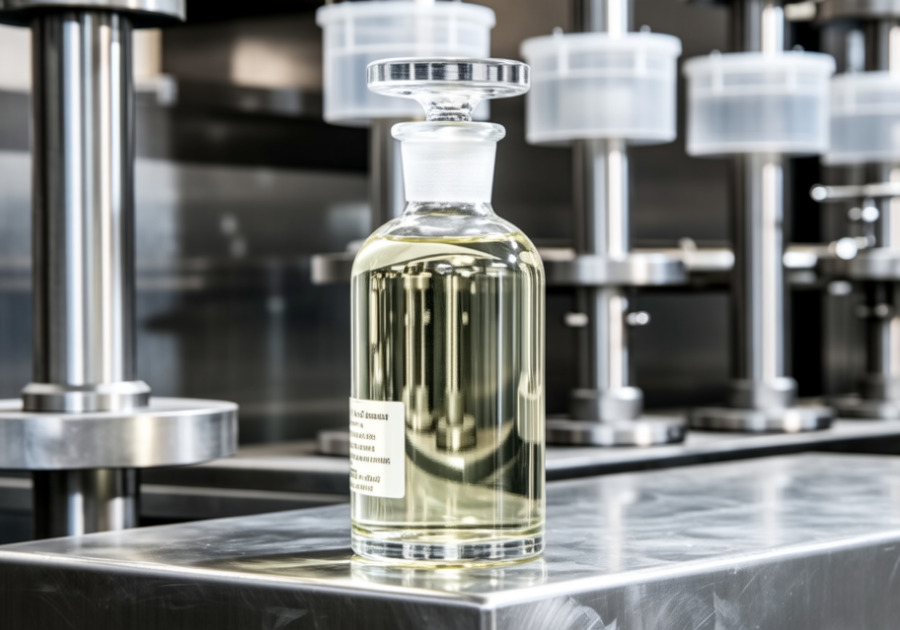
Roquette Beauté Launches a Compactable Plant-Based Sensory Powder
Roquette Beauté recently launched the innovative plant-based sensory powder Beauté by Roquette ST 305, which uses patented enzymatic technology to reconstruct the porous structure of corn starch, providing the beauty industry with a natural solution that is both sustainable and high-performance. This white powder does not contain talc and nanoparticles, is completely biodegradable, and has been successfully used in the fields of makeup, skin care, personal care and fragrance.
This ingredient achieves super compaction performance through a unique loose porous structure, which can be adapted to loose powder formulas and solid products such as pressed powder. Experimental data shows that its color retention performance is on par with talc and porous silica beads, and its whiteness value (L*=92.4) is significantly higher than traditional materials such as talc and silica, which can reduce the addition of additional colorants in the formula and help brands reduce the cost of makeup products. It is worth noting that compared with natural corn starch, this powder presents a warmer yellow tone while maintaining high brightness, providing a unique aesthetic option for product development.
In terms of functionality, ST 305 demonstrates excellent matte oil control. In foundation formula testing, adding this ingredient can reduce gloss by 96%, and its sebum absorption efficiency exceeds that of natural corn starch and silica beads, and is comparable to that of synthetic material PMMA. When applied to loose powder formulas, a 65% concentration of ST 305 can effectively smooth fine lines around the eyes, blur skin blemishes, and create a youthful makeup effect. For lip products, its delicate texture can significantly eliminate oiliness and achieve a long-lasting matte makeup.
Bénédicte Courel, general manager of Roquette Beauté, pointed out that this breakthrough ingredient accurately responds to the market's demand for clean labels. Its unique oil-water affinity gives formulators a high degree of creative freedom, allowing them to develop innovative products from oil-control skin care products to long-lasting makeup. At present, the technology has entered the patent application stage, and laboratory data shows that it has established new industry benchmarks in terms of ecotoxicity, use efficiency and cost control.

You May Interested In


High Quality β-Nicotinamide adenine dinucleotide CAS 53-84-9 NADwith ready stock and best price
$3/UNIT FOB


2026-10-11
Trade Alert
Delivering the latest product trends and industry news straight to your inbox.
(We'll never share your email address with a third-party.)

Related News
-
Roquette Beauté Opens Cosmetics Co-Innovation Center in Shanghai
-
Roquette Beauté appoints Barentz as U.S. distribution partner
-
Wanhua Chemical’s 2025 Revenue Exceeds RMB 200 Billion While Net Profit Remains Under Pressure
-
Platinum Chemotherapy Shortages Expose the Fragility of Essential API Supply
-
Fertilizer Costs Rise as Middle East Tensions Pressure Global Food Production
-
Fertilizer Costs Rise as Middle East Tensions Pressure Global Food Production
-
Can Lotte Chemical's Four Growth Pillars Support Its New Valuation After Spinning Off Basic Chemicals?
-
Global Trade Data for Epoxy Resin in 2025 Released: Asia Accounted for $640 Million in Imports, Vietnam Emerges as Top Buyer
-
India Launches Concentrated Anti-Dumping Actions Against Eight Categories of Chinese Chemicals, Covering APIs/Intermediates, Polyurethanes, and Refrigerants
-
Rhine Drought Disrupts German Chemical Logistics, Raising Supply Risks for BASF, Covestro and Evonik
Recommend Reading
-
![China’s PE, PP and PVC Exports Rise as Stockpile Releases Reshape Global Supply]()
China’s PE, PP and PVC Exports Rise as Stockpile Releases Reshape Global Supply
-
![Global Oil Inventories Fall: Restocking Demand May Keep Petrochemical Costs Supported]()
Global Oil Inventories Fall: Restocking Demand May Keep Petrochemical Costs Supported
-
![European Petrochemicals Enter 'Era of Downsizing' as Dow, TotalEnergies, Shell Exit Older Cracker Assets]()
European Petrochemicals Enter 'Era of Downsizing' as Dow, TotalEnergies, Shell Exit Older Cracker Assets
-
Japanese Plastics Market Accelerates its Shifts to Recycled Materials and Bioplastics
-
![The $6 Billion Gold Rush: Generic Semaglutide Set to Reshape Global Pharma After Patent Cliff]()
The $6 Billion Gold Rush: Generic Semaglutide Set to Reshape Global Pharma After Patent Cliff
-
![Brief Summary of Pure Benzene Trends in March (March 1, 2026 - March 31, 2026) in China]()
Brief Summary of Pure Benzene Trends in March (March 1, 2026 - March 31, 2026) in China
-
![Cost-driven: Acrylonitrile prices rise slightly]()
Cost-driven: Acrylonitrile prices rise slightly
-
![March styrene market saw a significant increase]()
March styrene market saw a significant increase
-
![Relaxed Demand, Cyclohexanone Prices in Shandong Slightly Decline in April]()
Relaxed Demand, Cyclohexanone Prices in Shandong Slightly Decline in April
-
![Cost Support and Tightening Supply Fuel March Toluene Market Rally]()
Cost Support and Tightening Supply Fuel March Toluene Market Rally