Acetonitrile: Properties, Uses, and Safety
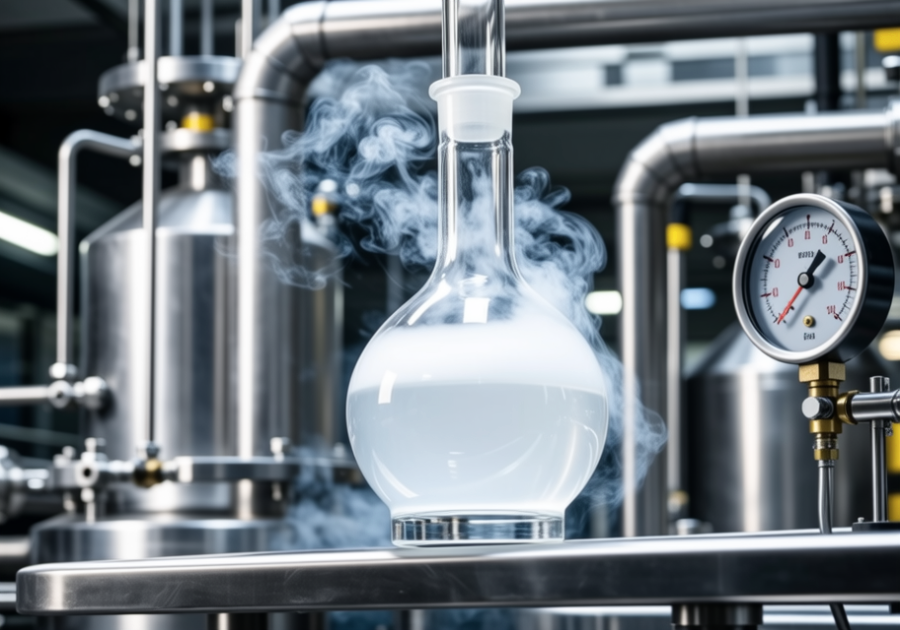
Acetonitrile is one of the most widely used organic solvents in scientific and industrial environments. Known for its high polarity, low viscosity, and excellent miscibility with water and many organic solvents, it plays a crucial role in analytical chemistry, pharmaceutical manufacturing, and chemical synthesis. This article explores Acetonitrile chemical properties, typical Acetonitrile uses in lab and industry, comparisons such as Acetonitrile vs ethanol, and important safety considerations for handling this compound.
What Is Acetonitrile?
Acetonitrile (CH3CN) is a colorless liquid with a faint ether-like odor. It is the simplest organic nitrile, consisting of a methyl group linked to a cyano group. Produced primarily as a by-product of acrylonitrile manufacture, it has become a valuable solvent in laboratories and industries alike due to its exceptional solvating properties and chemical stability.
Acetonitrile Chemical Properties
The chemical characteristics of acetonitrile are what make it such a versatile compound. It is a polar aprotic solvent with a dielectric constant of around 37 and a boiling point of 81.6°C. It dissolves a wide range of ionic and non-ionic compounds and is compatible with various chromatographic systems, particularly in high-performance liquid chromatography (HPLC). According to the U.S. Environmental Protection Agency (EPA), its low reactivity and stability under neutral conditions make it suitable for precision analytical work.
| Property | Value | Significance |
|---|---|---|
| Molecular Formula | CH3CN | Indicates simplest nitrile compound |
| Boiling Point | 81.6°C | Suitable for low-temperature distillation |
| Density | 0.786 g/cm³ | Light solvent with fast evaporation rate |
| Dielectric Constant | ≈37 | High polarity; excellent ion solvation |
| Flash Point | 2°C (closed cup) | Flammable; requires proper ventilation |
Acetonitrile Uses in Lab
In laboratory settings, acetonitrile is essential in chromatographic analysis, particularly HPLC, due to its ability to produce sharp, reproducible peaks. It is also employed in DNA and peptide synthesis, organic reactions such as the Strecker synthesis, and solvent extraction processes. Analytical chemists appreciate acetonitrile for its low UV absorbance and high purity availability, making it ideal for spectroscopic applications. In comparison to methanol or ethanol, it offers faster elution times and higher resolution in many analytical systems.
Acetonitrile Industrial Applications
Beyond the laboratory, acetonitrile serves multiple industrial purposes. It is used in the production of pharmaceuticals, batteries, perfumes, and synthetic fibers. In the pharmaceutical sector, it acts as a reaction solvent for active ingredient synthesis and purification. In the electronics industry, it functions as a solvent in lithium battery electrolytes due to its high dielectric constant and low viscosity, which enhance ion mobility. The European Chemicals Agency (ECHA) notes that acetonitrile’s stability under diverse manufacturing conditions makes it an efficient medium for chemical transformations on a large scale.
Acetonitrile vs Ethanol: A Practical Comparison
Although both acetonitrile and ethanol are popular solvents, they serve distinct functions. Ethanol is a polar protic solvent and participates in hydrogen bonding, which can affect reaction mechanisms and solubility behavior. Acetonitrile, on the other hand, is a polar aprotic solvent that does not form hydrogen bonds, making it more suitable for nucleophilic substitution reactions and analytical applications where minimal solvent interference is desired.
| Parameter | Acetonitrile | Ethanol |
|---|---|---|
| Polarity Type | Aprotic | Protic |
| Boiling Point | 81.6°C | 78.3°C |
| Hydrogen Bonding | No | Yes |
| Common Uses | HPLC, synthesis solvent | Disinfectant, biofuel, extraction solvent |
| Flammability | High | Moderate |
Safety and Handling
Although acetonitrile is highly useful, it requires careful handling. The compound is flammable and can release toxic hydrogen cyanide vapors upon decomposition. Exposure to acetonitrile may cause dizziness, nausea, or irritation. The U.S. National Institute for Occupational Safety and Health (NIOSH) recommends using acetonitrile in well-ventilated areas, wearing nitrile gloves, and avoiding open flames. In case of a spill, absorbent materials should be used and waste should be disposed of following local hazardous waste regulations.
Conclusion
Acetonitrile’s combination of chemical stability, polarity, and versatility makes it indispensable for both laboratory and industrial applications. Whether comparing Acetonitrile vs ethanol for analytical precision or exploring Acetonitrile industrial applications in advanced manufacturing, understanding its properties ensures safer and more efficient use. Following recommended safety protocols and environmental guidelines helps maintain compliance and sustainability in chemical practice.
Looking for chemical products? Let suppliers reach out to you!
TBHQ: Uses, Safety, and Health Effects
You May Interested In


Glow70/KLOW80 99% China Peptides Warehouse Direct Delivery Lyophilized Powder in Stock
$169/UNIT FOB


2026-10-20
Trade Alert
Delivering the latest product trends and industry news straight to your inbox.
(We'll never share your email address with a third-party.)

Related News
-
Vanillin: Properties, Uses, and Safety
-
Sodium Metabisulfite: Properties, Uses, and Safety
-
What is Amylum Starch? (Old Terminology & Modern Equivalent)
-
What is Element Stibium? (Antimony Facts & Uses)
-
Calcium Sulfate: Properties, Uses, and Applications
-
Chemical Properties and Uses of Tetraetil
-
Sodium Hypochlorite: Uses, Concentration Guide, and Critical Safety Hazards
-
Isopropyl Alcohol (IPA) vs Ethanol: Which Solvent or Disinfectant is Better?
-
Ethylene Glycol: Production, Uses, and Safety
-
Fipronil: Uses, Safety, and Environmental Impact
Recommend Reading
-
![Potassium Nitrate Reactions & Uses (KNO3)]()
Potassium Nitrate Reactions & Uses (KNO3)
-
![L-Alanine: Amino Acid Profile, Sports Nutrition, and Metabolic Role]()
L-Alanine: Amino Acid Profile, Sports Nutrition, and Metabolic Role
-
![Rubber Cement: Applications and Safety Guidelines]()
Rubber Cement: Applications and Safety Guidelines
-
![Salinity Solution: Preparation and Uses]()
Salinity Solution: Preparation and Uses
-
![Key Properties and Applications of Para-Nitrophenol]()
Key Properties and Applications of Para-Nitrophenol
-
![Weak demand leads to consolidation in China's anhydrous hydrogen fluoride market]()
Weak demand leads to consolidation in China's anhydrous hydrogen fluoride market
-
![Bottom-fishing and restocking boost ABS to a rapid rise in mid-January]()
Bottom-fishing and restocking boost ABS to a rapid rise in mid-January
-
![Premium Global Chemical Sourcing Requests (16-19July, 2026)]()
Premium Global Chemical Sourcing Requests (16-19July, 2026)
-
![Premium Global Chemical Sourcing Requests (4-7Jun, 2026)]()
Premium Global Chemical Sourcing Requests (4-7Jun, 2026)
-
![October Activated Carbon Prices First Rise, Then Fall]()
October Activated Carbon Prices First Rise, Then Fall