Tert Butylate: Properties and Applications
Tert butylate, most often as potassium tert-butoxide (KOtBu), is a highly effective, sterically hindered strong base widely used in chemical and industrial synthesis. It offers great selectivity but demands careful handling. This article explains its properties, tert butylate chemical uses, comparisons (tert butylate vs other butylates), tert butylate industrial uses, and tert butylate safety in detail. All information follows Google EEAT principles (Expertise, Authoritativeness, Trustworthiness).
1. What Is Tert Butylate?
Tert butylate refers to the alkoxide derived from tert-butanol, commonly the potassium salt (KOC(CH3)3). Because of the bulky tert-butyl group, the tert-butoxide ion is a strong base but a poor nucleophile. This feature makes it valuable in reactions that require deprotonation or elimination without unwanted substitution.
2. Key Properties
| Property | Value / Description |
|---|---|
| Molecular Formula | KOC(CH3)3 |
| Molar Mass | 112.21 g/mol |
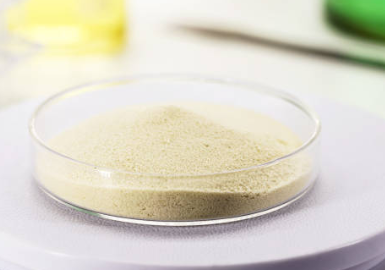
| Appearance | White to off-white crystalline solid, hygroscopic |
| Melting Point | 256–258 °C (decomposes) |
| Basicity | Very strong base, low nucleophilicity |
| Reactivity | Reacts violently with water, moisture sensitive |
Because of these properties, tert butylate is ideal where a strong but selective base is required.
3. Tert Butylate Chemical Uses
The main tert butylate chemical uses are centered on its strong base activity. It is used in:
- Deprotonation reactions: Produces carbanions or enolates efficiently.
- Elimination (E2) reactions: Prefers Hofmann (less substituted) products due to steric hindrance.
- Condensation and rearrangement reactions: Acts as a catalyst in Claisen, Michael, and Pinacol rearrangements.
- Pharmaceutical and agrochemical synthesis: Provides clean, anhydrous conditions for complex molecule formation.
4. Tert Butylate vs Other Butylates
When comparing tert butylate vs other butylates, key differences include:
- Steric size: Tert butylate is the most hindered, reducing its nucleophilicity.
- Reaction selectivity: It favors elimination (E2) over substitution (SN2).
- Basic strength: Slightly stronger base than n-butoxide or sec-butoxide.
- Handling: More sensitive to air and moisture, requires dry environments.
5. Tert Butylate Industrial Uses
In industry, tert butylate industrial uses include:
- Polymer and resin catalysts: Initiates polymerization in coatings and adhesives.
- Agrochemical production: Used to create intermediates under dry, basic conditions.
- Pharmaceutical manufacturing: Serves as a base in the synthesis of active pharmaceutical ingredients (APIs).
Major suppliers such as Evonik and Sigma-Aldrich provide KOtBu in both solid and solution forms for safe large-scale use.
6. Tert Butylate Safety
Tert butylate safety is critical. It is highly reactive and corrosive. Key precautions:
- Store in tightly sealed containers under inert or dry atmosphere.
- Avoid contact with moisture; reacts violently with water to produce flammable tert-butanol and caustic KOH.
- Use gloves, goggles, and protective clothing during handling.
- Follow proper waste disposal and emergency neutralization procedures.
7. Summary and Practical Guidance
Tert butylate is a powerful, selective base essential in modern organic synthesis. It is best suited for E2 eliminations, deprotonations, and condensation reactions requiring high purity and control. Always ensure dry, controlled conditions and adhere strictly to safety standards.
FAQ
- Q1: Why is tert butylate less nucleophilic?
- Because the bulky tert-butyl group blocks approach to electrophilic centers, making it mainly act as a base.
- Q2: Can it be used in water?
- No. It reacts violently with water and must only be used in dry, aprotic solvents.
- Q3: What are common industrial applications?
- Used as a catalyst and base in polymer, pharmaceutical, and agrochemical manufacturing.
- Q4: How should tert butylate be stored?
- In sealed metal or glass containers under inert gas, away from heat, acids, and moisture.
Looking for chemical products? Let suppliers reach out to you!
You May Interested In


2026-09-28
Trade Alert
Delivering the latest product trends and industry news straight to your inbox.
(We'll never share your email address with a third-party.)

Related News
-
Oxalic Acid: Acidity (pKa), Sources, and Kidney Stone Risk
-
What is a Surfactant? (Definition, Types, and How They Work)
-
Benzyl Alcohol: Uses in Cosmetics, Preservative Efficacy, and Safety
-
Ammonia Chemical Formula: NH3 Structure & Properties
-
Chemical Raw Materials: How to Source Quality Suppliers & Understand Grades
-
Aluminum Sulfate: Industrial and Water Treatment Applications
-
Sodium Chloride (NaCl): Food Grade vs Industrial Grade Uses & Safety Data
-
India Unleashes a Triple-Action Defender: Parijat Introduces NILANIX SC into the Rice Battlefront
-
France’s Vineyards Find a New Shield: Eden’s Mevalone Enters the Frontline of a Changing Fungicide Era
-
Uses and Properties of Copper Acetate
Recommend Reading
-
![Vanillin: Properties, Uses, and Safety]()
Vanillin: Properties, Uses, and Safety
-
![L Phenyl Compounds: Properties, Benefits, and Uses]()
L Phenyl Compounds: Properties, Benefits, and Uses
-
![Isoascorbic Acid: Uses and Safety]()
Isoascorbic Acid: Uses and Safety
-
![Sodium Alginate: Properties, Uses, and Benefits]()
Sodium Alginate: Properties, Uses, and Benefits
-
![Rubber Cement: Applications and Safety Guidelines]()
Rubber Cement: Applications and Safety Guidelines
-
![Business Society’s September 3, 2026 Methanol Market Outlook: Clearly Upward Trend]()
Business Society’s September 3, 2026 Methanol Market Outlook: Clearly Upward Trend
-
![Business Society’s BDO Market Outlook on September 2, 2026: High-Level Fluctuations]()
Business Society’s BDO Market Outlook on September 2, 2026: High-Level Fluctuations
-
![Business Society’s Ethanol Market Outlook on September 3, 2026: Clearly Upward Trend]()
Business Society’s Ethanol Market Outlook on September 3, 2026: Clearly Upward Trend
-
![Both Supply and Demand Surge, Formic Acid Prices Gradually Rise]()
Both Supply and Demand Surge, Formic Acid Prices Gradually Rise
-
![Acrylic Prices Soar by Over 1 Year—Short-Term at High Levels, Medium-Term Under Pressure]()
Acrylic Prices Soar by Over 1 Year—Short-Term at High Levels, Medium-Term Under Pressure