Dow’s “Double Salvo”: Behind the €150/ton Hike, Europe’s Chemical Industry Is Being Strangled by a “Cost Noose”
On December 3, 2025—a seemingly ordinary winter day—Dow Europe Limited dropped two “price bombs” on the EMEAI (Europe, Middle East, Africa, and India) market: a €150/ton increase across all polyether polyols and a simultaneous €100/ton hike on all polyurethane systems. The announcement was calm and measured, citing the familiar refrain of “rising raw material, energy, and transportation costs.” But when viewed against the broader landscape of the global chemical industry, this move reveals far more than routine cost pass-through—it is a public declaration of a regional survival crisis.
As a global chemical titan, Dow’s pricing actions have long served as a market bellwether. This dual-track price increase across EMEAI not only exposes the deteriorating economics of European chemical manufacturing but also unveils a harsh truth: Europe’s once-proud chemical sector—renowned for its technology and quality—is being dragged into an “unsustainable” quagmire by its crippling cost structure.
The Triple Cost Symphony: Energy, Feedstocks, and Logistics in a “Death Spiral”
Dow explicitly attributed the hikes to “continuously rising raw material, energy, and transportation costs.” These three forces constitute the “three mountains” crushing European chemical producers.
First is energy cost. Although European natural gas prices have retreated from their 2022 peak of €300/MWh to around €50–60/MWh in 2025, they remain far above historical averages—and over 2.5 times higher than U.S. levels. For energy-intensive polyether polyol production (requiring high-temperature, high-pressure catalysis), energy accounts for 25–30% of total costs. Even at full capacity, per-unit energy allocation leaves margins paper-thin.
Second is feedstock pressure. Key raw materials like propylene oxide (PO) and propylene glycol (PG)—the backbone of polyether polyols—have seen sustained price increases since Q3 2025. Tightening supply from Asian PO plants due to environmental curbs or unplanned outages, coupled with persistently high crude oil prices amid geopolitical tensions, has driven up base petrochemical costs. Crucially, Europe suffers from severe domestic PO capacity shortages and relies heavily on imports, amplifying exposure to global price swings.
Third is logistics and compliance costs. The Red Sea shipping crisis continues to flare, keeping Asia-Europe freight rates 80% above pre-pandemic levels despite recent moderation. Meanwhile, the EU’s Carbon Border Adjustment Mechanism (CBAM) entered its substantive taxation phase in 2025, adding hidden export costs. Within EMEAI itself—from Rotterdam to Lagos, Dubai to Mumbai—inefficient inland transport and customs clearance create a “last-mile” cost black hole in warehousing and insurance.
Together, these forces form a self-reinforcing death spiral: rising costs → compressed margins → reduced investment → lower efficiency → even higher costs. Dow’s price hike is a desperate attempt to break this cycle.
Why Target EMEAI? A Precision “Regional Harvest”
Notably, Dow confined this price action strictly to the EMEAI region—not a global rollout. This strategy is deeply calculated.
In the Americas—especially along the U.S. Gulf Coast—Dow benefits from shale gas advantages, enjoying ultra-low ethylene and propylene feedstock costs that grant natural margin buffers, eliminating the need for aggressive price hikes. In Asia-Pacific, while cost pressures exist, local giants like Wanhua Chemical and BASF’s Zhanjiang Verbund site have erected formidable competitive barriers, making price increases risky due to potential customer attrition.
EMEAI, however, is Dow’s ideal “pricing testbed”:
- Europe: Weak overall demand, but high-end applications (e.g., automotive, wind turbine blades) exhibit low price sensitivity;
- Middle East & Africa: Lack large-scale polyether capacity, leaving downstream players—mostly SMEs—with minimal bargaining power;
- India: Rapid manufacturing expansion drives >12% annual PU demand growth, with high import dependency.
In short, EMEAI offers the “golden combo” of high demand elasticity and low supply substitution, allowing Dow to maximize profit recovery with minimal resistance. This isn’t cost pass-through—it’s a meticulously engineered regional value extraction.
Industry Ripple Effects: Downstream Faces a “Cost Avalanche”
Polyether polyols and PU systems are essential for soft foams, rigid foams, adhesives, and coatings—used in furniture, building insulation, automotive interiors, and cold-chain equipment. As one of the world’s top-three suppliers, Dow’s price hike will rapidly cascade through the entire value chain.
Take a household refrigerator: rigid PU insulation accounts for 8–10% of total unit cost. A €150/ton polyether increase (≈¥1,200 RMB) adds roughly ¥15–20 per unit. Seemingly trivial, but for an appliance maker producing tens of millions annually, that’s hundreds of millions in extra costs. And with the sector locked in fierce price wars, there’s virtually no ability to pass this on to end consumers.
Smaller downstream firms are even more vulnerable. A sofa manufacturer in Turkey confessed: “We have no long-term contracts—every purchase is spot-priced. When Dow hikes, our gross margin instantly drops from 12% to 6%.” Such businesses dot the EMEAI landscape, lacking scale or technical premium, forced to absorb shocks silently. By mid-2026, a wave of insolvencies, production cuts, or forced consolidations among weak polyurethane fabricators is inevitable.
| Downstream Application | Polyol Cost Share | Price Pass-Through Ability | Risk Resilience |
|---|---|---|---|
| Appliance Insulation | 8–10% | Low | Medium |
| Spray Foam (Building) | 15–20% | Medium | Low |
| Automotive Seat Foam | 12–15% | High | High |
| Footwear Adhesives | 20%+ | Very Low | Very Low |
The data is clear: the more labor-intensive and competitive the downstream segment, the less it can withstand upstream price shocks.
Dow’s Real Intent: Not Protecting Profits, But Preserving Operations
Dow emphasized that the hike is “critical to maintaining sustainable, high-quality, and reliable operations.” This statement warrants close reading. On the surface, it’s about service continuity—but it carries an implicit warning: without higher prices, future production cuts or even supply disruptions may follow.
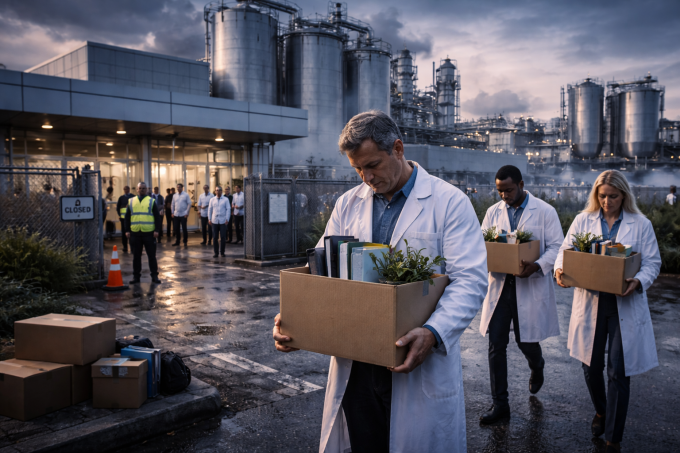
Indeed, since 2025, numerous European chemical plants have permanently shuttered due to poor economics. INEOS closed its German phenol unit; LyondellBasell reduced polyolefin runs in the Netherlands; even BASF has repeatedly warned that “certain businesses may exit Europe.” Dow’s move is both self-preservation and a signal to customers: accept higher prices—or prepare for alternatives, though few exist in EMEAI.
More profoundly, such price actions are reshaping the global polyurethane landscape. Capital and capacity are accelerating toward North America, China, and the Middle East. Wanhua is expanding polyether capacity in Fujian; Saudi SABIC is building integrated PU complexes; Europe, meanwhile, risks becoming a “high-cost, low-growth” periphery. While Dow hasn’t abandoned Europe, its strategic core has clearly shifted eastward—Zhanjiang, Houston, and Jubail are the future.
The Hike Isn’t the End—It’s the Tolling of Europe’s Chemical Twilight
Dow’s “double salvo” on December 3 may appear to be routine commercial maneuvering, but it is in fact a microcosm of Europe’s chemical industry in distress. When a century-old giant must rely on repeated price hikes just to sustain basic operations, its business model is teetering on the edge.
Uncontrollable costs, weak demand, and eroding competitiveness—the “iron triangle” of European chemicals—is collapsing. Dow can still stabilize through its global footprint, but countless local SMEs are vanishing quietly.
This €150/ton increase isn’t buying profit—it’s buying time. And time, it seems, is no longer on Europe’s side. As the global industrial map rapidly redraws itself, unless Europe fundamentally resolves its energy and cost structure, today’s price announcement is merely an echo in the twilight bell—resonant, yet tinged with the melancholy of decline.

You May Interested In


Glow70/KLOW80 99% China Peptides Warehouse Direct Delivery Lyophilized Powder in Stock
$169/UNIT FOB


2026-10-19
Trade Alert
Delivering the latest product trends and industry news straight to your inbox.
(We'll never share your email address with a third-party.)

Related News
-
Middle East Capital Moves In: SABIC Plans RMB 33 Billion Stake in Rongsheng Petrochemical
-
Argentina to Build Latin America’s Largest Urea Plant Under €1.3 Billion Contract
-
Multiple Chemical Industry Leaders Post Strong H1 Earnings Growth as Sector Profitability Revives
-
Türkiye Advances $3 Billion Petrochemical Cluster Targeting 17% of Domestic Polypropylene Demand
-
Dow Swings from an $801 Million Loss to an $802 Million Profit as Hormuz Disruption Lifts Polyethylene Prices
-
BASF-Evonik Takeover Faces Political Resistance as German State Defends Jobs and Independence
-
BASF Sues Apple Over Face Authentication Patents Used in Dozens of iPhones and iPads
-
BASF Raises Acid Chloride and Chloroformate Capacity by 30% at Ludwigshafen
-
Sinopec Oilfield Service Chairman Steps Down, Sinopec Shanghai Sales Branch Deputy GM Investigated on Consecutive Days
-
Ineos Rescues UK's Last Dichloroethane Plant
Recommend Reading
-
![AkzoNobel Invests €50 Million to Expand Aerospace Coatings Operations in the United States]()
AkzoNobel Invests €50 Million to Expand Aerospace Coatings Operations in the United States
-
![A Rare Vote of Confidence: INEOS to Invest €250 Million in French Cracker Plant]()
A Rare Vote of Confidence: INEOS to Invest €250 Million in French Cracker Plant
-
![Dow and Celanese Retreat: European and Korean Cutbacks as China Expands]()
Dow and Celanese Retreat: European and Korean Cutbacks as China Expands
-
![Toray to Transfer Stake in Soda Aromatic to Samyang]()
Toray to Transfer Stake in Soda Aromatic to Samyang
-
![Merck to Lay Off 150 Workers at US Gardasil Plant Amid Sales Weakness]()
Merck to Lay Off 150 Workers at US Gardasil Plant Amid Sales Weakness
-
![This week, China's acetone market continues to weaken]()
This week, China's acetone market continues to weaken
-
![Ethanol Market Conditions Show Signs of Recovery]()
Ethanol Market Conditions Show Signs of Recovery
-
![Applications of Caesium Iodide]()
Applications of Caesium Iodide
-
![This Week, China's Phenol Market Rises and Then Falls]()
This Week, China's Phenol Market Rises and Then Falls
-
![Ammonium Sulfate Market Prices Slightly Increase (11.17-11.21) in China]()
Ammonium Sulfate Market Prices Slightly Increase (11.17-11.21) in China