Antidumping Pressure Hits the Chemical Chain as Chinese Exports Face Higher Barriers in Europe
European chemical companies are filing antidumping complaints against Chinese imports at a new high.
The Financial Times previously reported that antidumping complaints by European chemical companies against Chinese chemical imports have reached a record level, with around half of the EU’s new trade defense cases involving chemical products.
Recent specific cases are also moving forward. On May 5, the European Commission announced final antidumping duties on imports of adipic acid from China, with duty rates ranging from 29.1% to 42.3%. On May 12, the EU also issued regulations imposing provisional antidumping duties on certain alkyl phosphate esters and their sodium salts from China. Market information shows that provisional duty rates on these products reached as high as 182.9% to 219.4%.
These cases show that European chemical trade protection is no longer a scattered set of events. It is becoming a systemic trend.
Chemicals Become a Focus of EU Trade Defense
The rising share of chemical products in new EU trade defense cases itself shows that European domestic producers are under significant pressure.
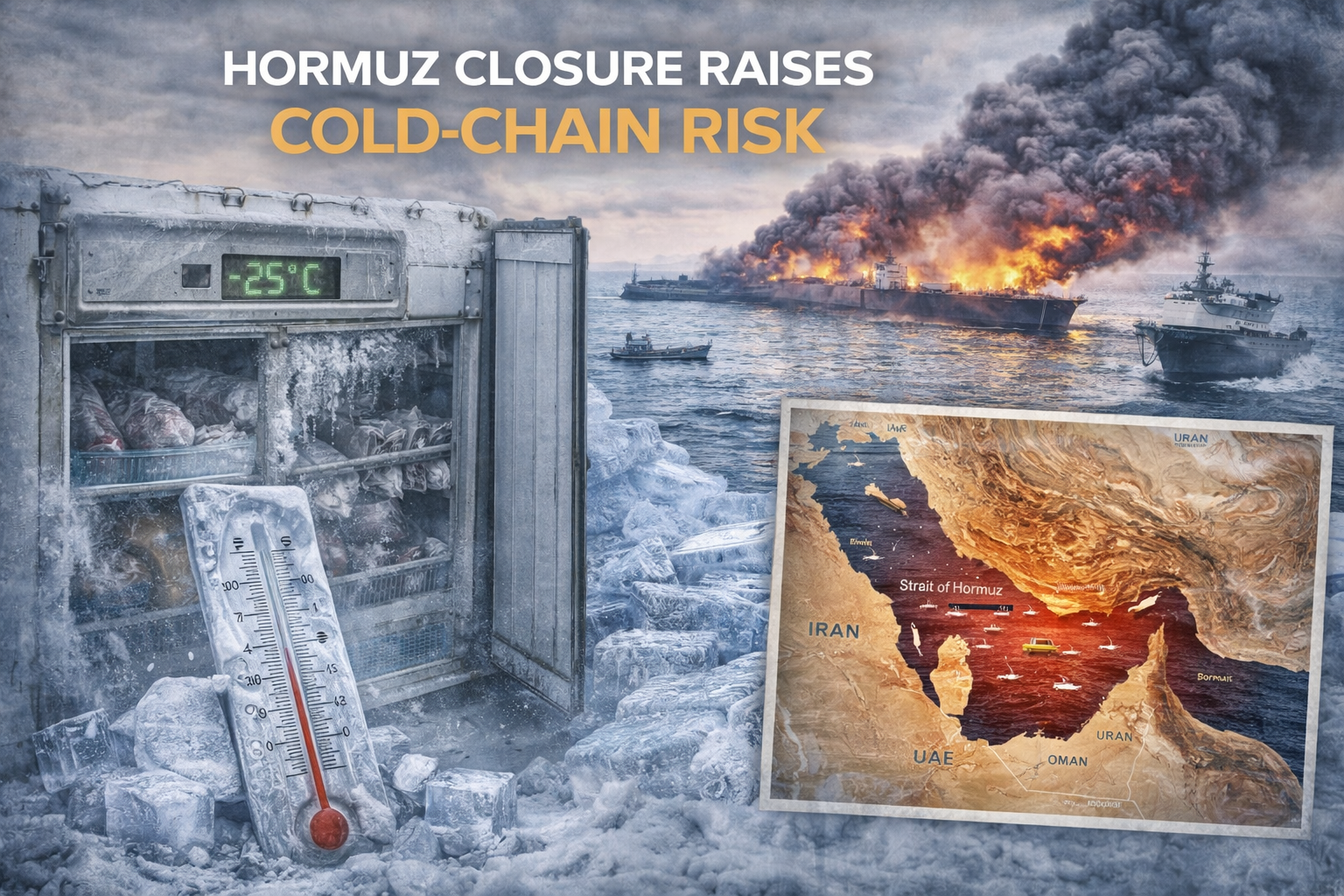
Over the past few years, Europe’s chemical industry has been squeezed by high energy costs, environmental and carbon-compliance pressure, weak demand, and competition from low-priced Asian supply. Basic chemicals, fine chemicals, intermediates, and functional materials have all been affected to varying degrees. When domestic companies cannot reduce costs quickly, trade remedies become an important tool for defending market prices and capacity utilization.
The rise in antidumping complaints is essentially the concentrated outbreak of tension between Europe’s chemical cost disadvantage and import price competition.
The cases involving adipic acid and certain alkyl phosphate esters and their sodium salts are representative. Adipic acid is used in nylon, polyurethane, plasticizers, and other sectors, making it an important chemical intermediate. Phosphonate-related products are widely linked to water treatment, agriculture, textiles, construction, and pharmaceutical-related chemical chains. These are not isolated products. They are foundation points for multiple downstream industries.
This shows that the EU is not only concerned about end consumer goods. It is focusing on the supply of key chemicals inside industrial value chains.
Antidumping Is Changing Export Pricing Logic
In the past, the main competitive factors for Chinese chemical exports to Europe were price, quality, delivery, and service. Now, antidumping is adding rule risk into the pricing system.
If a product category is placed under investigation, European buyers will reassess future duty rates, customs clearance risk, supply stability, and contract liability. Even before final duties are determined, the investigation itself changes procurement psychology. Customers may reduce purchases, ask suppliers to share potential duty risks, or shift to other origins.
An antidumping investigation does not start affecting the market only after the final ruling. The investigation itself changes trading logic.
For exporters, quotations cannot only consider production cost and margin. They must also consider price sensitivity in the target market, historical export prices, customer procurement structure, potential duty exposure, and response costs. Once duties are high, products that previously had price advantages can quickly lose competitiveness.
The provisional high duty rates on alkyl phosphate esters and their sodium salts deserve particular attention. If a product is subject to antidumping duties that are close to or several times higher than the product’s profit margin, trade flows may be forced to adjust. Importers will look for alternative origins, while exporters will need to reassess their European market strategy.
Rule Capability Becomes a New Export Threshold
The impact of antidumping cases on companies is not limited to duty rates.
During investigations, companies need to provide large volumes of information, including export prices, domestic sales prices, cost data, production processes, affiliated transactions, and sales channels. Whether data is complete, whether methods are consistent, and whether the evidence chain is clear can all affect the final determination.
Chemical exports are moving from “whether the product can be sold” to “whether the price can be explained, whether the data can be proven, and whether the procedure can be managed.”
This places higher demands on corporate management. In the past, some companies focused more on orders and delivery, with limited systematic preparation for trade-remedy risks in target markets. Now, companies that operate in Europe over the long term must build more standardized financial data, sales records, cost accounting, and compliance documentation systems.
Failing to respond or submitting weak materials may lead to more unfavorable duty rates. Active participation, clear data, and reasonable pricing logic may help companies seek better outcomes. In the future, rule capability will directly affect a company’s survival space in the European market.
European Domestic Industry Protection Will Continue
The record level of antidumping complaints reflects long-term pressure on Europe’s chemical industry.
High energy prices have weakened the competitiveness of European basic chemicals. Environmental and regulatory costs have increased operating pressure. Weak demand makes it difficult for companies to offset costs through volume growth. Low-priced products from China and other Asian suppliers further depress market prices.
Against this backdrop, it is likely that European domestic companies will continue using antidumping tools to defend market share and pricing systems. Chemical products that play basic value-chain roles, have broad downstream applications, and face strong import competition are especially likely to become trade-remedy targets.
Future attention may not be limited to bulk chemicals. More key intermediates and functional chemicals may also be drawn into trade remedy proceedings.
For Chinese chemical companies, this means the European market can no longer be treated simply as a stable export destination. Companies need to continuously monitor EU industrial policy, antidumping filings, customer procurement changes, and product risk levels.
Chemical Exports Enter a Stage of Comprehensive Competition
The rise in EU antidumping pressure marks a more complicated stage for chemical exports.
Cost advantage remains important, but it is no longer enough. Companies also need stable quality, compliance documents, transparent data, customer communication, investigation-response capability, and supply-chain risk management. For European customers, supplier selection will shift from a low-price focus toward a broader assessment of price, stability, tax risk, and compliance capability.
The core competitiveness of chemical exports is expanding from price advantage to rule adaptability.
This does not mean Chinese chemical companies have no opportunity in Europe. On the contrary, the more complex the rules become, the more the market will screen suppliers. Companies with long-term customer bases, clear data systems, stable quality, and active response capability can still preserve market positions. Companies relying only on low-price entry will face higher uncertainty.
The record high in EU antidumping complaints is a clear industry signal. Global chemical trade is moving from competition over capacity, cost, and delivery into competition over compliance, rules, and market access. The companies that go further will not only be those that can produce, but those that can operate sustainably within the rules system.

You May Interested In


High Quality β-Nicotinamide adenine dinucleotide CAS 53-84-9 NADwith ready stock and best price
$3/UNIT FOB


2026-10-04
Trade Alert
Delivering the latest product trends and industry news straight to your inbox.
(We'll never share your email address with a third-party.)

Related News
-
Sulfur Price Hits 7,633 CNY/Ton, Up Nearly Sixfold in a Year and a Half; Domestic Refining Giants Halt New Orders Due to Tight Supply
-
Chinese Urea Producers Receive a Timely Boost as Second Round of 2026 Export Quotas Nears 2 Million Tons
-
Coal Price Surge Coupled with El Niño Drives Urea Up by RMB 100/Ton in a Single Day
-
UAE Breaks Ground on World’s First Gigascale Round-the-Clock Renewable Energy Project, Setting a New Global Standard For Clean Energy
-
Kemira Acquires AquaBlue
-
When the Skin of Ships Gets More Expensive: A 30% Price Shock Is Quietly Rewriting the Cost Floor of Global Shipping
-
Arkema's New Singapore Plant Commences Operations, Tripling Polyamide Capacity
-
Kraton Announces Strategic Plan to Streamline Polymer Operations in Berre, France
-
Saudi Energy Facilities Hit as Middle East Feedstock Risk Spreads Toward the Red Sea
-
China Methanol Futures Hit Limit-Up as More Than 60% of Middle East Capacity Remains Offline
Recommend Reading
-
![Hormuz Closure Raises Cold-Chain Risk]()
Hormuz Closure Raises Cold-Chain Risk
-
![US Tariff Refunds Could Reshape Seafood Trade]()
US Tariff Refunds Could Reshape Seafood Trade
-
![Ten Ministries Jointly Issue Notice as Five Chemicals Are Officially Added to the Hazardous Chemicals Catalogue]()
Ten Ministries Jointly Issue Notice as Five Chemicals Are Officially Added to the Hazardous Chemicals Catalogue
-
![Aekyung Chemical Plans to Sell Its Ningbo Subsidiary]()
Aekyung Chemical Plans to Sell Its Ningbo Subsidiary
-
![DIC Raises Epoxy Resin and Curing Agent Prices by Up to 280 Yen/kg]()
DIC Raises Epoxy Resin and Curing Agent Prices by Up to 280 Yen/kg
-
![October Adipic Acid Market Weakens and Falls]()
October Adipic Acid Market Weakens and Falls
-
![Cost Decline, Weak Demand—Oxynol Prices Fluctuate and Fall This Week]()
Cost Decline, Weak Demand—Oxynol Prices Fluctuate and Fall This Week
-
![This week, the cyclohexane market in China mainly maintained a stable operation (10.20-10.27)]()
This week, the cyclohexane market in China mainly maintained a stable operation (10.20-10.27)
-
![Downstream Demand Lacks; DMF Market Rides Narrowly on a Weak Note]()
Downstream Demand Lacks; DMF Market Rides Narrowly on a Weak Note
-
![DMF Primarily in Oscillating Mode; Upside Potential Limited]()
DMF Primarily in Oscillating Mode; Upside Potential Limited