It is said that the two sides will meet in Beijing and China won't compromise
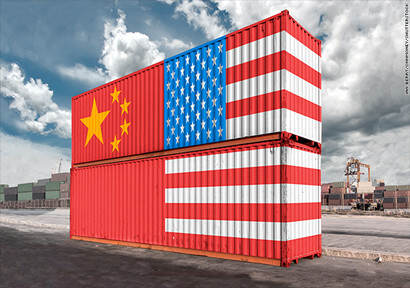
The eleventh round of China-US high-level economic and trade consultation concluded in Washington on Friday (10 th). Liu He, member of the Political Bureau of the CPC Central Committee, Vice Premier of the State Council and Chinese leader of the Sino-US Comprehensive Economic Dialogue, said in an interview after the consultation that the two sides had better communication and cooperation. The negotiations did not break down. On the contrary, they were only minor twists and turns in the negotiations between the two countries, which was inevitable. China was cautiously optimistic about the future of the negotiations. It is said that the economic and trade teams of the two sides will meet in Beijing in the future, continue to communicate and promote consultation.
Prior to that, at 0.01 Washington time, the US tariff on $200 billion of Chinese imports to the United States increased from 10% to 25%. In response, China issued a statement two minutes later, almost simultaneously announcing that it had to take the necessary counter-measures. The result is not surprising. Since February last year, the Sino-US economic and trade talks have been held for eleven rounds. Although important progress has been made, they have also been repeated several times. Talking about fighting may have become the norm of Sino-US economic and trade frictions. Prior to the current round of negotiations, the US side said it would upgrade tariffs, which led to fears that the Sino-US negotiations would break down. Under such pressure, the Chinese delegation still went to the United States as scheduled to participate in the eleventh round of consultations, which in itself reflects the greatest sincerity in solving the problem and a high degree of responsibility for the interests of the peoples of the two countries and the world.
However, the US accused China of trying to blame China for its failure in negotiating some of the contents of the agreement, which was obviously unfair. On the one hand, negotiation is a process of exchanging opinions, solving problems and reaching consensus. It is normal for both sides to have different views and change before agreement is reached. Therefore, the two sides should discuss further to resolve their differences and expand consensus, instead of taking the differences and changes in the negotiation process as the reason for imposing tariffs, which is obviously overreacting, using the wrong prescription, making the wrong force and artificially setting obstacles to the negotiation process. On the other hand, the United States accuses China of "retrogression" and labels China with "betrayal" and "dishonesty". But up to now, what China has "promised" is a one-sided statement from the United States. I am afraid that there are many components of China's "promised". All along, the United States has been talking about whether China meets its economic and trade concerns and whether it meets China's concerns. It is against the principle of mutual respect, equality and mutual benefit. This is also an important reason for the failure of this round of negotiations to make progress.
China has its own core concerns about the Sino-US economic and trade negotiations, and these principles cannot be compromised. The first is to abolish all the tariffs imposed so as to normalize bilateral trade. Tariffs are the starting point of Sino-US trade disputes. If an agreement is reached, of course, tariffs must be abolished altogether. In today's highly globalized industrial chain, the imposition of tariffs is bound to have an impact on the economies of China and the United States, as well as on all aspects of the industrial chain. Over the past year or so, the negative impact of Sino-US economic and trade frictions has proved that there is no winner in the trade war and that tariff imposition is not the solution to the problem. At present, the voice of the global opposition to the imposition of tariffs, including the American people, is growing stronger and stronger. The United States should respect China's demands and take into account the interests of the global public. On the issue of trade procurement, the United States has repeatedly asked China to expand imports from the United States, and even asked China to commit specific amounts. However, the expansion of China's imports should be based on meeting the needs of the domestic people for a better life and promoting high-quality economic development. The number of trade procurement should not only conform to reality, but also be geared to the global market. If a product is competitive, it will be welcomed by Chinese consumers, instead of "buying and selling by force".
Moreover, the expression of the text should be acceptable to the Chinese people, without compromising the sovereignty and dignity of the country. Only such an agreement can be truly implemented.
Because the US insisted on imposing tariffs, China was forced to fight back and the Sino-US trade war escalated again. Such a situation is regrettable to China, but it also faces it calmly. Over the past year or so, under the pressure of escalating tariffs from the United States, China's economy has been affected to a certain extent, but facts have proved that the impact is totally controllable and bearable. In the first quarter of this year, China's GDP grew by 6.4% year-on-year, the total value of imports and exports of goods increased by 4.3% in the first four months, and the main indicators of economic operation, such as employment, price and income, were generally better than expected. The International Monetary Fund has raised China's economic growth forecast by 0.1% to 6.3%. China is the only major economy in the world that has been raised its economic growth forecast. Buffett, a well-known American investor, recently said that investing in China is ideal. "Maybe there will be some big deployments in the next 15 years."
These information indicate that over the past year, China has taken appropriate measures to deal with external shocks and put them in place, which has enhanced the resilience of the economy, the potential of the market and confidence in investment and consumption. In this regard, Liu He confidently expressed that China's policy tools are adequate and that China's economy will maintain a stable and healthy development. This means that in the future, China will more calmly and calmly respond to external challenges, promote high-quality economic development in accordance with the established deployment, and meet the people's needs for a better life. It is worth noting that although there are still differences in core concerns between China and the United States, they still agree to follow up.

You May Interested In


High Quality β-Nicotinamide adenine dinucleotide CAS 53-84-9 NADwith ready stock and best price
$3E+1/UNIT FOB


2026-10-23
Trade Alert
Delivering the latest product trends and industry news straight to your inbox.
(We'll never share your email address with a third-party.)

Related News
-
IFAT Munich 2024: Trade Fair for Water, Sewage, Waste and Raw Materials Management
-
Pesticide import and export situation in China in August 2022
-
How much do you know about the AEO?
-
How Much Do You Know About The AEO System of 'One Belt One Road' Countries?
-
The Total Value of China's Imports And Exports in The First 11 Months Exceeds That of Last Year, Reaching 35.39 Trillion Yuan
-
The Total Value of China's Imports And Exports in The First 11 Months Exceeds That of Last Year, Reaching 35.39 Trillion Yuan
-
The export volume of original medicines increased by 96%! Recently, China's pesticide imports and exports have both increased!
-
India imposes anti-dumping duties on TDI imports from Chinese Taipei, Europe, Japan, South Korea and the United States
-
Many countries have adjusted tariffs, and China has issued a number of import and export-related policies!
-
India's macrolide API: 90% imported from China
Recommend Reading
-
![Chung Lien Oil’s 8,000-Ton Soybean Oil BaP Scandal: NT$165 Million Fine, 401 Product Recalls, Source Still Unknown]()
Chung Lien Oil’s 8,000-Ton Soybean Oil BaP Scandal: NT$165 Million Fine, 401 Product Recalls, Source Still Unknown
-
![Eastern Shenghong Projects First-Half Profit of 5 Billion Yuan – A Collective Turnaround for the Four Major Private Refiners? Is the Chemical Sector Rebounding?]()
Eastern Shenghong Projects First-Half Profit of 5 Billion Yuan – A Collective Turnaround for the Four Major Private Refiners? Is the Chemical Sector Rebounding?
-
![Tinci Materials Calls Off 2.65 Billion Yuan Project as Electrolyte Giant Shifts Strategy]()
Tinci Materials Calls Off 2.65 Billion Yuan Project as Electrolyte Giant Shifts Strategy
-
![German Chemical Industry Posts Q2 Rebound but Capacity Utilization Remains at 73.2%]()
German Chemical Industry Posts Q2 Rebound but Capacity Utilization Remains at 73.2%
-
![Urea Prices Surge as India Faces Critical Shortages: Will China’s Export Quotas Provide Relief?]()
Urea Prices Surge as India Faces Critical Shortages: Will China’s Export Quotas Provide Relief?
-
![Business Society, October 20, 2026: Fuel Oil 180CST Trend Analysis – Volatility]()
Business Society, October 20, 2026: Fuel Oil 180CST Trend Analysis – Volatility
-
![Business Society October 20, 2026 MTBE Trend Analysis: Bearish Volatility]()
Business Society October 20, 2026 MTBE Trend Analysis: Bearish Volatility
-
![Business Society October 21, 2026 Diesel Trend Analysis: Slightly Stronger Trend]()
Business Society October 21, 2026 Diesel Trend Analysis: Slightly Stronger Trend
-
![Business Society October 20, 2026 Petroleum Coke Trend Analysis: Volatility]()
Business Society October 20, 2026 Petroleum Coke Trend Analysis: Volatility
-
![Premium Global Chemical Sourcing Requests (14-17May, 2026)]()
Premium Global Chemical Sourcing Requests (14-17May, 2026)