Can Artificial Meat Achieve the Full Flavor and Taste of Real Meat
Although vegan cheese substitutes have made great strides in terms of texture, there is still a gap between their nutritional content and dairy products. Coconut oil is very high in saturated fat, even more so than the saturated fat contained in animal fat, and without the addition of nutrients to vegan dairy products (such as some vegan milks), they will lack nutrients such as calcium.
People use dairy products in a variety of ways and may choose plant-based alternatives. There are many ways and means by which people use dairy products in their daily lives, some of which are not directly apparent, and may choose plant-based alternatives that are not purely dairy.
Many foods, from ice cream to infant formula, use milk powder as an ingredient, and it may be easier to use plants for substitution.
The most common ingredient in infant formula is milk proteins from cows, which are spray-dried to make milk powder that can be brewed with hot water for consumption when people need to drink the milk. Using the spray drying process means that the milk powder can be stored for longer, and this state allows for a stable temperature and antibacterial properties, meaning that the milk is easier to transport once it is made into milk powder and does not require moisture quality.
Can plant proteins replace milk proteins in infant formula? For products like infant formula, where a moderate balance of macronutrients (e.g., protein and fat) and micronutrients (e.g., vitamins and minerals) is important, biochemists have encountered a difficulty in finding plant-based alternatives - namely, how to maintain the physical and nutritional properties of the formula.
The biggest challenge in replacing milk proteins with plant proteins is that milk has a single texture and is all cow-derived, whereas for plant proteins, any kind of plant protein can be used, e.g., even if pea or fava bean varieties are used, they have a different protein profile.
As scientists have found in artificial eggs, mixed legume proteins may be the best solution, for example: peas are high in essential amino acid content, which binds with fat and water, meaning they help emulsify milk. Fava beans, meanwhile, are rich in proteins that are less abundant in peas.
But getting the right protein blend can be a challenge, and plant protein particles are usually larger and become thicker between oil and water, meaning that mixed plant proteins emulsify much less effectively than animal proteins.
So there is still a way to go to perfectly manufacture artificial meat products, however, it is reasonable to assume that we may soon be able to choose the right plant-based alternatives to animal-based ingredients in many foods, and it may be a while before we see plant-based steaks in supermarkets, but is that our future goal?
Instead of focusing our research on converting plant-based proteins into meat, we should focus more on how to make plant-based proteins better.
This is not a passing fad, artificial meat is not going away, it just takes a long way to achieve the perfect meat substitute, and in the future we will see more and more different kinds of products, such as: artificial pork, chicken, seafood, beef, and whole artificial meat, and scientists will always work in this field to make colorful and flavorful artificial meat.
Animal proteins and plant proteins have different characteristics, for example: you just need to think about the experience of eating veggie burgers made from beans and chickpeas, they do not have the chewy, elastic texture of meat patties, and they are a little soft.
Few plant products have the fibrous texture and chewiness of whole meat, but the exception is pineapple honey, which is as meaty as pork or chicken when it's unripe.
The Maillard reaction is a non-enzymatic browning widely found in the food industry, which is a reaction between carbonyl compounds (reducing sugars) and amino compounds (amino acids and proteins), resulting in a complex process that produces brown or even black macromolecules such as nigrin or melanin, so also known as the "carbonyl ammonia reaction This is why it is also known as the "carbon-ammonia reaction".
Although this reaction occurs not only in meat products (but also in the brewing of beer, coffee and the production of chocolate or bread), it goes some way to explaining why barbecue or take-out aromas are so appealing.
Meat flavor comes from compounds released during grilling, such as thiazole or thiophene, which can be found in plants.
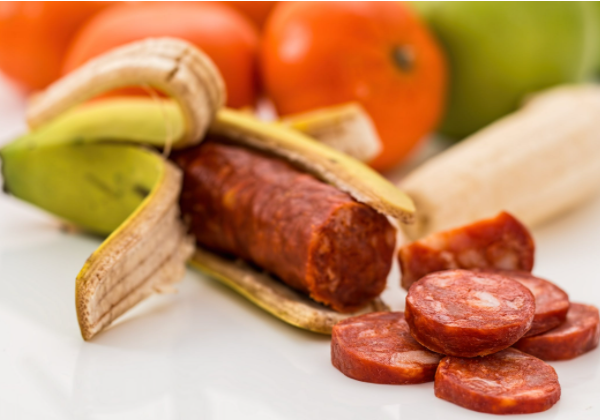
When food is heated to a high temperature, the amino acids and sugars on its surface are rearranged, releasing flavor and aroma compounds. The higher the protein concentration, the more flavor compounds it releases, and the higher the sugar concentration, the more flavor compounds are released. Temperature, as well as water content, are key factors in the reaction, and one can imagine the difference between cooking a sausage to 100 degrees Celsius and slightly browning it on a hot grill; both cooking methods are safe, but only one is truly appealing.
In fact, compounds such as thiazole or thiophene, released during high temperature dry cooking (baking or grilling), are also available in plants, one example being 2-methyl-3-thiophene thiol, which is released in roasted meats but is also present in the sesame seed frying process. Similar compounds are released from roasted coffee, but plant aromatic substitutes are difficult to find.
In order to release the same aromas and flavors from plant proteins, they must be heated to high temperatures. Cooking at high temperatures reduces the nutritional content of all foods, especially the amount of vitamins B and C contained in plant and animal products. So, plant-based meat products may be delicious, and grilling them may release some meat flavor, but they are not as beneficial to human health as preparing common vegetable ingredients.
Animal fats have unique properties that are difficult to replicate with plant fats, for example: most animal fats are saturated, which means they melt at higher temperatures, while most plant fats melt at lower temperatures, with only a few exceptions.
Coconut oil and palm oil are two of these exceptions, and they are often used as substitutes for vegan dairy products, but vegan cheese has a different taste and texture than most dairy cheeses, with the vegetable fats in soft cheeses having a better texture than hard cheeses, and little difference in texture between soft, fluffy sliced burger cheeses.

You May Interested In


High Quality β-Nicotinamide adenine dinucleotide CAS 53-84-9 NADwith ready stock and best price
$3E+1/UNIT FOB


2026-10-25
Trade Alert
Delivering the latest product trends and industry news straight to your inbox.
(We'll never share your email address with a third-party.)

Related News
-
Do You Know the Food Zero Additives?
-
Brazil publishes an officially registered broiler slaughterhouse inspection procedure based on a risk assessment
-
Technological innovation drives strong growth in pea protein market
-
Average price reduction of 82% National collection of artificial joints recently landed in many provinces
-
95% of China's top 100 selling wines are corked
-
What is the Cytidine Diphosphate Choline in Food Industry?
-
The Domestic Tukeng Sauerkraut Incident And Its Analysis
-
Do You Know the Real Benefits of Eating Bird's Nest?
-
The Importation of Bird's Nest
-
Progress in the Study of Aromatic Rice Sorghum Products
Recommend Reading
-
![India Launches Concentrated Anti-Dumping Actions Against Eight Categories of Chinese Chemicals, Covering APIs/Intermediates, Polyurethanes, and Refrigerants]()
India Launches Concentrated Anti-Dumping Actions Against Eight Categories of Chinese Chemicals, Covering APIs/Intermediates, Polyurethanes, and Refrigerants
-
![Honeywell Acquires Johnson Matthey Catalyst Business at a Discount, Cutting £475 Million from the Price]()
Honeywell Acquires Johnson Matthey Catalyst Business at a Discount, Cutting £475 Million from the Price
-
![China’s TiO₂ Industry Launches Sixth Price Hike Wave as More Than 20 Producers Follow]()
China’s TiO₂ Industry Launches Sixth Price Hike Wave as More Than 20 Producers Follow
-
![Arkema Triples Transparent Polyamide Capacity in Singapore: a Bet on Virtual Reality Growth or a Move to Strengthen Supply Resilience?]()
Arkema Triples Transparent Polyamide Capacity in Singapore: a Bet on Virtual Reality Growth or a Move to Strengthen Supply Resilience?
-
![Asia’s Plastics Chain Faces a Shock: Tight Naphtha Supply Drives Up Polymer Costs]()
Asia’s Plastics Chain Faces a Shock: Tight Naphtha Supply Drives Up Polymer Costs
-
![Supply Tightening Drives Up Phthalic Anhydride Prices, Further Increases May Face Obstacles in China]()
Supply Tightening Drives Up Phthalic Anhydride Prices, Further Increases May Face Obstacles in China
-
![Business Society’s Trend Analysis for Isooctanol on September 16, 2026: Strongly Bullish]()
Business Society’s Trend Analysis for Isooctanol on September 16, 2026: Strongly Bullish
-
![Business Society’s Trend Analysis for Epichlorohydrin on September 11, 2026: Fluctuating]()
Business Society’s Trend Analysis for Epichlorohydrin on September 11, 2026: Fluctuating
-
![Business Society’s Market Outlook for Maleic Anhydride on September 4, 2026: Volatile]()
Business Society’s Market Outlook for Maleic Anhydride on September 4, 2026: Volatile
-
![Business Society’s Trend Analysis for Hydrofluoric Acid on September 15, 2026: Weak Fluctuations with a Bearish Bias]()
Business Society’s Trend Analysis for Hydrofluoric Acid on September 15, 2026: Weak Fluctuations with a Bearish Bias