U.S. Chemical Manufacturers: Supply Chain Disruptions Cause Serious Losses
The global pandemic is wreaking havoc on global supply chains. A new U.S. survey finds that persistent and, in some cases, worsening supply chain problems are severely impacting chemical manufacturers' operations.
U.S. Chemical Manufacturers Say Supply Chain Disruptions Are Causing Serious Losses
Recently, the American Chemistry Council (ACC) released the results of a survey showing that the impact of supply chain disruptions and transportation restrictions on many chemical companies is widespread and occurs throughout the United States.
The survey found that nearly all chemical companies (98%) reported modified operating programs due to supply chain/transportation issues. Two-thirds reported production losses, and nearly all reported transportation delays (94%), raw material shortages (94%) and increased transportation costs (93%).
In 2021, more than one-third of companies experienced or declared force majeure due to supply chain/freight issues.
During the same period, almost all (93%) companies reported high additional costs. Estimates ranged from $100,000 to $250 million, with more than one-third of companies reporting costs above $20 million.
Supply chain issues are a key concern for chemical companies, as chemical shipments account for a large percentage of total shipments by sea, truck and rail.
ACC economists expect demand for chemical shipments to increase this year and in the future, so the risk is only expected to grow.
PPG Industries CEO: The Toughest Job is Plant Manager
The spread of the Omicron strain is putting pressure on the supply chain with staff shortages, and rising raw material costs are causing U.S. chemical companies to cut their earnings for the fourth quarter of 2021 and the first quarter of 2022.
U.S. coatings giant PPG Industries reported on Jan. 21 that net income in the fourth quarter of 2021 fell 2 percent from a year earlier to $267 million, while net sales rose 12 percent to $4.19 billion. Sales prices rose 8 percent year-over-year, but sales fell 4 percent as the company was unable to fill orders due to supply chain and transportation issues.
"From a revenue perspective, higher sales prices were up 8 percent year-over-year compared to the third quarter, partially offsetting higher raw material and logistics costs. However, operating costs increased significantly due to unpredictable manufacturing disruptions at both our facilities and customer operations as a result of the significant workforce impact of COVID-19," said Michael McGarry, PPG and chief executive officer (CEO).
Michael McGarry said sales and earnings were also impacted by ongoing raw material and transportation supply challenges, which continued to make it difficult to fulfill strong orders in several end markets.
The spread of the Omicron mutant strain had a significant negative impact on PPG's results in the fourth quarter of 2021, resulting in very high labor absenteeism.
According to ICIS, McGarry said some PPG plants recently laid off up to 40 percent of their workforce due to the new coronavirus infection and quarantine, which has hampered the company's ability to meet demand, which remains "strong" in most end-use markets.
"The toughest job at PPG right now is the plant managers: they wake up in the morning, check their phones and see how many people have called in sick." Once they get to work, McGarry said, they check how many truckloads of product have not been shipped and how much material has not come in.
McGarry added that freight truck drivers leaving because of a virus, or preventative quarantine, "is the biggest challenge we're facing right now."
In addition, PPG continues to face raw material shortages, with its U.S. architectural coatings business being the most affected.
Due to labor and raw material issues, PPG's sales backlog grew to $150 million at the end of the fourth quarter, particularly in the aerospace, automotive refinish and general industrial businesses.
McGarry said that while raw material prices are "leveling off," PPG is closely monitoring the recent "spike" in oil prices, which could have an impact on solvents.
PPG will continue to raise its selling prices in the first quarter of 2022, as price increases in the fourth quarter of last year did not offset the impact of higher labor, transportation and other costs, as well as higher raw material prices.
A UBS report shows that specialty chemicals and coatings manufacturers are more vulnerable to labor and raw material shortages.
Specialty chemical companies purchase many chemical components to make formulations in small batches and have important technical services and sales organizations that interact closely with customers. When a raw material is missing due to supply chain issues, the formulation cannot be completed. In contrast to base chemicals, pricing lags behind raw material cost increases.
U.S. coatings manufacturer Xanwei recently noted that a mutated strain of Omicron had spread among the company's store managers, field sales reps and drivers last December. In some locations, the company has shortened hours and laid off employees. Meanwhile, many of Xanwei's suppliers and customers are experiencing similar problems.
"Looking ahead, while demand for PPG products remains strong, increased supply in the fourth quarter and related disruptions due to the New Crown outbreak are expected to continue to impact the ability to manufacture and deliver products in the first quarter of the year," McGarry said. But he predicted that the economy should reopen in 2022, supply chain issues will be alleviated, inventories in many end-use markets will be rebuilt, and healthy consumers will be more willing to consume.
Recently, the American Chemistry Council (ACC) released the Chemical Industry Situation and Outlook for late 2021. The Outlook states that U.S. chemical production will grow by 4.3% in 2022 as demand recovery continues in the post-epidemic period, supply constraints and the effects of severe storms ease.
ACC chief economist and the report's author, Martha Moore, said: "Despite the global economic crisis, the U.S. is expected to grow by 4.3 percent in 2022. Moore said: "Although the risks to the global economy remain, the U.S. chemical industry will maintain a strong position in 2022. As manufacturing activity recovers and inventories rebuild, supply chain bottlenecks are easing and chemical demand will grow strongly."

You May Interested In


High Quality β-Nicotinamide adenine dinucleotide CAS 53-84-9 NADwith ready stock and best price
$3E+1/UNIT FOB


2026-10-24
Trade Alert
Delivering the latest product trends and industry news straight to your inbox.
(We'll never share your email address with a third-party.)

Related News
-
Hormuz Traffic Remains 90% Below Pre-Conflict Levels as Limited Tanker Access Offers Partial Relief
-
Sharp Decline in Profits for Chemical Manufacturing in First Eight Months
-
The chemical market is dominated by weakness and fluctuation
-
The power shortage crisis in many parts of China and the shutdown of manufacturing industries have had an impact on the chemical industry and foreign trade.
-
In the First Five Months, the Profit of Chemical Raw Materials and Products Manufacturing Industry Increased by 13.8%
-
Manufacturing Prices of Chemical Raw Materials and Products in May Rose 13.6% Year-on-year and 0.6% Month-on-month
-
Another Increase! Wanhua Raises Prices Of 4 Water-Based Products, Up To 5,000 CNY/ton
-
Four National Chemical Industry Chains! Strengthening The Bones Of Green Chemical Development
-
Crude Oil Ups And Downs, But PVC At The Mercy Of Futures?
-
Total social retail sales from January to February amounted to RMB 242.73 billion in Beijing
Recommend Reading
-
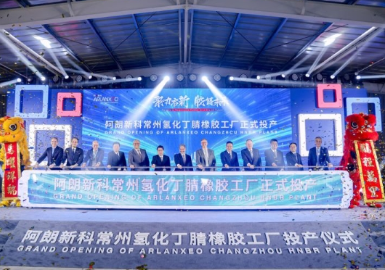
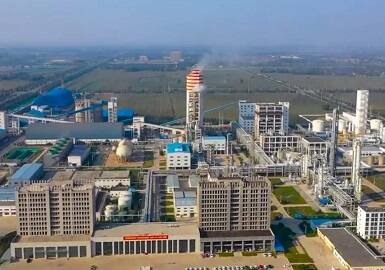
![ARLANXEO Launches State-of-the-Art HNBR Plant in Changzhou, Strengthening Asia-Pacific Supply]()
ARLANXEO Launches State-of-the-Art HNBR Plant in Changzhou, Strengthening Asia-Pacific Supply
-
![Indorama Corporation Acquires 100% Stake in Anyang Zhongying Fertilizer]()
Indorama Corporation Acquires 100% Stake in Anyang Zhongying Fertilizer
-
![“Anti-Overcapacity” Backfires: China’s Chemical Industry Trapped in a Hell of Its Own Making—and Global Pushback]()
“Anti-Overcapacity” Backfires: China’s Chemical Industry Trapped in a Hell of Its Own Making—and Global Pushback
-
![Saint-Gobain Expands Its Construction Chemicals Operations in Indonesia]()
Saint-Gobain Expands Its Construction Chemicals Operations in Indonesia
-
![From Coffee Waste to Superfood Additive: EU Declares Pectin-Rich Arabica Extract Safe for Food Use]()
From Coffee Waste to Superfood Additive: EU Declares Pectin-Rich Arabica Extract Safe for Food Use
-
![What is HCO3? (Bicarbonate Ion Function & Normal Levels)]()
What is HCO3? (Bicarbonate Ion Function & Normal Levels)
-
![PEG (Polyethylene Glycol): Uses in Pharma, Cosmetics, and PEGylation]()
PEG (Polyethylene Glycol): Uses in Pharma, Cosmetics, and PEGylation
-
![Post-Holiday Demand Follow-Up Drives Up Caustic Soda Prices]()
Post-Holiday Demand Follow-Up Drives Up Caustic Soda Prices
-
![Urea Market Trends in February Show a Strong, Rising Trend]()
Urea Market Trends in February Show a Strong, Rising Trend
-
![Post-Holiday Sharp Drop in Dichloromethane—Quick Repair]()
Post-Holiday Sharp Drop in Dichloromethane—Quick Repair