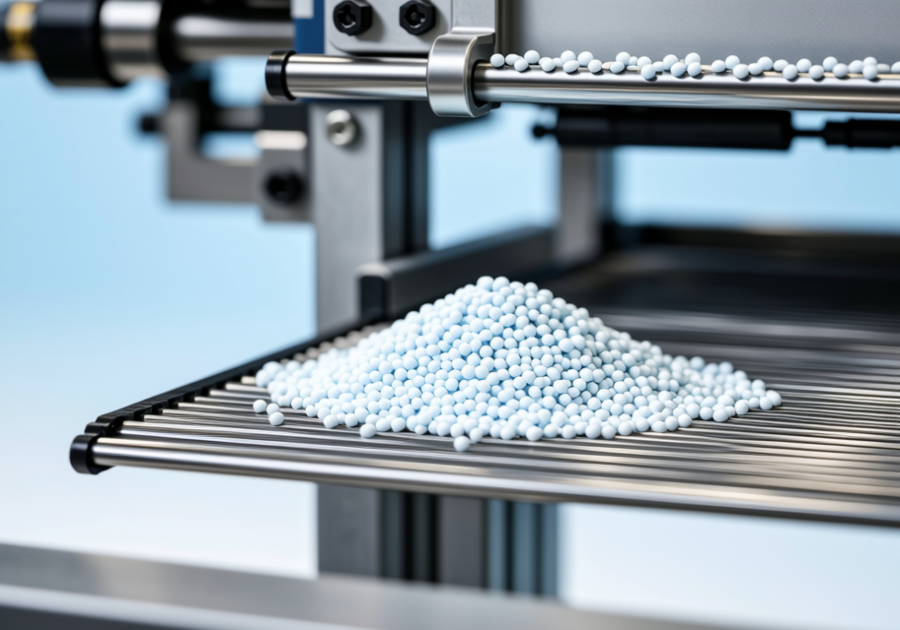
US Textile Industry Returning to Life
After years of losing market share to overseas manufacturers, American textile and fiber makers say their industry is turning around. A story in Chemical & Engineering News (C&EN), the weekly newsmagazine of the American Chemical Society, explores how advancing technology in the field is allowing the U.S. textile industry to gain new ground.
Senior C&EN Correspondent Marc S. Reisch reports that American textile companies, long crowded out of the market by low-cost overseas labor, have developed new niches for hi-tech fibers and textiles. These advanced products include antimicrobial fabric, fire-retardant finishes, sensor-imbued "smart fabric," and polyester made from recycled plastic bottles. Thanks to technological advances, automation and productivity improvements, the U.S. textile industry is finally growing more competitive, experts say.
Despite the increase in business, and even favorable domestic policies enticing foreign manufacturers to open plants in the United States, employment in the industry may continue to falter in the face of automation. But the high-tech nature of modern textiles and a drive for productivity has increased the demand for experts, including polymer chemists and dye specialists. For example, the North Carolina State University College of Textiles reported its largest-ever graduating class this year. And if the past is any indication, most are likely to find jobs within three months of earning their degrees. In a field once marked by rampant job loss, stability is returning with a new focus on advanced specialty products.

You May Interested In




2026-09-16
Trade Alert
Delivering the latest product trends and industry news straight to your inbox.
(We'll never share your email address with a third-party.)

Related News
-
U.S. 10% Temporary Tariff Expires, New Section 301 Tariffs Not Yet Implemented
-
U.S. Includes Lithium in National Defense Stockpile for First Time, Plans to Purchase 16,200 Tons Over Five Years
-
U.S. Issues Final Anti-Dumping Ruling on Chinese MDI: Dumping Margins Reduced from Over 500% to 85%+
-
India Considers Removing Taxes on U.S. Liquefied Natural Gas to Boost Imports
-
New McKinsey report: Adoption of sustainable agricultural practices by U.S. farmers is growing but remains low
-
Huntsman to Sell Textile Dyeing Unit for $718 Million
-
What Does a Textile Chemist Do? A Detailed Analysis
-
What Are Caustic Soda Uses in Textile Industry
-
BASF Southeast Asia joins ZDHC Textile Foundation
-
New York will ban food packaging containing perfluoroalkyl
Recommend Reading
-
![Chung Lien Oil’s 8,000-Ton Soybean Oil BaP Scandal: NT$165 Million Fine, 401 Product Recalls, Source Still Unknown]()
Chung Lien Oil’s 8,000-Ton Soybean Oil BaP Scandal: NT$165 Million Fine, 401 Product Recalls, Source Still Unknown
-
![Arkema's New Singapore Plant Commences Operations, Tripling Polyamide Capacity]()
Arkema's New Singapore Plant Commences Operations, Tripling Polyamide Capacity
-
![]()
"No available slots" returns as global shipping rates skyrocket amid multiple factors
-
![“Soaring Sulfuric Acid, Tightening Ore Supplies”: The High-Stakes Battle Behind the Titanium Dioxide Price Surge]()
“Soaring Sulfuric Acid, Tightening Ore Supplies”: The High-Stakes Battle Behind the Titanium Dioxide Price Surge
-
![Agrochemical Markets at a Crossroads: Winter Stockpiling Begins Amid Cost Pressures and Fragmented Demand]()
Agrochemical Markets at a Crossroads: Winter Stockpiling Begins Amid Cost Pressures and Fragmented Demand
-
![Business Society’s Market Outlook for Epichlorohydrin on September 3, 2026: Volatile]()
Business Society’s Market Outlook for Epichlorohydrin on September 3, 2026: Volatile
-
![Business Society’s Market Outlook for Phthalic Anhydride on September 2, 2026: Volatile and Bearish]()
Business Society’s Market Outlook for Phthalic Anhydride on September 2, 2026: Volatile and Bearish
-
![Business Society’s Market Outlook for Propylene Oxide on September 2, 2026: Volatile (Bullish Bias)]()
Business Society’s Market Outlook for Propylene Oxide on September 2, 2026: Volatile (Bullish Bias)
-
![Business Society’s Toluene Market Outlook on September 3, 2026: Clearly Upward]()
Business Society’s Toluene Market Outlook on September 3, 2026: Clearly Upward
-
![Business Society’s PVC Market Outlook on September 3, 2026: Relatively Strong Fluctuations]()
Business Society’s PVC Market Outlook on September 3, 2026: Relatively Strong Fluctuations