




U.S. Body Fragrance Market Should Meet Local Customer Demand
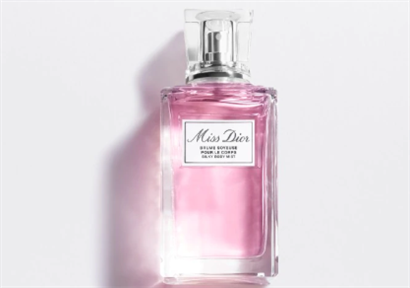
Since 2010, the U.S. body fragrance market has shown a sustained growth trend. According to Euromonitor data, the market of body fragrances in the United States reached 4.7 billion US dollars last year. Although the market is very large, it has been suggested recently that for newly-developed enterprises that are expanding the market, they should continue to develop products to meet local consumption in the United States. The demand is harsh.
According to the KOTRA trade Museum in Chicago, the most popular types of body odor agents sold by body odor agents include body fragrance sticks and spray type. Besides, they also have various formulations, such as roller, cream and paper pulling.
Body aroma sticks and spray type account for 85% of the market, and all kinds of products such as cream, tissue and paper are speeding up. The sales growth rate of pressed body fragrance agents such as body gel and spray is 8%, with an average annual growth rate of 9.2%, achieving a relatively high growth rate.
With the development of research on the composition of body fragrance to inhibit sweat and the adverse effects of aluminium on health, high-priced natural and organic products are becoming more and more popular. Body fragrance manufacturers use baking soda and bamboo taro flour instead of aluminium, and pay more attention to the natural raw materials of products.
Natural and organic products, regardless of gender, emphasize safety components and adopt differentiation strategy to distinguish between female and male product lines. But the disadvantage of natural body fragrances is that they are mainly frosty and need to be smeared by hand. The main sales channels used to be cosmetic retail stores and large supermarkets. Nowadays, with the increasing sales of body fragrance in online stores, warehouse supermarkets, clothing and shoes stores, the new market exploration is still continuing. Native Deodorant, a fragrant dew brand acquired by P&G, is sold mainly through online subscription. Schmidt's Naturals, acquired by Unilever, consolidates its online status by selling products in limited quantities online. With the emergence of DTC brand (Direct to Consumer) Humble and Myro Deodorant, online subscription service sales are expected to continue to grow.
In 2017, pharmacy CVS began to demonstrate the operation of health product vending machines, as a part of improving customer experience, it can also provide opportunities to be close to consumers outside the store.
Unilever and Procter & Gamble Liquor account for 29% and 27% of sales in the US market respectively, ranking first and second, and are approaching customers in various ways. According to the analysis of KOTRA Chicago Trade Museum, "Fragrant dew as a necessary body care product for modern people, is not affected by season, and will continue to be used after one use, so it is very suitable for the characteristics of regular subscription. Fragrant dew made of natural materials is being consumed through regular subscription on the Internet. In addition, large enterprises such as Unilever have introduced channel systems and taken measures to prevent consumers from losing.
Ava Miller suggested in an interview with KOTRA that "when customers decide to buy a product, not only the efficacy and design of the product will affect the decision, but also the social impact and values of the enterprise will be taken into account. Although gender distinction is widespread, fashionable design, environmental protection components and fragrance will be purchased. The impact of buying decisions is growing.

You May Interested In


Glow70/KLOW80 99% China Peptides Warehouse Direct Delivery Lyophilized Powder in Stock
$1.8E+2/UNIT FOB


2026-09-06
Trade Alert
Delivering the latest product trends and industry news straight to your inbox.
(We'll never share your email address with a third-party.)

Related News
-
Skin longevity, biotech, fragrance and sensory beauty take centre stage as in-cosmetics Asia returns to Bangkok
-
Huda Beauty to Sell Kayali Stake to General Atlantic
-
Skylar Clean Beauty Launches New Citrus Reverie Fragrance
-
Give Back Beauty secures Mercedes-Benz fragrance licensing agreement
-
BASF Aromatic Ingredients expands its Isobionics portfolio with new natural flavors
-
Henry Rose raises series A funding
-
LMR NATURALS BY IFF UNVEILS CARBON FOOTPRINT CALCULATION FOR FRAGRANCE
-
PCHi 2022
-
Farman launches 'Green Catcher' fragrance with a wide range of applications
-
The latest trend of fragrance notes in epidemic situation
Recommend Reading
-
![Your Plant Has the Data. Your AI Cannot Reach It. Here Is Why That Is the Core Problem in Chemical Manufacturing.]()
Your Plant Has the Data. Your AI Cannot Reach It. Here Is Why That Is the Core Problem in Chemical Manufacturing.
-
![FDA Dye Pledges Push Natural Colors Into the Mainstream]()
FDA Dye Pledges Push Natural Colors Into the Mainstream
-
![FDA Fee Updates Raise the Cost of Entering the U.S. Generic Drug Chain]()
FDA Fee Updates Raise the Cost of Entering the U.S. Generic Drug Chain
-
![EU Biocidal Data Protection Extension Raises the Stakes for Chemical Market Entry]()
EU Biocidal Data Protection Extension Raises the Stakes for Chemical Market Entry
-
![South Korea’s Largest Petrochemical Hub Moves to Cut Cracker Capacity by 40%]()
South Korea’s Largest Petrochemical Hub Moves to Cut Cracker Capacity by 40%
-
![Business Society’s Market Outlook on Melamine for August 26, 2026: Weak Rebound]()
Business Society’s Market Outlook on Melamine for August 26, 2026: Weak Rebound
-
![Business Society’s PTA Market Outlook for August 24, 2026: Volatile]()
Business Society’s PTA Market Outlook for August 24, 2026: Volatile
-
![Benzoylecgonine: Detection and Testing Methods]()
Benzoylecgonine: Detection and Testing Methods
-
![Business Society’s Market Outlook for Polyester Staple Fiber on August 24, 2026: Volatile]()
Business Society’s Market Outlook for Polyester Staple Fiber on August 24, 2026: Volatile
-
![Business Society’s LDPE Market Outlook on August 25, 2026: Volatile]()
Business Society’s LDPE Market Outlook on August 25, 2026: Volatile




- Hot Searches
- sodium carbonate color
- chronic cervicitis with squamous metaplasia
- buy sodium nitrite
- n-isopropylbenzylamine for sale
- tri- calcium phosphate
- today urea price
- beryllium sds
- cost for silicon
- non ionic surfactant for herbicides
- white urea fertilizer
- where to buy coumarin
- msds myristic acid