




Fixed investment grew by 5.7% year-on-year in the first July
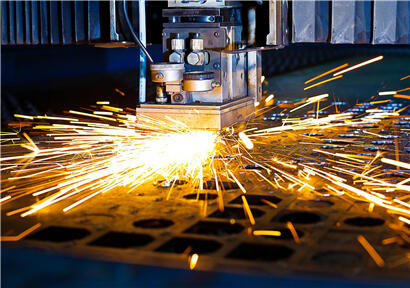
On August 14, the website of the National Bureau of Statistics published various data on the operation of the national economy in July. Judging from the data released this time, the performance of this important index in July still continues the previous long-term stable situation.
Daily Economic News reporter noted that the data showed that from January to July 2019, the national fixed assets investment (excluding farmers) was 348.892 billion yuan, an increase of 5.7% year on year, and the growth rate fell 0.1 percentage points compared with January to June. Judging from the ring-to-ring speed, fixed assets investment (excluding farmers) increased by 0.43% in July. Among the fixed investment in the secondary industry, industrial investment increased by 3.8% from January to July, 0.5 percentage points higher than that in January to June. Meanwhile, the growth rate of manufacturing investment has rebounded for three consecutive months. At the same time, according to July industrial data, steel output in key products increased 9.6% year-on-year, down 3 percentage points from June, and cement output increased 7.5% year-on-year, up 1.5 percentage points from last month.
Manufacturing investment "rises against the trend"
Judging from the latest published fixed investment data, it has been considered as an important factor to promote the growth of fixed investment, namely, the growth rate of infrastructure investment declined slightly from January to July. The data shows that infrastructure investment (excluding electricity, heat, gas and water production and supply) in the tertiary industry increased by 3.8% year on year, and the growth rate dropped by 0.3 percentage points from January to June. Among them, investment in water resources management industry decreased by 0.3%, increased by 1.1% in January-June; investment in public facilities management industry increased by 0.1%, decreased by 0.3% in January-June; investment in road transport industry increased by 6.9%, and the growth rate fell by 1.2 percentage points; investment in railway transport industry increased by 12.7%, and the growth rate fell by 1.4 percentage points. In contrast to the trend of infrastructure investment, industrial investment, especially manufacturing investment, went out of a "negative upward" road from January to July. Among the fixed investment of secondary industry, industrial investment increased by 3.8% year-on-year, and the growth rate increased by 0.5 percentage points from January to June. Among them, manufacturing investment increased by 3.3%, and the growth rate increased by 0.3 percentage points. Reporters noted that from the data point of view, manufacturing investment data has been rising for three consecutive months. Why can manufacturing investment continue to strengthen? Lu Zhengwei, chief economist of Societe Generale Bank, commented that in the manufacturing sector, credit spreads and production and operation expectations have a certain lead in investment. Influenced by the decline of credit spreads of private enterprises and the improvement of enterprises'production and operation expectations, manufacturing investment continued to rise slightly in July, rising to 3.3%.
However, the political commissar of Lu also said that the sustainability of the recovery of manufacturing investment remains to be seen. On the one hand, due to the uncertainties of the trade situation, enterprises'production and operation activities are expected to fall back again in the near future. On the other hand, under the influence of financial institutions' risk events in May, the credit spreads of private enterprises are rising again, and private enterprises'financing is still facing challenges.
July cement output increased by 7.5%p>compared with the same period last year. In terms of industrial added value above scale, although PMI data, an important leading indicator reflecting industrial operation, showed a rebound (49.7% in July, 0.3 percentage points higher than last month), the data released showed that the growth rate of industrial added value in July was increasing by 0.3 percentage points. Not as expected. Why is there a contradiction between PMI and industrial added value? According to Li Qilin, chief economist of Lianhe Securities, the fluctuation of industrial value-added data may be greater than that of the actual production of industrial enterprises. Considering June and July as a whole, the average annual growth rate is 0.43%, slightly higher than the 0.40% in May. This means that industrial production in July may not be as depressed as the data reflect, and the growth rate of industrial value added is expected to rebound in August. Yang Chang, senior economist and head of policy group of China-Thailand Securities Research Institute, also believes that although July data show that the growth rate of industrial added value has declined, it is noteworthy that the decline in automobile production has narrowed in the same period.
He said that from July industrial data, steel production in key products increased by 9.6% year-on-year, down 3 percentage points from June; cement production increased by 7.5% year-on-year, up 1.5 percentage points from last month; and it is worth noting that automobile production decreased by 11.5% year-on-year, down 3.7 percentage points from last month. For July's industrial data, some market participants believe that strong stimulus may be on the way. However, at a news conference held by the State New Office on the 14th, Liu Aihua, spokesman of the National Bureau of Statistics, responded clearly: "At present, we have not taken the measure of"flood irrigation".
She further said that at present, we are paying more attention to stimulating market vitality and enhancing the internal power of the economy, promoting the reform of "release and control clothing", taking supply-side structural reform as the main line, implementing innovation-driven development strategy, optimizing business environment, reducing taxes and fees on a large scale, in order to cope with the transformation and development in the process of high-quality development. Various problems arise during the period of tackling key problems in optimizing the economic structure.

You May Interested In


Glow70/KLOW80 99% China Peptides Warehouse Direct Delivery Lyophilized Powder in Stock
$169/UNIT FOB


2026-10-17
Trade Alert
Delivering the latest product trends and industry news straight to your inbox.
(We'll never share your email address with a third-party.)

Related News
-
With an investment of 17.6 billion yuan, Wanhua Chemical plans to build ethylene and downstream projects
-
With an investment of 600 million yuan, 180,000 tons of adhesive project was put into production
-
China丨Qianjiang Biochemical plans to establish a wholly-owned subsidiary with ¥350 million investment
-
The total investment is 320 million yuan! The paint project with an annual output of 100,000 tons was put into operation in Nanyang
-
China agrochemical industry weekly (1118)
-
China agrochemical industry weekly (1111)
-
Pymetrozine production line of Dekun will land in Gansu Province, China
-
China丨Bayer built a new supply center in China with an investment of ¥ 300 million
-
RedSun: promoting Chlorantraniliprole project, and may invest in production capacity in the future.
-
India丨IFC invests Rs 300 crore in Crystal Crop Protection
Recommend Reading
-
![IMCD Acquires Dong Yang FT, Entering the Korean Beauty Sector]()
IMCD Acquires Dong Yang FT, Entering the Korean Beauty Sector
-
![BASF and Hannong Chemical Joint Venture Nonionic Surfactant Plant Begins Operation in South Korea]()
BASF and Hannong Chemical Joint Venture Nonionic Surfactant Plant Begins Operation in South Korea
-
![LANXESS Raises Global 1,6-Hexanediol Prices by 20% as Cost Pressure Begins to Pass Downstream]()
LANXESS Raises Global 1,6-Hexanediol Prices by 20% as Cost Pressure Begins to Pass Downstream
-
![BASF Raises BA and 2-EHA Prices as Acrylic Ester Costs Continue to Move Higher in Asia-Pacific]()
BASF Raises BA and 2-EHA Prices as Acrylic Ester Costs Continue to Move Higher in Asia-Pacific
-
![BorsodChem Raises MDI Prices by €500 as Cost Pressure in Europe’s Polyurethane Chain Continues to Escalate]()
BorsodChem Raises MDI Prices by €500 as Cost Pressure in Europe’s Polyurethane Chain Continues to Escalate
-
![Business Society’s Phosphoric Acid Market Outlook on August 13, 2026: Low-Range Adjustment]()
Business Society’s Phosphoric Acid Market Outlook on August 13, 2026: Low-Range Adjustment
-
![Business Society’s Market Outlook for Epichlorohydrin on August 13, 2026: Price Trends Clearly Declining]()
Business Society’s Market Outlook for Epichlorohydrin on August 13, 2026: Price Trends Clearly Declining
-
![Business Society’s August 14, 2026 View on Isooctanol Market Trends: Stagnation and Price Increase Alert]()
Business Society’s August 14, 2026 View on Isooctanol Market Trends: Stagnation and Price Increase Alert
-
![Business Society’s August 13, 2026 Xylenol Market Outlook: Continuing to Rise]()
Business Society’s August 13, 2026 Xylenol Market Outlook: Continuing to Rise
-
![Business Society’s PTA Trend Analysis for September 14, 2026: Volatile]()
Business Society’s PTA Trend Analysis for September 14, 2026: Volatile




- Hot Searches
- best place to buy retatrutide peptides
- sodium carboxyl methyl cellulose distributor
- urea fertilizer price
- where can i get retatrutide peptide
- hydrocloric acid sds
- aeo 7 surfactant
- bioglutide for sale
- polytetramethylene glycol
- reta for sale
- ldpe resin price asia 2025 english
- hdpe prices
- ethyl bromide