




300,000 tons of coal mine withdraws from the stage of history
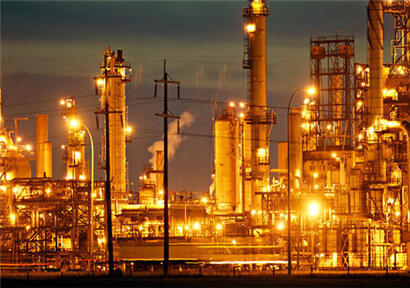
Recently, six departments issued the Work Programme for Classified Disposal of Coal Mines Below 300,000 Tons/Year, which proposed quickening the withdrawal of backward coal production capacity, according to the requirements of strict law enforcement, closing a batch, implementing capacity replacement, withdrawing a batch, upgrading and upgrading, classifying coal mines below 300,000 tons/year and quickening the withdrawal from inefficiency. Invalid production capacity, improve the level of safety in production, and promote high-quality development of the coal industry. The plan also puts forward the goal of transformation. Through three years, the number of coal mines under 300,000 tons per year in China will be reduced to 800 by the end of 2021. Coal mines under 300,000 tons per year in North China and Northwest China (excluding Southern Xinjiang) will basically withdraw. In principle, the number of coal mines under 300,000 tons per year in other areas will be reduced by more than 50% compared with the end of 2018. According to the data of the big data center of coal in today's think tank, there are 2189 mines under 300,000 tons in China, with a total capacity of 273 million tons, of which the output of power coal is 268 million tons and that of coking coal is 205 million tons.
Southwest China:
From the above figure, we can see that the most distribute area of Mines below 300,000 tons/year is the southwest area, Guizhou, Sichuan and Yunnan rank the top three in the country, with 467, 358 and 334 mines, respectively. In addition to Chongqing municipality directly under the Central Government, there are 1182 mines below 300,000 tons/year, with a total production capacity of 159.76 million tons. Among them, 34.74 million tons of power coal and 125.02 million tons of coking coal are produced. The flow direction is mainly for local Pangang, coking enterprises and Baowu, Hualing and other steel enterprises.
The proportion of Mines under 300,000 tons/year in this area is relatively high in each province. Because of the complex geological conditions in southwest China, the local consumption capacity of coking coal is limited. Considering the high demand for electricity in local industrial development planning, it is expected that the proportion of coal varieties used in coking will decrease in the future and be used in power generation industry. Coal will increase.
Central China:
This area is the southwest area, where the proportion of Mines under 300,000 tons per year is higher, of which 188 are in Hunan Province, accounting for 95%, 27 in Hubei Province, accounting for 93%, 73 in Henan Province, accounting for 31%, with a total capacity of 36.94 million tons, of which 672,000 tons are in power coal and 3.22 million tons in coking coal.
From the point of view of documents, the two lakes must be the focus of elimination and withdrawal. The coal mines in Hubei Province may withdraw directly, while Hunan Province, as a traditional coal export province, and near the downstream steel enterprises, the withdrawal capacity is likely to be used to replace new production capacity. However, the geological conditions of the coal mines in this area are more complex and deeper, and the coal quality is also deep. Without obvious advantages, future planning and development still need continuous attention.
Northeast China:
Northeast Liaoning and Jilin provinces have too few coal mines, so there is no excessive analysis here. In Heilongjiang Province, there are 333 coal mines, of which 271 are under 300,000 tons per year, with a total capacity of 27.28 million tons, of which 4.06 million tons are power coal and 23.22 million tons are coking coal. Coking coal mainly flows to Angang, Benxi Steel and Shougang in the northeast. Most of these coal mines will be eliminated belong to county-managed enterprises. Considering resource allocation, optimization of industrial structure and subsequent economic development, employment and other issues, the merger and reorganization of backward production capacity with provincial key coal enterprises as the core before Shanxi Province can provide some experience for local development. 。
East China:
As the most developed area in China, there are no coal mines in many provinces, and only Fujian Province has a large base to meet the requirements of withdrawing from coal mines. However, the province has the convenience of shipping imported coal, and the local geological conditions are complex, which is not conducive to coal mining. Therefore, it is expected to gradually withdraw from coal supply cities in the future. Field.
North China and Northwest China:
According to the requirements of the documents, 300,000 tons/year mines in North China and Northwest China will all withdraw in the next three years.
Remarks: 1. For the convenience of statistics, Inner Mongolia Autonomous Region is merged into North China; 2. Southern Xinjiang includes Kashgar, Aksu, Hetian, Kizilesu Kirgiz Autonomous Prefecture, Bayinguoling Mongolian Autonomous Prefecture, Alar, Tiemenguan, Tumshuk and Kunyu City, with a total area of 300,000 tons per year or less. There are 16 mines with a total capacity of 1.62 million tons, all of which are coking coal. As can be seen from the table above,
the impact of the coal mine exit plan implemented in this time on these two areas is very limited. Firstly, as the main coal-producing provinces of the whole country, there are very few mines under 300,000 tons per year in the "Three West" area. Compared with its huge capacity, the withdrawal capacity is very small and the market is basically unaffected. Secondly, the number of coal mines demanded by other provinces is relatively limited, and these provinces are far away from coal consumption areas. The coal produced is mainly used for enterprise digestion in local and adjacent provinces, which has limited impact on the whole coal market. < p > < p > Today think tank believes that coking coal market is good for market impact.
The implementation of this policy is more to let the provinces with the second echelon of coal output allocate resources and adjust their structure. Guizhou, Sichuan, Yunnan, Heilongjiang and Hunan are the focus of the work.

You May Interested In


High Purity Retatrutide 10mg Lyophilized Peptide Vial Cosmetic Lab Sample With Complete HPLC Analysis COA
$79/BOU FOB



2026-08-15
Trade Alert
Delivering the latest product trends and industry news straight to your inbox.
(We'll never share your email address with a third-party.)

Related News
-
Coal prices soared, South Africa's Thungela company doubled its annual profit
-
Chemical Enterprises Collectively Stop Production! Supply 'Urgent'
-
Power coal price in Zhejiang Province decreased by 4.0% YoY
-
Oil And Coal Fell, With Collapse And Plasticization Market! PE, PP Fell Over 300
-
The Output Of Major Energy Products Increased Year-on-year in November
-
Mitsubishi Chemical Announces: Withdrawal from Petrochemical And Coal Chemical Business
-
Pure benzene price rebound
-
[ethylene glycol] : Coal fell rapidly, ethylene glycol followed
-
The National Bureau of Statistics release China's energy production in July
-
Longbai Group: signed strategic cooperation framework agreement with Henan Energy & Chemical Group
Recommend Reading
-

Profits Are Rising, but So Are the Risks—China’s Coatings Industry Is Living Through Its Most Awkward Year
-

Antidumping Pressure Hits the Chemical Chain as Chinese Exports Face Higher Barriers in Europe
-

One Million Tonnes of U.S. Ethane Arrive as China Sets a New Import Record
-

IEA Warns Oil Inventories Are Draining Fast as Chemicals Enter Risk Pricing
-

A $25 Billion Bill Hits Global Companies as Chemical Costs Are Repriced
-
Geopolitical Storm Ignites Cost Surge, The Bull and Bear Struggle Behind PTA's Opening Limit Up
-
Major Shakeup on the Raw Materials Side: ABS Prices Surge Sharply in Early March
-

March 9th Pure Benzene Market Prices Significantly Increased in China
-
Middle East Geopolitical Crisis Intensifies, March DOP Prices Surge
-

Costs Soar, Phthalic Anhydride Prices Surge