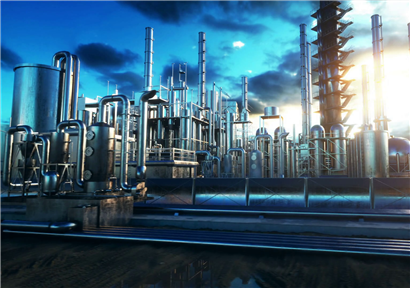
Iron and steel production is expected to be close to 1 billion tons in 2019
With the coming of the fourth quarter, steel demand will enter the off-season. At the same time, many places will usher in the autumn and winter of environmental protection and production restrictions, the trend of iron and steel industry has attracted much attention. The national industrial and Commercial Federation Chamber of Commerce 2019 business exchange conference was held today (26). Many members of the chamber of Commerce, in an interview with reporters, judged that steel production in the fourth quarter will grow in the same period last year, but the industry efficiency may decline. From January to August 2019, the national steel output was 660 million tons, an increase of 9.1% over last year. Among them, the output of private iron and steel enterprises is 390 million tons, accounting for 62% of the national steel output, up from 58% last year. Reporter combing found that since 2016, while the steel industry to capacity, steel production is increasing every year. For one reason, a voice thinks that this may be related to the new capacity of illegal production and the revival of "ground bar steel". To this end, the relevant departments carried out targeted supervision and inspection in the third quarter, and the relevant results have not yet been feedback. Industry analysis shows that there are other reasons for the increase in iron and steel production, such as enterprise overload production. Zhang Zhixiang, executive vice president of the Federation of metallurgical industries, said that another major reason is the upgrading of steel production efficiency: "there is no change in production capacity, but why output will increase? In fact, the most important reason is technological progress and management progress. So the approved capacity is the same, but the output actually has the ability to increase. Since 2019, the increase of iron and steel production has greatly boosted the social stock of iron and steel. However, it is noteworthy that steel stocks have recently begun to decline, and the total steel stocks in sample warehouses across the country have fallen for six consecutive weeks. Wang Lianzhong, Deputy Secretary-General of Fulian Metallurgical Chamber of Commerce, believes that this shows that there are also demand driving factors behind the increase in steel production. "Although iron and steel production is increasing rapidly now, stocks are declining, which shows that demand has not decreased, and this demand is the main factor to promote the increase of iron and steel production. Therefore, without much change in demand, output will not necessarily be greatly reduced.
Industry insiders predict that the total output of iron and steel in 2019 will be close to 1 billion tons. In particular, not long ago, the Ministry of Ecology and Environment solicited opinions on the action plan for comprehensive air pollution control in autumn and winter in Beijing, Tianjin, Hebei and the surrounding areas, clearly and resolutely opposed "one size fits all", and did not engage in mandatory peak staggering and large-scale shutdown, which meant that steel production in the fourth quarter would increase significantly over the same period of last year. Dong Caiping, the newly elected president of the All-China Metallurgical Chamber of Commerce and the chairman of the board of directors of Zhongtian Iron and Steel Group, said that this would put some pressure on the steel supply and demand situation in the future.
"Compared with last year, we can produce in an orderly manner as long as we achieve ultra-low emissions. This year's output will not fall in the fourth quarter, but demand will decline. Because once winter comes, construction, especially in the eastern part of the country, will stop. Dong Caiping said.
In terms of profits, from January to July 2019, the national iron and steel enterprises realized profits of 167.6 billion yuan, while the private iron and steel enterprises realized profits of 93.5 billion yuan, with a certain decline over the same period of last year. Dong Caiping pointed out that with the increasing investment in environmental protection of iron and steel enterprises, the benefits of iron and steel enterprises in the fourth quarter may be further explored. Zhang Zhixiang said that the iron and steel industry will have to solve several outstanding problems in order to achieve high-quality development. He pointed out: "the concentration of the steel industry is low, so when the supply and demand relationship is tense, it is easier to cause a" price war ". In addition, iron ore raw materials in iron and steel enterprises are heavily dependent on imports. Now the dependence on imports has reached 80%, so we are relatively passive in the procurement of ore.

You May Interested In


High Quality β-Nicotinamide adenine dinucleotide CAS 53-84-9 NADwith ready stock and best price
$3/UNIT FOB


2026-10-14
Trade Alert
Delivering the latest product trends and industry news straight to your inbox.
(We'll never share your email address with a third-party.)

Related News
-
Trump Announces Higher Steel and Aluminum Tariffs, Risks Inflation and Promises More Jobs
-
India plans to impose up to 25% tariffs on steel imported from China
-
In the first three quarters, China's iron and steel industry research and development investment continued to increase
-
Steel Market Prices are Weak and Oscillating
-
The price of coke in Inner Mongolia fell by 50%
-
Power coal: no sign of recovery?
-
Overall stable operation of coal and coke market in South China
-
In November, the output of steel bars on the national scale was 22 million tons
-
Lack of power support for steel price rising continuously
-
No new capacity will be allowed in steel industry in 2020
Recommend Reading
-
![India’s Pharma Cost Problem Gets Worse]()
India’s Pharma Cost Problem Gets Worse
-
![Sichuan Unveils Revised List of 14 Qualified Chemical Parks in Major Industrial Realignment]()
Sichuan Unveils Revised List of 14 Qualified Chemical Parks in Major Industrial Realignment
-
![Arkema Triples Transparent Polyamide Capacity in Singapore: a Bet on Virtual Reality Growth or a Move to Strengthen Supply Resilience?]()
Arkema Triples Transparent Polyamide Capacity in Singapore: a Bet on Virtual Reality Growth or a Move to Strengthen Supply Resilience?
-
![Lianolong Bets Big on Electronic Adhesives with $50M Strategic Stake in Sidofu]()
Lianolong Bets Big on Electronic Adhesives with $50M Strategic Stake in Sidofu
-
![Huide Technology Partners with U.S. Firm to Open the Door to Mass Production of Circular TPU]()
Huide Technology Partners with U.S. Firm to Open the Door to Mass Production of Circular TPU
-
![FDA Fast-Tracks U.S. Drug Manufacturing]()
FDA Fast-Tracks U.S. Drug Manufacturing
-
![October Sodium Metabisulfite Prices Decline]()
October Sodium Metabisulfite Prices Decline
-
![Supply and Demand Both Weak, Butadiene Market Operates Weakly in October]()
Supply and Demand Both Weak, Butadiene Market Operates Weakly in October
-
![This week, the Chinese anhydrous hydrogen fluoride market trend declined (10.27-10.30)]()
This week, the Chinese anhydrous hydrogen fluoride market trend declined (10.27-10.30)
-
![October Phosphate Market Trends: Initially Down, Then Up]()
October Phosphate Market Trends: Initially Down, Then Up