China's foreign trade steadily improves quality, showing five bright spots
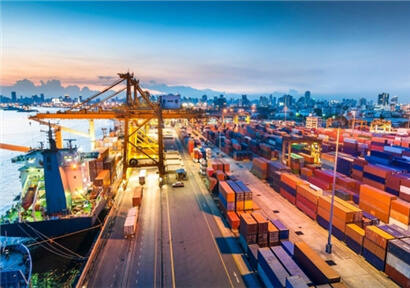
According to statistics released by the General Administration of Customs on October 14, the total value of China's foreign trade import and export in the first three quarters of this year was 22.91 trillion yuan, an increase of 2.8% over the same period last year. Since this year, the growth of international economic and trade has slowed down, and the external environment has become more complex and severe. In the first three quarters, China's foreign trade import and export continued to grow and its structure continued to optimize. Li Kuiwen, a spokesman for the General Administration of customs and director of the statistics and analysis department, said at the press conference of the new office of the people's Republic of China. Since this year, world economic growth has slowed down and trade protectionism has continued to rise, but China's foreign trade has maintained a strong resilience. 7.01 trillion yuan, 7.66 trillion yuan, 8.24 trillion yuan... In the first three quarters, the overall operation of foreign trade was stable, and the scale of import and export rose quarter by quarter. According to the latest data released by WTO, from January to July this year, the growth rate of China's import and export is still higher than that of Germany, Japan, ROK and other countries, and China still maintains the position of the world's largest country in goods trade, accounting for 0.1 percentage point higher than the same period last year. Li Kuiwen told reporters that the main factors supporting the smooth operation of China's foreign trade in the first three quarters of this year are as follows:
First, the smooth operation of the domestic economy, which provides strong support for China to cope with external risks and challenges and realize the continuous growth of foreign trade. Since this year, China's economic operation has been generally stable, structural adjustment has been steadily advanced, and reform and opening up have been comprehensively deepened.
The second is the continuous release of policy effect. Since last year, China has twice raised the export tax rebate rate of some products, successively issued a series of independent tariff reduction policies, and successively lowered the import value-added tax rate twice, which effectively stimulated the vitality of the market main body. In the first three quarters of this year, China's imports of consumer goods increased by 15.3%; the number of enterprises with import and export records reached 464000, up 5.9% year on year. The business environment has been continuously optimized, and the level of trade facilitation has been greatly improved. In the first three quarters, the overall customs clearance time of China's imports and exports has been shortened by 56.4% and 64.7% respectively compared with that in 2017.
The third is that the market diversification is effective. Since this year, China has launched a series of major measures to open up to the outside world, promoted a new round of high-level opening up, accelerated the formation of a new situation of opening up, and provided confidence and confidence for enterprises to actively explore new markets and optimize the global market layout. Along with the steady progress of the "one belt and one way" construction, China's economic and trade cooperation with the countries along the border has been more closely linked, and trade contacts have been more active. In the first three quarters of this year, China's total value of imports and exports of the countries along the belt and road grew by 6 trillion and 650 billion yuan, up 9.5% from the same period last year, which is higher than the total growth rate of China's foreign trade by 6.7 percentage points during the same period, accounting for 29% of China's total import and export value in the same period.
The proportion increased by 1.8 percentage points over the same period last year, a 4 percentage point higher than that of the "one belt" initiative in 2013. In the first three quarters of this year, the trade volume between China and Africa increased by 7.5% year on year, 4.7 percentage points higher than the overall growth rate of foreign trade. The trend of stable, medium and improved quality is obvious. The leading role of general trade is more significant. The leading role of private enterprises is more prominent. The pattern of regional foreign trade is more optimized. The development of special customs supervision areas is faster. The structure of import and export commodities is more optimized. At the same time of expanding scale, China's high-quality foreign trade development has also made positive progress, and the trend of stability, medium and quality improvement is obvious. In the first three quarters, China's import and export of general trade increased by 4.8%, 2 percentage points higher than the overall growth rate of foreign trade, accounting for 59.5% of China's total foreign trade, and the proportion increased by 1.1 percentage points. The domestic industrial chain of import and export of general trade mode is longer, which can better reflect the independence of China's foreign trade. Under the favorable policies of tax reduction and fee reduction, private enterprises show stronger vitality and have become the main force driving the growth of China's foreign trade. In the first three quarters, China's import and export of private enterprises increased by 10.4%, 7.6 percentage points higher than the overall growth rate of foreign trade, accounting for 42.3% of China's total foreign trade, and the proportion increased by 2.9 percentage points. Among them, exports increased by 13%, accounting for more than half of China's export value. Since this year, China's regional strategy has been steadily implemented.
Major strategies such as coordinated development of Beijing, Tianjin and Hebei, development of the Yangtze River economic belt, integrated high-quality development of the Yangtze River Delta, construction of Guangdong, Hong Kong and Macao Bay area, and comprehensive deepening reform of Hainan have been further promoted. Ecological protection and high-quality development of the Yellow River Basin have also become major national strategies, greatly promoting the coordinated development of China's foreign trade. In the first three quarters, the import and export of the central and western regions increased by 12.4% and 11.8%, respectively, accounting for 0.6 and 0.7 percentage points of China's foreign trade. At the beginning of this year, the State Council issued a number of opinions to promote the high-level opening and high-quality development of the comprehensive bonded area, which effectively promoted the development of the comprehensive bonded area. In the first three quarters, the import and export of the comprehensive bonded zone increased by 12.9%, accounting for 0.7% of China's foreign trade. A series of strong domestic market policies have been put into effect, and the potential of domestic demand has been continuously released, providing endogenous impetus for China to actively expand imports and optimize the structure of imported commodities. In the first three quarters, the import of consumer goods for people's livelihood grew rapidly. At the same time, domestic supply side structural reform continued to be promoted, industrial upgrading made positive progress, and promoted the continuous optimization of China's export commodity structure. The development trend of China's foreign trade will not change. The OECD predicts that the world economic growth will fall to the lowest level in ten years this year.

You May Interested In


High Quality β-Nicotinamide adenine dinucleotide CAS 53-84-9 NADwith ready stock and best price
$3/UNIT FOB


2026-10-16
Trade Alert
Delivering the latest product trends and industry news straight to your inbox.
(We'll never share your email address with a third-party.)

Related News
-
IFAT Munich 2024: Trade Fair for Water, Sewage, Waste and Raw Materials Management
-
Pesticide import and export situation in China in August 2022
-
How much do you know about the AEO?
-
How Much Do You Know About The AEO System of 'One Belt One Road' Countries?
-
The Total Value of China's Imports And Exports in The First 11 Months Exceeds That of Last Year, Reaching 35.39 Trillion Yuan
-
The Total Value of China's Imports And Exports in The First 11 Months Exceeds That of Last Year, Reaching 35.39 Trillion Yuan
-
The export volume of original medicines increased by 96%! Recently, China's pesticide imports and exports have both increased!
-
India imposes anti-dumping duties on TDI imports from Chinese Taipei, Europe, Japan, South Korea and the United States
-
Many countries have adjusted tariffs, and China has issued a number of import and export-related policies!
-
India's macrolide API: 90% imported from China
Recommend Reading
-
![Global Trade Data for Epoxy Resin in 2025 Released: Asia Accounted for $640 Million in Imports, Vietnam Emerges as Top Buyer]()
Global Trade Data for Epoxy Resin in 2025 Released: Asia Accounted for $640 Million in Imports, Vietnam Emerges as Top Buyer
-
![U.S. 10% Temporary Tariff Expires, New Section 301 Tariffs Not Yet Implemented]()
U.S. 10% Temporary Tariff Expires, New Section 301 Tariffs Not Yet Implemented
-
![Echoes of Overcapacity: The Structural Anxiety of China’s EVA Industry Chain]()
Echoes of Overcapacity: The Structural Anxiety of China’s EVA Industry Chain
-
![The Cold Cycle: PVC Market’s Chill and Faint Light Ahead]()
The Cold Cycle: PVC Market’s Chill and Faint Light Ahead
-
![Crude Tanker Freight From the Americas to Asia Tops $80 Million per Voyage Amid Global Shipping Crunch]()
Crude Tanker Freight From the Americas to Asia Tops $80 Million per Voyage Amid Global Shipping Crunch
-
![Regulatory Tightening Causes a Sharp Drop in Lithium Carbonate Prices]()
Regulatory Tightening Causes a Sharp Drop in Lithium Carbonate Prices
-
![In January, the Chinese epichlorohydrin market showed a]()
In January, the Chinese epichlorohydrin market showed a "first stable then rising, with the focus shifting upwards" trend
-
![What is Aconitic Acid? (Chemistry & Occurrence)]()
What is Aconitic Acid? (Chemistry & Occurrence)
-
![Cost-Side Impact: Asphalt Market Shows Slight Recovery After Prolonged Decline]()
Cost-Side Impact: Asphalt Market Shows Slight Recovery After Prolonged Decline
-
![What are Acetoglycerides? (Definition & Food Industry Uses)]()
What are Acetoglycerides? (Definition & Food Industry Uses)