All About Glucose Syrup
What Is Glucose Syrup
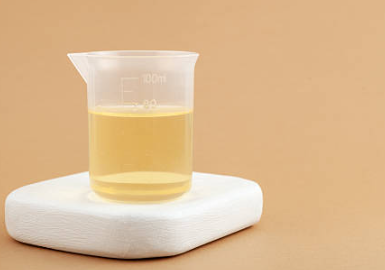
Glucose syrup, also known as confectioner's glucose, is a syrup made from the hydrolysis of starch. Glucose is a sugar. Maize (corn) is commonly used as the source of the starch in the US, in which case the syrup is called "corn syrup", but glucose syrup is also made from potatoes and wheat, and less often from barley, rice and cassava. Glucose syrup is used in foods to sweeten, soften texture and add volume. By converting some of the glucose in corn syrup into fructose (using an enzymatic process), a sweeter product, high fructose corn syrup can be produced.
Common Questions About Glucose Syrup
Glucose syrup is a kind of refined added sugar. Refined added sugars are sugars or syrups that are added to foods during the manufacturing and preparation process, including white sugar, white sugar, brown sugar, honey, glucose syrup, and so on.
◇ What does glucose syrup do: Application in Candy
Add lutein water-dispersible dry powder to a small amount of water to dissolve it for later use. After mixing and dissolving sucrose, glucose syrup and water, vacuum cook at 140℃ (vacuum 680mmHg). When it is cooled to 70°C, add citric acid, dissolved lutein solution, flavor and other ingredients and stir well. Cool, press and cut into pieces.
◇ Example of Glucose Syrup - Isoglucose
Isoglucose syrup, which can be made from corn starch or wheat starch, is cheap to manufacture and its non-crystalline consistency gives it a number of functional advantages for manufacturers, particularly for soft drinks but also cakes, sauces and yoghurts. Isoglucose is widely used in the US under the name high-fructose corn syrup with a fructose content that varies between 42 and 55%. In Europe, it is listed as either glucose-fructose syrup or fructose-glucose syrup on ingredient lists, depending on the composition.
Recent Market Search
◆ China's Main Starch Sugar Products Import and Export Value Recently
Among the main starch sugar products, glucose and glucose syrup are the most exported, followed by other solid sugars and syrups without flavoring or coloring agents. In 2020, China’s exports of glucose and grape syrup are 776,853 tons, a year-on-year increase of 1.1%; fructose and fruit The export volume of syrup was 19,7862 tons, a year-on-year decrease of 13.8%; the export volume of dextrin and other modified starches was 79,452 tons, a year-on-year decrease of 14.2%; the export volume of other solid sugars and syrups without flavors or colors was 516,427 tons, a year-on-year increase 4.8%.
◆ Glucose-fructose Syrups are More Widely Used than Fructose-glucose Syrups in the EU Today
According to Andreas Delvaux, communication manager at the trade group Starch Europe, which represents European starch and sweetener suppliers, glucose-fructose syrups are more widely used than fructose-glucose syrups in the EU today. “From our own calculations, average Fructose content in isoglucose produced is roughly 25%. The production of fructose-glucose syrups remains very limited,” he said.
Recommend Glucose Syrup Suppliers
● Jilin Tely IMP & EXP Co.,Ltd.
Jilin Tely Imp & Exp Co., Ltd. is located in Changchun, a national historical and cultural city, Jilin Province, China. It covers an area of 22,000 square meters, construction area of 6,000 square meters. We have our own import and export rights. Main Supply: fine chemicals, pharmaceutical and pesticide intermediates. Jilin Tely Focus on: APIs / Pharmaceutical Intermediates, additive, reagent, agrochemical, veterinary, organic chemicals.
● Shanghai United Chemicals Co.,Ltd.
Shanghai United Chemicals Co.,Ltd.(UC) was established in 1992 in Shanghai, China. Since then, UC has launched multiple businesses in outsourcing, import and export, research and development, and custom manufacturing. With time, UC has transferred its sales and marketing headquarters from the United States to Shanghai, expanding the company's coverage of chemical products not just to the U.S. but to the whole of North America, as well as European countries, and most of Asia, South America, and the Middle East.
Looking for chemical products? Let suppliers reach out to you!
You May Interested In


Glow70/KLOW80 99% China Peptides Warehouse Direct Delivery Lyophilized Powder in Stock
$169/UNIT FOB


2026-10-10
Trade Alert
Delivering the latest product trends and industry news straight to your inbox.
(We'll never share your email address with a third-party.)

Related News
-
What are Acetoglycerides? (Definition & Food Industry Uses)
-
What is Aconitic Acid? (Chemistry & Occurrence)
-
Sodium Metabisulfite: Properties, Uses, and Safety
-
PEG (Polyethylene Glycol): Uses in Pharma, Cosmetics, and PEGylation
-
What is HCO3? (Bicarbonate Ion Function & Normal Levels)
-
Cytosine: Structure, DNA Pairing, and Role in Genetics
-
Bovine Serum Albumin (BSA): Role in Cell Culture & Laboratory Applications
-
Dimethyl Carbonate: Properties and Industrial Applications
-
Hydrobromic Acid: Properties, Uses, and Safety
-
Potassium Carbonate: Properties, Uses, and Applications
Recommend Reading
-
![Cocamidopropyl Betaine: Uses, Benefits, and Safety]()
Cocamidopropyl Betaine: Uses, Benefits, and Safety
-
![Potassium Nitrate Reactions & Uses (KNO3)]()
Potassium Nitrate Reactions & Uses (KNO3)
-
![L-Alanine: Amino Acid Profile, Sports Nutrition, and Metabolic Role]()
L-Alanine: Amino Acid Profile, Sports Nutrition, and Metabolic Role
-
![Sodium Benzoate (E211): Safety, Benzene Risk, and Preservative Uses]()
Sodium Benzoate (E211): Safety, Benzene Risk, and Preservative Uses
-
![Bivalirudin: Medical Uses, Properties, and Safety]()
Bivalirudin: Medical Uses, Properties, and Safety
-
![Business Society’s Market Outlook for Phthalic Anhydride on September 7, 2026: Relatively Resilient with a Bias Toward Stability]()
Business Society’s Market Outlook for Phthalic Anhydride on September 7, 2026: Relatively Resilient with a Bias Toward Stability
-
![Supply Increase Leads to Decline in Maleic Anhydride Market in China]()
Supply Increase Leads to Decline in Maleic Anhydride Market in China
-
![Business Society’s Market Outlook for Acrylic Acid on September 7, 2026: Strong Consolidation]()
Business Society’s Market Outlook for Acrylic Acid on September 7, 2026: Strong Consolidation
-
![Rumors of Production Resumption Break Lithium Carbonate's Upside Trend]()
Rumors of Production Resumption Break Lithium Carbonate's Upside Trend
-
![Business Society’s Market Outlook for Isooctanol on September 7, 2026: More Warnings of Resistance to Decline]()
Business Society’s Market Outlook for Isooctanol on September 7, 2026: More Warnings of Resistance to Decline