Potassium Carbonate: Properties, Uses, and Applications
Potassium Carbonate (K₂CO₃) has quietly become one of the essential inorganic materials behind several modern industries. From glassmaking and food processing to agricultural applications, its chemical versatility and relatively gentle alkalinity make it a preferred compound for both performance and safety. This article examines what Potassium Carbonate is, explores Potassium Carbonate uses in different fields, and compares it to the more common Sodium Carbonate.
1. Understanding Potassium Carbonate
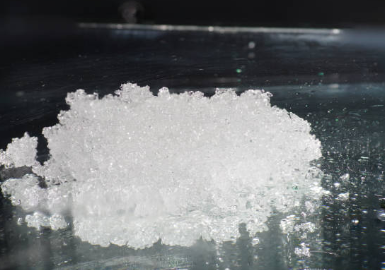
Potassium Carbonate is an alkaline, white, crystalline powder that readily absorbs moisture from the air. It dissolves easily in water to form a strongly basic solution but remains insoluble in organic solvents such as ethanol or ether. Historically derived from wood ashes, modern Potassium Carbonate is produced through the reaction of carbon dioxide with potassium hydroxide. This process yields a purer and more consistent material suitable for industrial standards.
| Property | Typical Value |
|---|---|
| Chemical formula | K₂CO₃ |
| Molecular weight | 138.21 g/mol |
| Appearance | White granular or powder form |
| Solubility in water | Highly soluble, forming alkaline solution |
| Melting point | Around 891°C (decomposes) |
The combination of stability, solubility, and alkalinity gives Potassium Carbonate a broad functional range—from manufacturing to analytical chemistry.
2. Major Potassium Carbonate uses and applications
Among inorganic salts, Potassium Carbonate stands out for its balanced chemical behavior. Its mild alkalinity makes it less aggressive than strong bases while still effective as a pH adjuster or reactant. Below are several key Potassium Carbonate uses in modern production and research:
- Glass and ceramics: Used as a flux to reduce melting temperatures and enhance optical clarity in high-quality glass, such as lenses and display panels.
- Food and beverages: Acts as a buffering and anti-caking agent, maintaining consistent texture and taste. It’s notably used in cocoa processing and certain Asian noodle formulations.
- Soap and detergent manufacturing: Provides alkalinity for saponification reactions and helps stabilize liquid detergent formulations.
- Agriculture: Supplies potassium in chloride-free fertilizers, suitable for crops sensitive to chlorides such as tobacco, grapes, or potatoes.
- Laboratory and industrial chemistry: Functions as a reagent for pH control and synthesis of potassium-based compounds.
In short, Potassium Carbonate in industry serves as a multi-purpose alkali that is both effective and relatively safe for routine applications.
3. Potassium Carbonate vs Sodium Carbonate
Although both compounds share carbonate chemistry, their physical and economic characteristics differ. Understanding these variations helps determine which carbonate better fits a specific use case.
| Aspect | Potassium Carbonate | Sodium Carbonate |
|---|---|---|
| Water solubility | Extremely soluble, absorbs moisture easily | Moderately soluble, forms crystalline solids |
| Alkalinity | Milder base, safer for heat-sensitive processes | Stronger base, more aggressive reactivity |
| Common applications | Specialty glass, food, fertilizers, electronics | Bulk detergents, paper, and common glassmaking |
| Cost | Higher due to purity requirements | Lower cost, widely available |
Thus, when comparing Potassium Carbonate vs Sodium Carbonate, the potassium variant is favored for specialized, high-purity, or chloride-free formulations, whereas sodium carbonate dominates bulk, low-cost applications.
Looking for chemical products? Let suppliers reach out to you!
You May Interested In


Glow70/KLOW80 99% China Peptides Warehouse Direct Delivery Lyophilized Powder in Stock
$169/UNIT FOB


2026-10-20
Trade Alert
Delivering the latest product trends and industry news straight to your inbox.
(We'll never share your email address with a third-party.)

Related News
-
Israeli Chemicals signs contract with Chinese company to supply potassium carbon
-
Acetophenone: Properties, Uses, and Applications
-
Sodium Percarbonate: Uses, Benefits, and Safety
-
TBHQ: Uses, Safety, and Health Effects
-
Acetonitrile: Properties, Uses, and Safety
-
HNO2 (Nitrous Acid): Properties, Uses, and Safety
-
Heptane: Properties, Uses, and Industrial Applications
-
Key Reactions of Cobalt Chloride
-
Chemical Properties and Applications of Cyclopropen
-
Uses and Properties of 3-Methyl-1-Butanol
Recommend Reading
-
![Key Reactions and Uses of Lithium Aluminum Hydride]()
Key Reactions and Uses of Lithium Aluminum Hydride
-
![A New Weapon Against Spider Mites: Canada Moves to Approve Novel Miticide for Greenhouse Growers]()
A New Weapon Against Spider Mites: Canada Moves to Approve Novel Miticide for Greenhouse Growers
-
![Potassium Nitrate Reactions & Uses (KNO3)]()
Potassium Nitrate Reactions & Uses (KNO3)
-
![L-Alanine: Amino Acid Profile, Sports Nutrition, and Metabolic Role]()
L-Alanine: Amino Acid Profile, Sports Nutrition, and Metabolic Role
-
![Sodium Benzoate (E211): Safety, Benzene Risk, and Preservative Uses]()
Sodium Benzoate (E211): Safety, Benzene Risk, and Preservative Uses
-
![Cost-side Support Boosts Polyester Staple Fiber Prices, Stopping the Decline and Rebounding]()
Cost-side Support Boosts Polyester Staple Fiber Prices, Stopping the Decline and Rebounding
-
![Double Positive Factors for Costs and Supply—PTA Prices Show Volatile but Strong Tendencies]()
Double Positive Factors for Costs and Supply—PTA Prices Show Volatile but Strong Tendencies
-
![Supply and Demand Easing Coupled with Bearish Moving Averages, Melamine Spot Prices Continue to Weaken in China]()
Supply and Demand Easing Coupled with Bearish Moving Averages, Melamine Spot Prices Continue to Weaken in China
-
![Crude Oil Prices First Fall, Then Rise; Retail Prices for Refined Oil Products Raised Again in This Round]()
Crude Oil Prices First Fall, Then Rise; Retail Prices for Refined Oil Products Raised Again in This Round
-
![Insufficient Demand for Cyclohexane in China, Prices Narrowly Fluctuate]()
Insufficient Demand for Cyclohexane in China, Prices Narrowly Fluctuate