In the future, the solvent in coatings will only develop in water-based way
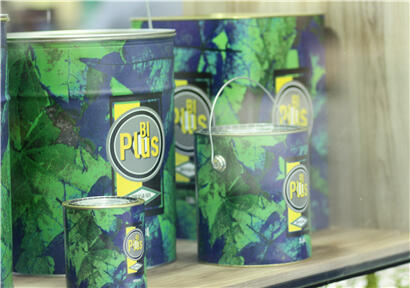
Solvent is an important part of solvent based coating. It is not only used to dissolve resin, reduce viscosity to improve manufacturing performance, but also affects construction and coating performance. The solvent based coating is an engineering coating which uses organic solvent as dispersion medium. Although solvent based coatings have the problems of environmental pollution, energy waste and high cost, they still have a certain range of application, and have their own obvious advantages online coating coatingol.com. First of all, from the performance comparison, solvent coating still has a great advantage. As an important diluent of paint, solvent is widely used in paint industry, but with the acceleration of environmental protection, traditional organic solvent has become an important problem hindering the development of the industry because of its toxic and harmful substances such as benzene, Toluene and xylene. The solvent is used for dissolving the adhesive, which is helpful for production and construction. It is the volatile component of the paint, which volatilizes during the drying process of the paint film. In order to obtain satisfactory results, mixed solvents are often used in practical production. The function of solvent in paint is often ignored. It is considered to be volatile, and it is always volatilized in the end and will not remain in the paint film, so it has little effect on the quality of paint film.
In fact, the dissolving power, volatilizing rate and other factors of various solvents will greatly affect the performance of paint production, storage, construction, film luster, adhesion and surface state. In coating manufacturing, two basic properties should be considered, namely, dissolving ability and volatilizing speed, when choosing suitable solvent. Dissolving ability refers to the ability of dissolving paint with solvent and reducing viscosity to achieve application purpose. The dissolving ability of the solvent to the binder can be based on the rule of experience: the polymer compound can dissolve in the low molecular solvent with similar structure; the liquid with the same or similar cohesive energy density can dissolve each other well. The solvent can be divided into main solvent (active solvent), cosolvent and diluent according to its function in coating. The main (active) solvent dissolves the resin, makes the resin solution and serves as the paint material of the coating. Many synthetic resins are solid, including most alkyd resins, some epoxies, chlorinated rubber resins and vinyl resins. The cosolvent is usually used together with the main solvent to make the coating easy to construct, control the evaporation rate and improve the quality of the final coating. There are many solvents that can't dissolve coating resin alone, but when they are mixed with a good solvent, they can obtain the same or greater dissolving power as the good solvent, which becomes a cosolvent, also known as a latent solvent. For example, alcohol solvent alone can not dissolve nitrocellulose, but it can obtain greater solubility when mixed with ketone and ester solvent in a certain proportion, so alcohol solvent is the cosolvent of nitrocellulose. The diluent is mainly used to dilute the ready-made paint, reduce the viscosity of the paint and facilitate the construction. It is a mixed solvent composed of a variety of solvents.
The selection principle of diluent is that it has good dissolving ability to the coating, can volatilize out of the coating with the drying of the coating film, has no non-volatile residual substances, and is easy to mix with the solvent, at the same time, the toxicity, flammability and other factors of diluent should be considered. In conventional liquid coatings, solvent accounts for about 30% - 50% of the total volume. The main functions of solvent in coating are: dissolving and dispersing the resin in coating, adjusting its viscosity and rheological property to make it easy to paint; increasing the storage stability of coating; improving the appearance of coating film, such as luster and fullness; increasing the wettability of coating to the substrate to improve the adhesion; making up a reasonable evaporation rate to give the coating the best fluidity and leveling. Different resin series can only be dissolved in different active solvents. In the same paint formula, a variety of resins are often used, so the combination of multiple active solvents can achieve better results.
Formulation principle of paint solvent: obtain the most stable and optimal performance balance among the active solvents, and add as many filling solvents as possible to optimize the cost and adjust the construction viscosity. Although low VOC emulsion paint, Water-based paint, UV curable paint and powder paint have developed rapidly to meet the increasingly stringent environmental protection requirements, solvent based paint still plays an important role in the field of paint due to its performance and construction advantages. Paint solvent is one of the most important components in paint formulation system, which accounts for about 30% - 50% of the proportion of paint system. In the golden age of solvent based coatings, for the formulation of coatings, the efficiency brought by solvent to coating system is more important than the solubility of coating resin in solvent. However, with the advent of the era of low VOC, the traditional organic solvent began to appear a new round of crisis. Due to the legal and economic reasons, the solvent has been limited to a disadvantage because of its defects as a physical substance. They are expensive, easy to move around and inconvenient to clean, most of them are flammable to some extent and may cause explosion hazards, many of them are harmful The use of solvents in the world has resulted in the loss of precious petroleum resources, and the disadvantages will outweigh the advantages when they are not used properly. No matter in economic cost or environmental responsibility, the paint industry needs to reexamine the current paint solvent market. Although the prospect of nontoxic water-based solvents is bright, the traditional solvents still have large-scale market application in China as a whole.

You May Interested In


High Quality β-Nicotinamide adenine dinucleotide CAS 53-84-9 NADwith ready stock and best price
$3E+1/UNIT FOB


2026-10-24
Trade Alert
Delivering the latest product trends and industry news straight to your inbox.
(We'll never share your email address with a third-party.)

Related News
-
Fluorine-Free Superhydrophobic Coating Made from Cellulose Nanofibrils
-
Klil Expands Its Business: Builds An Advanced And Innovative Coating Plant
-
Vietnam Successfully Researched Nano-Heat-Insulating Reflective Coatings
-
BASF Expands and Upgrades Coating Defoamer Unit at Turkish Plant
-
Middle East Coatings Show 2024——The Largest Gathering for the Coatings Community in the Mena Region
-
PPG’s new paint for a new start initiative to decorate schools worldwide with colorful makeovers
-
Pacific coating show 2023
-
The total investment is 320 million yuan! The paint project with an annual output of 100,000 tons was put into operation in Nanyang
-
Dow Coatings Products Win Ringier Technology Innovation Award
-
AkzoNobel Expands Production of Water-based Coatings in China
Recommend Reading
-
![Saudi East-West Oil Pipeline Shut Down After Attack, Disrupting 4 Million bpd of Oil Flow]()
Saudi East-West Oil Pipeline Shut Down After Attack, Disrupting 4 Million bpd of Oil Flow
-
![China's National Narcotics Control Commission Issues Important Notice: Beware of These 8 Chemicals Being Diverted for Drug Production]()
China's National Narcotics Control Commission Issues Important Notice: Beware of These 8 Chemicals Being Diverted for Drug Production
-
![This Is Not a Price Increase Wave but a Full-Blown Cost Squeeze Across China’s Coatings Chain]()
This Is Not a Price Increase Wave but a Full-Blown Cost Squeeze Across China’s Coatings Chain
-
![Global Countries Impose Tariffs on Chinese Chemical Products]()
Global Countries Impose Tariffs on Chinese Chemical Products
-
![South Korea Retires 1.39 Million Tonnes of Ethylene Capacity as Northeast Asia’s Petrochemical Reset Turns Real]()
South Korea Retires 1.39 Million Tonnes of Ethylene Capacity as Northeast Asia’s Petrochemical Reset Turns Real
-
![Cost and Supply Support Eases, Demand Under Pressure, Methylene Chloride Prices Retreat from High Levels]()
Cost and Supply Support Eases, Demand Under Pressure, Methylene Chloride Prices Retreat from High Levels
-
![Costs Rise, Hydrogen Peroxide Market Prices See an Increase]()
Costs Rise, Hydrogen Peroxide Market Prices See an Increase
-
![Business Society October 16, 2026 Acetic Acid Trend Analysis: Clear Downtrend]()
Business Society October 16, 2026 Acetic Acid Trend Analysis: Clear Downtrend
-
![Business Society October 21, 2026 Dichloromethane Trend Analysis: Decline]()
Business Society October 21, 2026 Dichloromethane Trend Analysis: Decline
-
![This week, the mainstream price of propylene oxide in the Chinese market has exceeded the 10,000 yuan mark (3.9-3.10)]()
This week, the mainstream price of propylene oxide in the Chinese market has exceeded the 10,000 yuan mark (3.9-3.10)