What are the weaknesses of China's local chemical industry?
The breakthrough of local chemical companies from MDI and PC
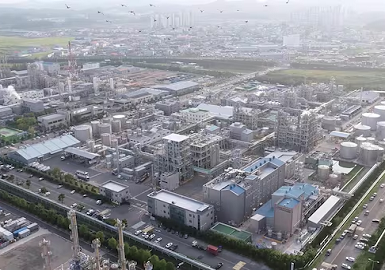
The output value of Chinese chemicals has surpassed the United States to become the world's number one as early as 2010. In 2014, it has surpassed the sum of the second United States and the third Japan combined; in 2019, five chemical companies, including Sinopec, Wanhua, and Formosa Plastics in Taiwan, entered the global top 50 (based on chemical sales revenue). After entering the 21st century, China has made many breakthroughs in the petrochemical industry and materials. The main logic is that the fast-growing Chinese market has driven the transfer of basic chemicals and general materials to domestic production capacity. China has become the fiercest battlefield for patentees. With the concentrated explosion of engineer bonuses and the counterattack of domestic equipment manufacturing industry, technological autonomy after reverse development has become a natural thing.
This situation is particularly significant in the coal chemical industry. Although various coal chemical technologies in the world have stepped out of the laboratory and sought industrialization very early, only in modern China have they contributed to the explosive prosperity of various coal-based chemicals. Coal gasification, direct coal-to-liquids, indirect coal-to-liquids, coal-to-olefins, coal-to-glycol, 10,000-ton coal-to-aromatics, low-rank coals, and the use of syngas conversion technologies have been successfully demonstrated and operated. In addition to the integration of foreign technology with capital guarantees, the autonomy of equipment is another important factor.Breakthroughs in air compressors, million-ton coal-to-liquid reactors, and 600,000-ton MTO reactors have contributed to the prosperity of the domestic coal chemical industry. In addition to the coal chemical process innovation, China has gradually realized import substitution for large quantities of chemicals such as MDI, either through independent development or through the introduction of technology.
MDI: Facing the technology blockade of foreign giants, Wanhua Chemical imported 10,000-ton MDI production units from Japan in the 1970s, and did not master the technical know-how for producing MDI through technology transfer and licensing, facing Serious consumption and quality problems. After the 1990s, Wanhua began technological transformation and independent development. After more than ten years of research, it successfully mastered the key manufacturing technology of MDI and developed a 160,000-ton MDI process package. Wanhua has realized the continuous operation of DAM condensation, phosgenation and crystallization separation equipment through its own development. Energy integration and process optimization significantly reduce the cost of utilities and raw materials consumption. After that, the company continued to break through the bottleneck in MDI production technology. Through technological innovation, the single-set production capacity in Ningbo was increased to 300,000 tons/year, and then increased to 400,000 tons, becoming the world's largest single-set capacity and the world's leading MDI technology. Wanhua is one of the few international manufacturers with MDI technology intellectual property rights, breaking the monopoly of the industry by overseas giants.
Polycarbonate (PC): As early as the 1960s, Chenguang Institute was the representative of the country to start the development of transesterification and phosgene production of PC technology. However, due to the backward process and equipment manufacturing level, it has not been able to achieve industrial production. Only Changzhou Synthetic Chemical Plant maintained a production scale of 1,000 tons, and the domestic market is completely monopolized by foreign manufacturers such as Bayer and Mitsubishi and import sources. Wanhua Chemical started the development of PC technology for interfacial polycondensation phosgene from 2005. After the successful commissioning of the pilot plant in 2010, an industrialization project was established in 2014 and the success of the 70,000-ton phosgene PC device was successfully put into operation in early 2018,, becoming the first domestic manufacturer to master the independent intellectual property rights of PC manufacturing technology of interfacial polycondensation. In May 2019, the transesterification process package developed by Chenguang Institute and Chengdu Organic Research Institute was also successfully applied to the production of 100,000-ton plant. After the successful independent development of polycarbonate technology, it can be seen that foreign companies such as Asahi Kasei soon began to lift restrictions on domestic technology transfer, and China is about to become the world's largest PC production country.

You May Interested In


High Quality β-Nicotinamide adenine dinucleotide CAS 53-84-9 NADwith ready stock and best price
$3/UNIT FOB


2026-10-17
Trade Alert
Delivering the latest product trends and industry news straight to your inbox.
(We'll never share your email address with a third-party.)

Related News
-
U.S.-Iran Détente Triggers Oil Price Plunge, Energy and Chemical Sectors Tumble
-
"Zipper-Like" Opening and Closing of Hormuz Coupled with Russian Export Ban Send Energy and Chemical Prices Soaring
-
Global Countries Impose Tariffs on Chinese Chemical Products
-
AUTOMA Chem 2026: Powering Industry 4.0 in Chemistry
-
Chemical Raw Materials: How to Source Quality Suppliers & Understand Grades
-
Big adjustment! Basf quietly closed 11 factories in Germany and transferred to China for plant investment!
-
Fluorine chemical: profit generally declined, under the pressure to expand profit space
-
Chemical production in the 27 EU countries has continued to recover, and the market recovery is still cautious
-
China: The development of green agricultural is the trend, and the future focus is on innovation and quality
-
Bayer: Revenue of 13.765 billion euros( Q1)was in line with expectations
Recommend Reading
-
![Strides Pharma Reports Strong Q2 as Net Profit Surges 82%]()
Strides Pharma Reports Strong Q2 as Net Profit Surges 82%
-
![Aekyung Chemical Plans to Sell Its Ningbo Subsidiary]()
Aekyung Chemical Plans to Sell Its Ningbo Subsidiary
-
![India Strengthens Drug Approval Oversight with Expanded CDSCO Powers]()
India Strengthens Drug Approval Oversight with Expanded CDSCO Powers
-
![West Asia Tensions Squeeze Pharma Raw Materials]()
West Asia Tensions Squeeze Pharma Raw Materials
-
![U.S. Health Chief Says No Evidence Linking Tylenol to Autism]()
U.S. Health Chief Says No Evidence Linking Tylenol to Autism
-
![Double Benefits: Aniline Market Rises Multiple Times]()
Double Benefits: Aniline Market Rises Multiple Times
-
![This Week's Styrene Market Weakens and Falls (5.11-5.15)]()
This Week's Styrene Market Weakens and Falls (5.11-5.15)
-
![On April 29, the market price of pure benzene in China was slightly increased]()
On April 29, the market price of pure benzene in China was slightly increased
-
![Butadiene Rubber Market Prices Surge Sharply]()
Butadiene Rubber Market Prices Surge Sharply
-
![Rise in Chinese Urea Market Prices (1.12-1.16)]()
Rise in Chinese Urea Market Prices (1.12-1.16)