




Viewing the survival of SME from the Japanese material industry
Since the 1980s and 1990s, Japan has been affected by external factors such as the sharp appreciation of the yen caused by the Plaza Agreement in 1985 and the expansion of China's opening up to the outside world in the 1990s. The stage of rapid economic growth has come to an end. With the saturation of the market and production and the increase in factor costs, Japanese small and medium-sized enterprises without economies of scale are facing huge competitive pressures, and the market structure is rapidly concentrating on head enterprises. In order to avoid the impact of a large number of SME bankruptcies on society, Japan has begun to actively help them to develop overseas and carry out large-scale industrial transfers overseas. Surprisingly, this shift has not caused the hollowing out of Japanese manufacturing industries, including the chemical and materials industries. Instead, it has provided more resources for higher productivity companies and the development of emerging industries. In the chemical industry, Japan has also successfully transformed the production of new materials and specialty chemicals. Their strategy of taking industrialization as a research and development and rapidly occupying the global market has achieved great success.
Taking the carbon fiber industry as an example, the core technology of global carbon fiber production is mainly in the hands of Japanese companies, including the steps of polymerization, spinning, and traction in the production of PAN raw silk, as well as low-temperature carbonization and high-temperature carbonization in the carbonization process. In the entire industrial chain, these two links account for 55% -75% of the profits. Japan’s carbon fiber production capacity and output have an absolute advantage (over 50%) in the world. In the small tow carbon fiber market, Toray , Teijin (the parent company of Toho) and Mitsubishi together account for 49% of the global market share; in the large tow carbon fiber market, Toray and Mitsubishi together account for 54% of the global market share. Take the semiconductor industry as an example. Despite the impact of South Korea and Taiwan in China after the 1990s, Japan’s technology and cost advantages in the DRAM field are no longer, and it gradually withdrew from the semiconductor chip market. Materials and equipment have maintained great advantages. The 19 necessary materials required for the production of semiconductor chips have extremely high technical barriers, and Japanese companies have used silicon wafers, synthetic semiconductor wafers, photomasks, photoresists, target materials, protective coatings, lead frames, ceramic plates, and plastics. Board, TAB (tape-tape automatic bonding), COF (thin film compound), wire bonding, packaging materials and other 14 important materials accounted for more than 50% of the shares, and has achieved Shin-Etsu Chemical, SUMCO, Sumitomo Bakelite, Hitachi Chemical and Kyocera Chemical's success in semiconductor materials. In addition to the success of the above-mentioned large and medium-sized chemical and materials companies, what impressed us even more was the achievements of some small and medium-sized chemical companies in Japan, especially those invisible champions in the subdivided fields, in the process of industrial upgrading and transformation.
Specialization and refinement are the survival of small and medium-sized chemical companies in Japan
The achievements of the chemical industries in Japan and South Korea in the past few decades have been to provide a large number of intermediate raw materials and end products to the Chinese market during the rise of the Chinese economy. A breakthrough in cost advantage was achieved, and we soon saw the collapse of related Japanese and Korean companies. Typical examples are many sub-sectors such as PTA and olefins. In addition to the competition among China, Japan and South Korea's petrochemical giants, the competition among SMEs in East Asia will become increasingly fierce in the future.
The Japanese chemical industry is highly concentrated. The sales revenue of the top 10 Japanese listed chemical companies totaled US $148.2 billion in 2018, accounting for 48.7% of all listed chemical companies. Among them, Mitsubishi Chemical Holdings, a large-scale petrochemical company, has a revenue scale of US $33.62 billion. Ranked first, followed by Toray, Sumitomo Chemical, Asahi Kasei, Shin-Etsu Chemical, Mitsui Chemicals, Showa Denko, Nippon Electric, Tosoh and DIC. The sales of the top 20 chemical companies accounted for 68.3% and the sales of the top 50 The proportion of the amount is 88.3%. Most of Japan's leading chemical companies are diversified. In addition to petrochemical products and basic chemicals, they are generally deployed in the fields of high-performance resins, specialty fibers, functional polymers, semiconductors, and integrated electronics and information materials. Compared with the diversification of head companies, the SMEs in the lower rankings are more specialized and refined. They basically do not produce basic chemicals, except for the production of terminal fine chemicals related to industrial production, life and health. A considerable number of companies produce functional materials related to semiconductors and display devices, such as photoresist for semiconductor packaging(Photoresist), Japan's JSR Micro and Tokyo Industries (ToK) are the top two global suppliers. In terms of IC packaging carrier boards, ABF substrate layer dielectric materials, manufacturing packaging substrate core layer materials, epoxy solid state packaging materials, lead frames, wire bonding materials, underfills, etc., these Japanese manufacturers also occupy the top positions in the world.

You May Interested In


2026-09-20
Trade Alert
Delivering the latest product trends and industry news straight to your inbox.
(We'll never share your email address with a third-party.)

Related News
-
Japanese Plastics Market Accelerates its Shifts to Recycled Materials and Bioplastics
-
India imposes anti-dumping duties on water treatment chemicals from China, Japan
-
Leakage Accident Turns Pristine Waters of Nago, Japan into Red: Propylene Glycol Safety Concerns Arise
-
Japanese squid imports increased 26% year-on-year in October
-
The operating conditions of the German chemical industry have further deteriorated
-
More than 1.5 million chickens will be culled in Japan amid an outbreak of bird flu
-
The utilization rate of ethylene equipment in Japan is continuously lower than 90%
-
Overseas agricultural information express
-
Legendary Bio BCMA CAR-T approved for sale in Japan
-
How can we use nitrogen as fuel in various industry?
Recommend Reading
-
![EU Low-Value Parcel Rules Could Disrupt Chemical Sample Flows]()
EU Low-Value Parcel Rules Could Disrupt Chemical Sample Flows
-
![EU May Build Industry-Level Trade Barriers Against Chinese Chemicals]()
EU May Build Industry-Level Trade Barriers Against Chinese Chemicals
-
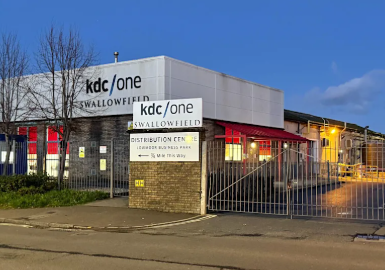
![End of an Era: KDC/One to Close 150-Year-Old Somerset Cosmetics Factory as Production Shifts to Scotland]()
End of an Era: KDC/One to Close 150-Year-Old Somerset Cosmetics Factory as Production Shifts to Scotland
-
![]()
"No available slots" returns as global shipping rates skyrocket amid multiple factors
-
![Why Did Chemical Raw Materials Unexpectedly Escape the Latest Round of U.S. 301 Tariffs on 60 Economies?]()
Why Did Chemical Raw Materials Unexpectedly Escape the Latest Round of U.S. 301 Tariffs on 60 Economies?
-
![Double Negative Impact on Costs and Demand—Polyester Staple Fiber Prices Shift Lower in May]()
Double Negative Impact on Costs and Demand—Polyester Staple Fiber Prices Shift Lower in May
-
![Cost Advantages Support, Polyester Staple Fiber Prices Remain on an Upward Trend]()
Cost Advantages Support, Polyester Staple Fiber Prices Remain on an Upward Trend
-
![Both Cost and Demand Weaken, PTA Prices Fluctuate and Decline in May]()
Both Cost and Demand Weaken, PTA Prices Fluctuate and Decline in May
-
![Weakening Fundamentals Lead to Declining Prices for Polyester Staple Fiber]()
Weakening Fundamentals Lead to Declining Prices for Polyester Staple Fiber
-
![May China Ammonium Sulfate Market Declines from High Levels]()
May China Ammonium Sulfate Market Declines from High Levels





- Hot Searches
- propylene glycol prices
- polycaprolactam polymer registered under number 25038-54-4
- methyl acrylate sds
- disodium octaborate tetrahydrate distributor
- alminium chloride
- buying adrenochrome
- ethylene glycol price
- reta for sale
- areprazole
- retatrutide for sale online usa
- where to buy methyl anthranilate
- research peptide tirzepatide for sale