What is the freezing point of sodium chloride?
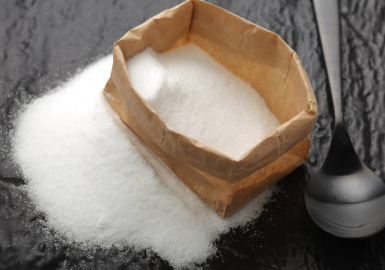
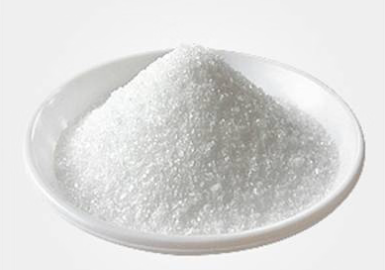
What is the freezing point of sodium chloride? Sodium chloride is the most abundant mineral in the Earth's oceans and seas. Known as the "elements of life" for its role in salt, Na+Cl is also known to have great commercial value in many industrial applications
Sodium chloride freezing point
Sodium chloride freezing is easy to determine experimentally by measuring the temperature at which a solution has changed from its normal liquid state to a solid mixture of ice and water. The actual freezing point will be lower due to the fact that the change in temperature can be affected by processes such as heat transfer, evaporation, surface tension of liquids during freezing or heat conduction through solid materials.
Sodium chloride's freezing point is -5.5℃ (23.9℉).
Factors that affects the freezing point of sodium chloride
1. Temperature of the solution
The sodium chloride freezing point can be affected by the temperature of the solution. For example, if we compare the freezing point in an ice-water mixture with the same concentration of sodium chloride in pure water, then at room temperature, it will take three times longer to freeze in a 1% solid sodium chloride ice-water mixture compared to that in pure water.
2. Concentration of ion in the solution
Sodium chloride can also be affected by the concentration of the ion in solution. The freezing point of a 1% solid sodium chloride ice-water mixture is lower compared to that in pure water at a higher concentration of ion in solution as shown by Galton and MacKenzie in 1941. The researchers also found that the freezing point of 1% supercooled liquid can be lowered down to -2 degrees Celsius when the same concentration is used.
3. Pressure applied to the solution
The freezing point of sodium chloride can also be affected by the pressure applied to the solution. This is mainly due to the fact that as the pressure rises, there will be more energy added which results in an increase in temperature. The larger the volume of the solution, and thus the increased value of pressure, denotes that there will be a decrease in temperature at a lower rate.
4. Density of the solution's ice
If the density of the solution's ice is lower than that of pure water, then the freezing point will drop. This is due to the fact that energy will be added to the system due to the larger volume and increased pressure.
5. Type of solution
Sodium chloride can also be affected by the type of solution. For example, if the solution is made up of less mixed ions than that of pure water, then the freezing point will rise. This is due to the fact that diluted solutions freeze at a higher temperature because less energy is needed to transform ice into liquid form.
6. Salt concentration in the solution
The higher the concentration of salt in the solution, the lower the freezing point will be. This is due to the fact that ions and water molecules are held together by strong intermolecular forces which cause a lower freezing point. On the other hand, a higher concentration of salt in a solution may lead to an increase in freezing point due to ionic interactions.
7. Salt's ionic strength
The salt's ionic strength is another factor that will affect the freezing point of the solution. This is due to the fact that ions have a more energy-intensive process compared to that of pure water molecules. The increase in ionic strength will cause a decrease in freezing point.
8. The presence of impurities
Various impurities such as ions other than sodium chloride will also change the freezing point of the solution. This is due to the fact that different types of ions may interact with each other and thus cause impurities to diffuse through into the solution.
9. Density of water used to make solution
The density of water used in the solution can affect its freezing point. It can be due to the fact that water is a physical fluid and may possess different densities from that of pure water. These varying densities can change the freezing point as well as dilute solutions will also have a lower melting point.
Conclusion
Understanding the freezing point of sodium chloride is a very important step in understanding how this chemical compound behaves at different temperatures. Understanding how this ice formulates is also important because it can be used to make items such as salt crystals and salt-water solutions. Knowledge of its freezing point will greatly help people to take proper measures when dealing with it on earth as well as in labs.
Looking for chemical products? Let suppliers reach out to you!
Fun Facts About Sodium
You May Interested In


Glow70/KLOW80 99% China Peptides Warehouse Direct Delivery Lyophilized Powder in Stock
$169/UNIT FOB


2026-10-24
Trade Alert
Delivering the latest product trends and industry news straight to your inbox.
(We'll never share your email address with a third-party.)

Related News
-
Sodium Chloride (NaCl): Food Grade vs Industrial Grade Uses & Safety Data
-
What Is Sodium Chloride And Sodium Bicarbonate, And Uses
-
Miracle Cure? Sodium Chloride And Sodium Bicarbonate Health Benefits
-
Sodium Chloride (NaCl): Properties, Biological Importance, and Applications
-
ADAMA Targets Sucking Pests with Ateka
-
EFSA Reviews Clodinafop Risk
-
Sulfuric Acid (H2SO4): Properties, Battery Uses, and Extreme Safety Hazards
-
What is Trametenolic Acid? (Structure, Sources & Research)
-
Ammonia Chemical Formula: NH3 Structure & Properties
-
Benzyl Alcohol: Uses in Cosmetics, Preservative Efficacy, and Safety
Recommend Reading
-
![Uses of Sodium Citrate Dihydrate in Food Industry]()
Uses of Sodium Citrate Dihydrate in Food Industry
-
![Chemical Properties and Uses of Caesium Fluoride]()
Chemical Properties and Uses of Caesium Fluoride
-
![Uses and Properties of Chromium Oxide]()
Uses and Properties of Chromium Oxide
-
![Tert Butylate: Properties and Applications]()
Tert Butylate: Properties and Applications
-
![Imidazole: Heterocyclic Chemistry, Antifungal Drugs, and Buffer Systems]()
Imidazole: Heterocyclic Chemistry, Antifungal Drugs, and Buffer Systems
-
![Insufficient Downstream Demand, DMF Market Primarily Ranges Within a Narrow Band]()
Insufficient Downstream Demand, DMF Market Primarily Ranges Within a Narrow Band
-
![India Approves ₹30.3 Billion Chemical-Park Scheme to Build Three Mega Industrial Hubs]()
India Approves ₹30.3 Billion Chemical-Park Scheme to Build Three Mega Industrial Hubs
-
![Business Society October 9, 2026 Ethanol Trend Analysis: Volatile with a Weak Tendency]()
Business Society October 9, 2026 Ethanol Trend Analysis: Volatile with a Weak Tendency
-
![Costs Decline as Phthalic Anhydride Prices Fluctuate and Fall This Week]()
Costs Decline as Phthalic Anhydride Prices Fluctuate and Fall This Week
-
![Methanol Market Prices Increase Significantly in China]()
Methanol Market Prices Increase Significantly in China