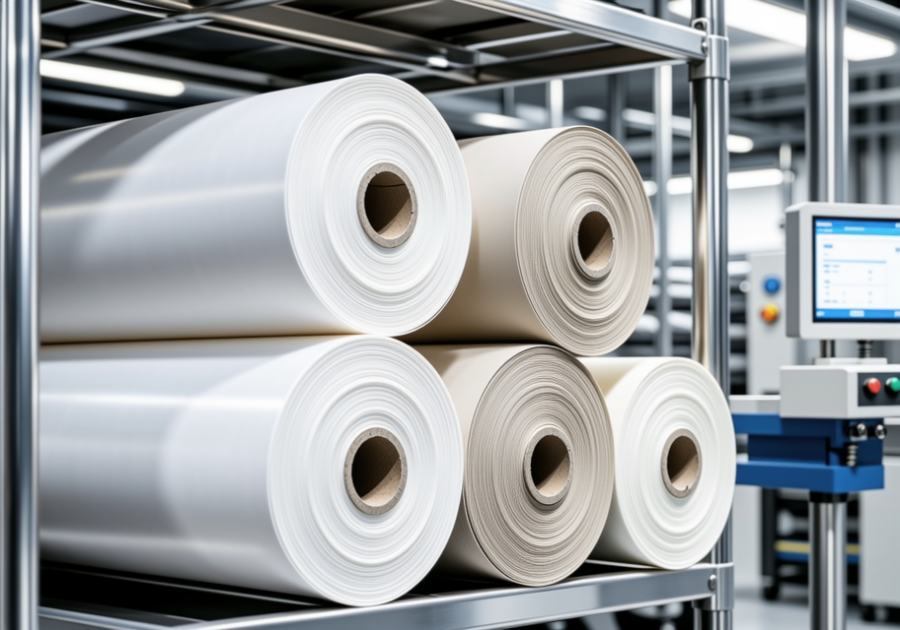
Yanan Petrochemical converted polypropylene medical non-woven fabric material
On March 30, the polypropylene plant of Yan'an Petrochemical Plant successfully converted to a new grade of polypropylene fiber material (PPH-Y38), marking the plant's ability to mass-produce special materials for medical non-woven fabrics and promoting the production differences of refining and chemical companies. Polypropylene products. The device is currently operating stably.
At 8:45 in the morning on the 30th, the conversion was carried out as planned, and the operator carefully adjusted various reaction parameters. At 14:30, a new product PPH-Y38 was produced. The melt index and appearance were all qualified. On the 31st, the new product's tensile yield, isometric and other indicators were all qualified.
For the production of PPH-Y38 products, the control of the extrusion granulator system is the key point, there are many related factors, and it is easy to cause downtime. The Party Branch of Yanhua United Second Workshop established a party member project research team, brainstorming, extensively collecting relevant technical information, analyzing and summing up the experience and lessons of other production enterprises, and repeatedly studying and formulating detailed trial production plans.
"In addition to the difficulty in controlling the extrusion granulator system, the operation of the pelletizer equipped with the device is also very difficult. On average, every 15 minutes, we take a sample analysis and try our best to overcome the unfavorable factors." Du Xiong, director of the second workshop of Yanhua United, said During the trial production, everyone controlled the whole process, accurately judged the possible problems, and successfully overcome the difficulties of the main parameters of the product melting index and the extrusion granulation system.
It is understood that PPH-Y38 products have the advantages of easy processing, low density, stable chemical properties, anti-mold and antibacterial, etc., and can be widely used in textiles, clothing, medical and sanitary products and other fields.

You May Interested In


Glow70/KLOW80 99% China Peptides Warehouse Direct Delivery Lyophilized Powder in Stock
$169/UNIT FOB


2026-10-23
Trade Alert
Delivering the latest product trends and industry news straight to your inbox.
(We'll never share your email address with a third-party.)

Related News
-
China’s Polyolefin Exports Keep Surging, Reversing the Global Plastics Trade Map
-
Understanding Polypropylene Injection Molding: A Complete Guide
-
Polypropylene vs PVC: The Difference Between Them
-
Shangyu 300,000 tons/year propylene oxide, 250,000 tons/year hydrogen peroxide plant open bidding
-
Jincheng Petrochemical 300,000 tons/year propylene oxide plant successfully started
-
Sino Korea Petrochemical successfully produced HCPP high-end polypropylene products
-
Guangxi 10 Billion chemical project started construction
-
Kazakhstan annual output of 500,000 tons of polypropylene project started successfully
-
Global polyolefin market indicators will remain depressed
-
Global polypropylene supply and demand variables increase steeply
Recommend Reading
-
![Novo Nordisk’s Oral Wegovy Wins EU Approval as Weight-Loss Competition Shifts from Injections to Pills]()
Novo Nordisk’s Oral Wegovy Wins EU Approval as Weight-Loss Competition Shifts from Injections to Pills
-
![Ingredion Agrees to Acquire Tate & Lyle for $3.6 Billion, Reshaping the Global Specialty Ingredients Market]()
Ingredion Agrees to Acquire Tate & Lyle for $3.6 Billion, Reshaping the Global Specialty Ingredients Market
-
![Wanhua Chemical and Xingfa Group Jointly Develop 5.32 Billion Yuan Phosphate Mine]()
Wanhua Chemical and Xingfa Group Jointly Develop 5.32 Billion Yuan Phosphate Mine
-
![Evonik to Close Two German Plants, Further Cutting Europe’s High-Purity Silicon Tetrachloride Capacity]()
Evonik to Close Two German Plants, Further Cutting Europe’s High-Purity Silicon Tetrachloride Capacity
-
![US Chemical Shutdown Wave Expands, PS Units Become the Hardest Hit Segment]()
US Chemical Shutdown Wave Expands, PS Units Become the Hardest Hit Segment
-
![Business Society’s Acrylic Acid Trend Analysis for September 17, 2026: Strong Consolidation]()
Business Society’s Acrylic Acid Trend Analysis for September 17, 2026: Strong Consolidation
-
![This Week DMF Continues to Be Strong, Entering an Accelerated Rising Phase]()
This Week DMF Continues to Be Strong, Entering an Accelerated Rising Phase
-
![Business Society’s BDO Trend Analysis on September 16, 2026: High-Range Fluctuations]()
Business Society’s BDO Trend Analysis on September 16, 2026: High-Range Fluctuations
-
![Cost support weakens, polyester staple fiber prices continue to decline]()
Cost support weakens, polyester staple fiber prices continue to decline
-
![Business Society’s Melamine Trend Analysis for September 17, 2026: Volatile and Bearish]()
Business Society’s Melamine Trend Analysis for September 17, 2026: Volatile and Bearish