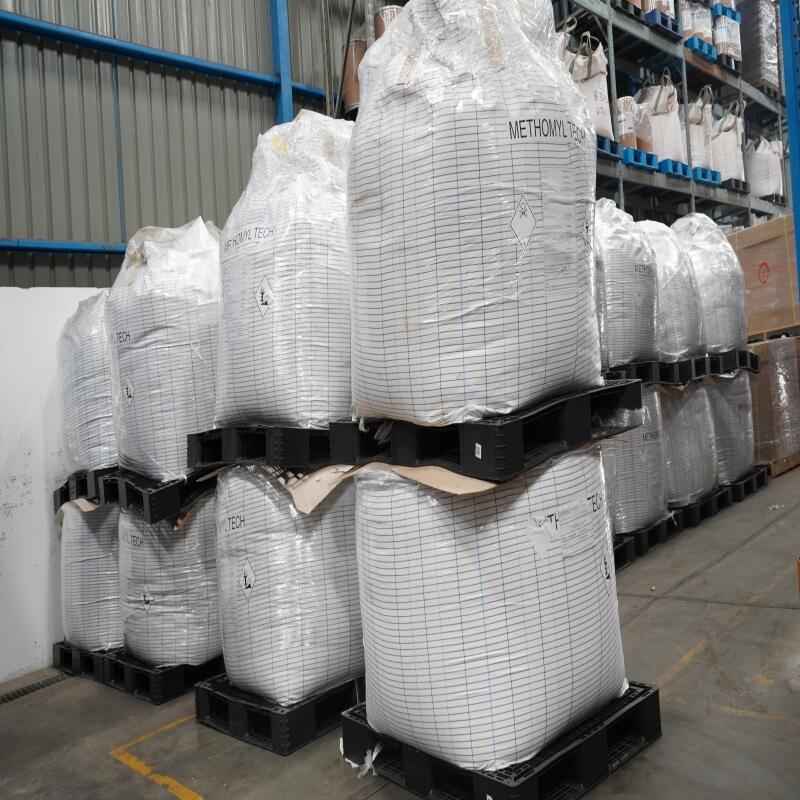
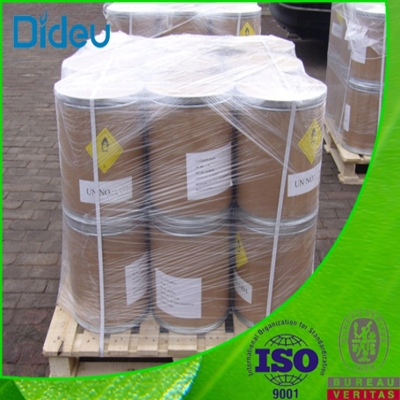
Thiourea 99.05%
15 Inquiries
62-56-6
Industrial Grade
99.05%
QINGDAO
25kg/0.2kg Bag
2017-10-06

-
Product Description
-
Seller Information
-
Inquiry History
-
Description
White and shiny crystal. Bitter taste. The density of 1.41. The melting point of 176 ~ 178 ℃. More thermal decomposition. When heated to dissolve in water, soluble in ethanol, very slightly soluble in ether. When molten partly on isomerization and form than ammonium thiocyanate. Used in the manufacture of the drug, dye, resin, such as molding powder of raw material, also used as rubber vulcanization accelerator, metallic minerals flotation agent and so on. By hydrogen sulfide and lime sulfur into calcium hydroxide, cyanogen amine (base) to the calcium role again. Ammonium rhodanide melting will also be making, or will cyanamid and hydrogen sulfide.
Chemical properties
Flame, high combustible. Thermal decomposition and released the oxides of nitrogen, sulfur, toxic gases. Strong reaction can occur with antioxidants. [1]
Easy deliquescence in the air. At 150 ℃ into ammonium thiocyanate. During 150-160 ℃ under vacuum sublimation, 180 ℃ when the decomposition. Has a reducing, it can make free iodine back into iodine ions. This product very reactive to the preparation of various compounds. Can react with a variety of antioxidants to produce the urea, sulfuric acid and other organic compounds, can be made easily dissolved addition compound and inorganic compound.
This product a role when small toxicity, repeatedly can absorbed by skin, inhibit thyroid and hematopoietic organs function, causes central nerve palsy and symptoms such as respiratory and cardiac function. Production of this product 1 ~ 15 years of workers, there will be a headache, lethargy, general weakness, dry skin, bad breath, mouth pain, upper abdominal pain, constipation, urinary frequency and other symptoms. Typical symptoms of pale face, facial puffiness, abdominal distension, basal metabolism is reduced, lower blood pressure, pulse slow, electrocardiogram (ecg) changes. Also can appear the symptom such as skin disease. The product of frog LD50 to 10 g/KG, D50 of rat subcutaneous injection for 4 g/KG. Lethal dose for people, accounts for 10 g/kg. Production workers should wear protective mask, protective clothing, pay attention to safety. Production equipment should be closed, no run, run, drip, leak phenomenon. [2]
Editing functions and purposes
Used to synthesize sulfathiazole, methionine and pig drugs such as raw materials. Used as dye and dyeing auxiliaries, resin and molding compound materials. Also can be used as a rubber vulcanization accelerator, metallic minerals flotation agent, phthalic anhydride and fumaric acid catalyst, and used for metal rust remover. In terms of photographic materials, can be used as a developer and toner. Can also be used in electroplating industry. Thiourea is also used in diazo sensitive paper, synthetic resin coating, anion exchange resin, germination promoting agent, fungicide and many other aspects. Thiourea is also used as fertilizer. [3]
Used in the manufacture of the drug, dye, resin, molding compound, rubber vulcanization accelerator, raw material of the metal mineral flotation agents etc. [2]
Use note editor
An overview of risk
Health hazard: a role when small toxicity, repeatedly when inhibits the function of the thyroid gland and hematopoietic organs. Can cause allergic reactions. Can be absorbed through the skin. The goods of dust in the eyes and upper respiratory tract are irritating, cause cough, chest discomfort after inhaling. Oral stimulation of gastrointestinal tract. Chronic effects: long-term exposure to appear have a headache, drowsiness, weakness, pale face, facial puffiness and reduced basal metabolism, blood pressure, pulse slow, leukopenia, etc. Has damage to the skin, skin itching, sweaty palms, dermatitis, chaps, etc.
Environmental hazards: have harm to the environment.
Combustion hazard: the goods flammable, toxic, stimulative. [1]
First aid measures
Skin contact: remove contaminated clothing, and water to thoroughly flushed the skin with soap and water.
Eye contact: mention eyelid, irrigate with flowing water or normal saline. Go to a doctor.
Inhalation: quickly from the scene to fresh air. Keep respiratory tract unobstructed. Such as difficulty in breathing, give oxygen. If breathing stops, artificial respiration immediately. Go to a doctor.
Eating: drink enough water, vomiting. Go to a doctor. [1]
Fire control measures
Hazardous combustion products: nitrogen oxides, sulfur oxide.
Fire extinguishing methods: with water, foam, carbon dioxide, sandy soil. [1]
Leak emergency treatment
Emergency treatment: the isolation leakage pollution area, restricted movement. Cut off the fire. Recommended emergency personnel wear dust mask (comprehensive cover), in general work overalls. Don't direct contact with the leakage.
A small leak: use clean shovel collection in a dry, clean, covered container.
Collecting leak: recycling or shipped to the disposal of waste places. [1]
Operation treatment and storage
Operation note: airtight operation, local exhaust. Operators must receive special training, strictly abide by the operation procedures. Suggest operators wear self-priming filter type dust mask, wearing chemical safety protective glasses, wear rubber gloves. Away from fire and heat source, the workplace smoking is strictly prohibited. Use explosion-proof ventilation systems and equipment. Avoid dust. Avoid contact with oxidant, acid type. Light light discharge when handling to prevent damage to packaging and container. Equipped with corresponding varieties and number of fire equipment and spill contingency processing equipment. Empty containers may remain inside.
Storage precautions: store in a cool, ventilated warehouse. Away from fire and heat source. Packing seal. Should with oxidant, acids, edible chemicals stored separately, mixed reservoir of avoid by all means. Equipped with corresponding varieties and number of fire equipment. Storage area should be equipped with the right material for leakage content. [1]
Security term
Wear suitable protective clothing and gloves.
Avoid release to the environment. Refer to special instructions/safety data sheets.
Risk term
Devour the harmful.
A few reports have carcinogenic effects.
Toxic to aquatic organisms, may cause long-term adverse effects in the aquatic environment.
May have the risk of harm the fetus.
Basic Info-
Product Name:
Thiourea
Other Name:Thiourea;Urea,thio-;Pseudourea,2-thio-;Pseudourea (NH2.C(OH):NH),thio-;Thiocarbamide;THU;β-Thiopseudourea;2-Thiourea;Pseudothiourea;Isothiourea;TsIZP 34;NSC 5033;1032826-45-1;1429623-74-4;1803177-22-1
CAS No.:62-56-6
UN No.:2811
Molecular Formula:CH4N2S
InChIKeys:InChIKey=UMGDCJDMYOKAJW-UHFFFAOYSA-N
Molecular Weight:76.12090
Exact Mass:76.12
EC Number:200-543-5
HScode:2930909090
Characteristics-
PSA:
84.13000
XLogP3:0.58930
Appearance:Thiourea appears as white or off-white crystals or powder. Sinks and mixes with water. (USCG, 1999)
Density:1.405 g/cm3
Melting Point:176-178 °C
Boiling Point:186.8ºC at 760 mmHg
Flash Point:66.8ºC
Refractive Index:1.637 (30ºC)
Water Solubility:H2O: 13.6 g/100 mL (20 ºC)
Storage Conditions:Store at RT.
Vapor Pressure:1.41X10⁻⁷ mm Hg at 25 deg C
Toxicity:LD50 orally in wild Norway rats: 1830 mg/kg (Dieke)
Odor:Odorless
Taste:Bitter
Hazard IdentificationClassification of the substance or mixture
Acute toxicity - Category 4, Oral
Carcinogenicity, Category 2
Hazardous to the aquatic environment, long-term (Chronic) - Category Chronic 2
Reproductive toxicity, Category 2
GHS label elements, including precautionary statements
Pictogram(s) 
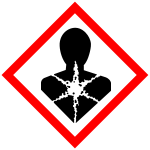
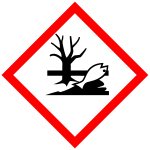
Signal word Warning
Hazard statement(s) H302 Harmful if swallowed
H351 Suspected of causing cancer
H411 Toxic to aquatic life with long lasting effects
Precautionary statement(s) Prevention P264 Wash ... thoroughly after handling.
P270 Do not eat, drink or smoke when using this product.
P203 Obtain, read and follow all safety instructions before use.
P280 Wear protective gloves/protective clothing/eye protection/face protection/hearing protection/...
P273 Avoid release to the environment.
Response P301+P317 IF SWALLOWED: Get medical help.
P330 Rinse mouth.
P318 IF exposed or concerned, get medical advice.
P391 Collect spillage.
Storage P405 Store locked up.
Disposal P501 Dispose of contents/container to an appropriate treatment and disposal facility in accordance with applicable laws and regulations, and product characteristics at time of disposal.
Other hazards which do not result in classification
no data available
Handling and StoragePrecautions for safe handling
NO open flames. Handling in a well ventilated place. Wear suitable protective clothing. Avoid contact with skin and eyes. Avoid formation of dust and aerosols. Use non-sparking tools. Prevent fire caused by electrostatic discharge steam.
Conditions for safe storage, including any incompatibilities
Separated from acids, food and feedstuffs, acrolein and oxidants. Cool. Well closed. Keep in a well-ventilated room.
-
-
Seller Information
-
Business Type:
Manufactory
-
Location:
Heze development zone Yangtze river east road no. 4666
-
-
Inquiry History15 Inquiries
Country Product Purchase Quantity Date Posted  United States
Thiourea
10000 MT Jun 15, 2024  Uzbekistan
Thiourea
1 PCS Dec 30, 2025  Democratic Republic of the Congo
Thiourea
30 MT Nov 21, 2025  India
India
THIOUREA
4.00 20' Fcl Jan 21, 2025  Vietnam
Thioure
500.00 KG Feb 27, 2024  United Arab Emirates
Thiourea
500 KG Jun 13, 2024
India
Thio Urea
5.00 MT Jan 9, 2024
India
Thiourea
1 20' Fcl Sep 15, 2023  Russia
thiourea 99%
40 MT Mar 27, 2025
Vietnam
Thiourea
6.00 TON Mar 4, 2024
Russia
Collector for copper, copper-gold, and polymetallic sulfide ores
2 KG Feb 9, 2026
Russia
Collector for copper sulfides and copper-gold ores
2 KG Feb 9, 2026
Russia
Collector for coal enrichment
2 KG Feb 9, 2026
Russia
Collector for copper and lead
2 KG Feb 9, 2026
Russia
Collector for low-sulfur copper minerals associated with gold and silver
2 KG Feb 9, 2026 Post an enquiry for this product