Product
Supplier
Encyclopedia
Inquiry
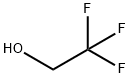
2,2,2-Trifluoroethanol75-89-8 buy - large image1
2,2,2-Trifluoroethanol75-89-8 buy - image1
2,2,2-Trifluoroethanol75-89-8 buy - image2
2,2,2-Trifluoroethanol75-89-8 buy - image3
2,2,2-Trifluoroethanol75-89-8 buy - image4
2,2,2-Trifluoroethanol75-89-8 buy - image5
2,2,2-Trifluoroethanol75-89-8 buy - image6

2,2,2-Trifluoroethanol75-89-8

4 Inquiries

Unit Price:

$33-34/MT FOB

Get Latest Price
CAS No.:

75-89-8

Grade:

Industrial Grade

Content:

99.5%

Port:

上海

Brand:

OORENT

Packaging:

Vial/Bottle/Bag/Carton

Price valid (until):

2026-07-17

Company Type:
Trader
Location:
China
Qualification:
Main Products:

pharmaceutical intermediates,peptides,electronic chemicals

  • Product Description

  • Seller Information

  • Inquiry History

  • Description

    Product Detail

    2,2,2-Trifluoroethanol Basic information
    Description Chemical properties Uses Preparation method Hazards & Safety Information
    Product Name: 2,2,2-Trifluoroethanol
    Synonyms: Trifluoro Ethanol(L);2,2,2-Trifluoroethanol,Trifluoroethyl alcohol;2,2,2-Trifluoroethanol, reagent grade;2,2,2-Trifluoroethan;2,2,2-Trifluoroethan-1-ol 99%;2-Hydroxy-1,1,1-trifluoroethane, (Trifluoromethyl)methanol;2,2,2-TRIFLUOROETHANOL-D3, HIGH ENRICHMENT;1,2,2-trifluoroethan-1-ol
    CAS: 75-89-8
    MF: C2H3F3O
    MW: 100.04
    EINECS: 200-913-6
    Product Categories: organofluorine compounds;Organics;API intermediates;Other Reagents;Fluorinated Building Blocks;Fluorinating Reagents & Building Blocks for Fluorinated Biochemical Compounds;Synthetic Organic Chemistry;Chemistry;3;1;bc0001;R00001
    Mol File: 75-89-8.mol
    Shop 2,2,2-Trifluoroethanol75-89-8-Detailed Image 1

    2,2,2-Trifluoroethanol Chemical Properties
    Melting point  −44 °C(lit.)
    Boiling point  77-80 °C(lit.)
    density  1.391 g/mL at 20 °C
    vapor density  3.5 (vs air)
    vapor pressure  70 mm Hg ( 25 °C)
    refractive index  n20/D 1.3(lit.)
    Fp  85 °F
    storage temp.  Store below +30°C.
    solubility  soluble in Chloroform, Methanol
    pka 12.4(at 25℃)
    form  Liquid
    color  Clear colorless
    Specific Gravity 1.373
    Odor Alcoholic odour
    PH 7
    PH Range 5-7 (10% aq soln)
    biological source goat
    explosive limit 8.4-28.8%(V)
    Water Solubility  Miscible with water, ethers, ketones, alcohols and chloroform.
    λmax λ: 260 nm Amax: ≤0.03
    λ: 280 nm Amax: ≤0.02
    Merck  14,9682
    BRN  1733203
    Henry's Law Constant 4.7×10⁻¹ mol/(m3Pa) at 25℃, Burkholder et al. (2019)
    Dielectric constant 8.5500000000000007
    Stability: Stable. Flammable - note wide explosion limits. Moisture sensitive. Incompatible with strong oxidizing agents, strong acids, sodium, potassium.
    Major Application sample preparation
    InChI 1S/C2H3F3O/c3-2(4,5)1-6/h6H,1H2
    InChIKey RHQDFWAXVIIEBN-UHFFFAOYSA-N
    SMILES OCC(F)(F)F
    CAS DataBase Reference 75-89-8(CAS DataBase Reference)
    NIST Chemistry Reference Ethanol, 2,2,2-trifluoro-(75-89-8)
    EPA Substance Registry System 2,2,2-Trifluoroethanol (75-89-8)

    Safety Information
    Hazard Codes  Xn,T,F
    Risk Statements  10-20/21/22-37/38-41-62-38-36/37/38
    Safety Statements  26-36-39-45-36/37/39-16
    RIDADR  UN 1986 3/PG 3
    WGK Germany  1
    RTECS  KM5250000
    Autoignition Temperature ~896 °F
    Hazard Note  Flammable/Toxic
    TSCA  TSCA listed
    HazardClass  3
    PackingGroup  III
    HS Code  29055910
    Storage Class 3 - Flammable liquids
    Hazard Classifications Acute Tox. 3 Inhalation
    Acute Tox. 3 Oral
    Eye Dam. 1
    Flam. Liq. 3
    Repr. 1B
    STOT RE 2 Inhalation
    Toxicity LD50 orally in Rabbit: 240 mg/kg LD50 dermal Rat 1680 mg/kg
    MSDS Information
    Provider Language
    2,2,2-Trifluoroethanol English
    ACROS English
    SigmaAldrich English
    ALFA English

    2,2,2-Trifluoroethanol Usage And Synthesis
    Description 2,2,2-trifluoroethanol or trifluoroethanol is called TFEA or TEF, it is important intermediate of the fluorine-containing aliphatic, it is colorless, it is miscible liquids with water, it has similar odor with ethanol. Due to the strong electron-withdrawing effect of trifluoromethyl, acid of trifluoromethyl is stronger than ethanol, it can generate hydrogen-bonded stable complex (such as: tetrahydrofuran, pyridine) with heterocyclic compound. Due to this unique physical and chemical properties and special molecular structure, it has different performance with other alcohols, it can participate in a variety of organic reactions, it can be oxidized to acetaldehyde trifluoromethyl or trifluoroacetic acid, it can also provide trifluoromethyl, it can participate in the Still-Gennari improvements of Horner-Wadsworth-Emmons reaction. It has wide range of uses in medicine, pesticides, dyes, energy, and other aspects of organic synthesis.
    The main use of trifluoroethanol is as anesthetic, at the earliest, fluorine acetylene ether which synthesized by trifluoroethanol and acetylene takes place of bigger side effects of bromine-fluoro alkanes as anesthetic, and then trichloroethanol is used as raw material to develop non-flammable, low toxicity isoflurane alkanes and high performance of the new anesthetic of chlorofluoroalkane. Trifluoroethanol can be introduced into drug structure as trifluoromethyl of functional group, it can generate significant physiological activity, increase fat-soluble of molecules, improve efficacy or reduce side effects of the organism, its synthetic drugs have central nervous system stimulants fluticasone Seoul, substituted pyridines stomach cytoplasmic proton pump inhibitor Lansoprazole and Pariprazole, antiarrhythmic drugs flecainide with amines and analgesic drugs benzodiazepines and dysuria treatment KMD-3212 and so on.
    Chemical properties Boiling point is 73.6℃, melting point is-43.5℃, refractive index is 1.2940, density (25 ℃) is 1.383g/cm3, enthalpy of evaporation is 37.8kJ/mol.
    Uses (1) It can be used as import agent of trifluoroethyl and trifluoroacetic ethoxycarbonyl agent, synthetic narcotics fluoride ether (Fluroxene), isoflurane (Isoflurane) and to chlorine halothane (Desflurane), central nervous system stimulants fluticasone Seoul (Flowotyl), proton pump inhibitor lansoprazole (Lansoprazol, pp inhibitors), anti-arrhythmic drugs flecainide with amine (Flecamide), analgesics, benzodiazepines (Quazepam), difficulty urinating therapeutic drug KMD-3213, herbicide trifluoromethyl thiomethyl (Triflusulfuronmethyl).
    (2) It can be used for chemical reagents.
    (3) It can be used as solvent, it can be used as import agent of trifluoroethyl and trifluoroacetic ethoxycarbonyl agent, it can be also used as pharmaceutical, pesticide intermediates.
    (4) It can be used as solvent, it is also used as medicine, pesticide intermediates.
    Preparation method Since 1933 Swarts used trifluoroacetic anhydride as raw material, catalytic reduction method was used to get trichloroethanol, we have developed a series of synthetic methods. According to the type, the reaction can be divided into three kinds: oxidation, reduction and hydrolysis. According to raw material, it can be divided trifluoroacetic acid method, trifluoroacetyl chloride method, trifluoroacetic anhydride method, trifluoroacetate law, trifluoroacetic acetaldehyde, polyvinylidene fluoride method, trifluoroethane (HFC-143a) method and trifluoro chloroethane (HCFC-133a) method.
    Hazards & Safety Information Category: Flammable liquid
    Toxicity grading: highly toxic
    Acute oral toxicity-rat LD50: 240 mg/kg; Oral-Mouse LD50: 366 mg/kg
    Irritation data: Skin-Rabbit 0.75 mg/24 hours and severe; Eyes-rabbit 20 mg/24 hr mild
    Flammability hazard characteristics: When meets fire, heat, oxidants, it is flammable; it can burn and generate toxic fluoride fumes.
    Storage characteristics: Treasury ventilation low-temperature drying; it should be stored separately with oxidants.
    Extinguishing agent: Dry powder, dry sand, carbon dioxide, foam, 1211 fire extinguishing agent.
    Chemical Properties Colorless liquid
    Uses In synthesis of medical anaesthetics, pharmaceuticals, and agrochemicals; in polymerizations. Protein denaturant; stabilizes peptide structures. Cleaning solvent; eluent in HPLC separations; working fluid in Rankine heat cycle systems. Environmentally friendly alternative to CFCs.
    Uses Trifluoroethanol serves as a solvent and a raw material in organic chemistry and biology. TFE is a solvent of choice for hydrogen peroxide-mediated oxidations of sulfides. Trifluoroethanol acts as a protein denaturant. It is used in the manufacture of certain pharmaceuticals and drug substances. The drug fluromer, which is 2,2,2-trifluoro-1-vinyloxyethane, is the vinyl ether of trifluorethanol. It is an effective solvent for peptides and proteins, and used for NMR-based protein folding studies, and in the manufacture of nylon. As a source of the trifluoromethyl group, it is employed in several organic reactions, for example in Still-Gennari modification of Horner-Wadsworth-Emmons reaction (HWE) reaction.
    Uses 2,2,2-Trifluoroethanol (Trifluoroethyl alcohol, TFE) is used to study the conformational states of proteins and the folding refolding processes of proteins.
    Definition ChEBI: 2,2,2-trifluoroethanol is a fluoroalcohol. It is functionally related to an ethanol.
    Safety Profile Poison by ingestion, intravenous, and intraperitoneal routes. Moderately toxic by inhalation and skin contact. Experimental reproductive effects. A severe skin and eye irritant. When heated to decomposition it emits toxic fumes of F-.
    Purification Methods Dry it with CaSO4 and a little NaHCO3 (to remove traces of acid) and distil it. Highly TOXIC vapour. [Beilstein 1 IV 1370.]

    Shop 3-Chloro-1-propene107-05-1-Detailed Image 2 Shop 3-Chloro-1-propene107-05-1-Detailed Image 3 Shop 3-Chloro-1-propene107-05-1-Detailed Image 4 Shop 3-Chloro-1-propene107-05-1-Detailed Image 5 Shop 3-Chloro-1-propene107-05-1-Detailed Image 6 Shop 3-Chloro-1-propene107-05-1-Detailed Image 7


    Basic Info
    Product Name:

    2,2,2-Trifluoroethanol

    Other Name:

    Ethanol,2,2,2-trifluoro-;2,2,2-Trifluoroethanol;β,β,β-Trifluoroethyl alcohol;2,2,2-Trifluoroethyl alcohol;TFE;NSC 451;2,2,2-Trifluoroethan-1-ol

    CAS No.:

    75-89-8

    Molecular Formula:

    C2H3F3O

    InChIKeys:

    InChIKey=RHQDFWAXVIIEBN-UHFFFAOYSA-N

    Molecular Weight:

    100.04000

    Exact Mass:

    100.04

    EC Number:

    200-913-6

    UNII:

    8T8I76KYF1

    NSC Number:

    451

    DSSTox ID:

    DTXSID0021751

    HScode:

    2905590090

    Characteristics
    PSA:

    20.23000

    XLogP3:

    0.54100

    Appearance:

    Liquid

    Density:

    1.4106 g/cm3 @ Temp: 0 °C

    Melting Point:

    -43.5 °C

    Boiling Point:

    74 °C

    Flash Point:

    29ºC

    Refractive Index:

    1.2907

    Water Solubility:

    Miscible with water, ethers, ketones, alcohols and chloroform.

    Storage Conditions:

    Store at RT.

    Vapor Pressure:

    70 mm Hg ( 25 °C)

    Vapor Density:

    3.5 (vs air)

    Toxicity:

    LD50 orally in Rabbit: 240 mg/kg LD50 dermal Rat 1680 mg/kg

    OH:

    9.55e-14 cm3/molecule*sec

    Henrys Law Constant:

    1.73e-05 atm-m3/mole

    Hazard Identification

    Classification of the substance or mixture

    Flammable liquids, Category 3

    Acute toxicity - Category 3, Oral

    Serious eye damage, Category 1

    Acute toxicity - Category 3, Inhalation

    Reproductive toxicity, Category 1B

    Specific target organ toxicity – repeated exposure, Category 2

    GHS label elements, including precautionary statements

    Pictogram(s)
    Signal word

    Danger

    Hazard statement(s)

    H226 Flammable liquid and vapour

    H301+H331 Toxic if swallowed or if inhaled

    H318 Causes serious eye damage

    H360 May damage fertility or the unborn child

    H373 May cause damage to organs through prolonged or repeated exposure

    Precautionary statement(s)
    Prevention

    P210 Keep away from heat, hot surfaces, sparks, open flames and other ignition sources. No smoking.

    P233 Keep container tightly closed.

    P240 Ground and bond container and receiving equipment.

    P241 Use explosion-proof [electrical/ventilating/lighting/...] equipment.

    P242 Use non-sparking tools.

    P243 Take action to prevent static discharges.

    P280 Wear protective gloves/protective clothing/eye protection/face protection/hearing protection/...

    P264 Wash ... thoroughly after handling.

    P270 Do not eat, drink or smoke when using this product.

    P261 Avoid breathing dust/fume/gas/mist/vapours/spray.

    P271 Use only outdoors or in a well-ventilated area.

    P203 Obtain, read and follow all safety instructions before use.

    P260 Do not breathe dust/fume/gas/mist/vapours/spray.

    Response

    P303+P361+P353 IF ON SKIN (or hair): Take off immediately all contaminated clothing. Rinse affected areas with water [or shower].

    P370+P378 In case of fire: Use ... to extinguish.

    P301+P316 IF SWALLOWED: Get emergency medical help immediately.

    P321 Specific treatment (see ... on this label).

    P330 Rinse mouth.

    P305+P354+P338 IF IN EYES: Immediately rinse with water for several minutes. Remove contact lenses, if present and easy to do. Continue rinsing.

    P317 Get medical help.

    P304+P340 IF INHALED: Remove person to fresh air and keep comfortable for breathing.

    P316 Get emergency medical help immediately.

    P318 IF exposed or concerned, get medical advice.

    P319 Get medical help if you feel unwell.

    Storage

    P403+P235 Store in a well-ventilated place. Keep cool.

    P405 Store locked up.

    P403+P233 Store in a well-ventilated place. Keep container tightly closed.

    Disposal

    P501 Dispose of contents/container to an appropriate treatment and disposal facility in accordance with applicable laws and regulations, and product characteristics at time of disposal.

    Other hazards which do not result in classification

    no data available

    Handling and Storage

    Precautions for safe handling

    Handling in a well ventilated place. Wear suitable protective clothing. Avoid contact with skin and eyes. Avoid formation of dust and aerosols. Use non-sparking tools. Prevent fire caused by electrostatic discharge steam.

    Conditions for safe storage, including any incompatibilities

    Store the container tightly closed in a dry, cool and well-ventilated place. Store apart from foodstuff containers or incompatible materials.

  • Seller Information
    Business Type:

    Trader

    Main Products:

    pharmaceutical intermediates,peptides,electronic chemicals

    Location:

    Room 102, 1st Floor, East Office Building, No. 45 Pengwan Road, Qianwan Bonded Port Area, Qingdao Zone, China (Shandong) Pilot Free Trade Zone

    Payment Terms:

    100% TT in advance

    Average lead Time:

    10

    Total Annual Revenue:

    $10 million-$25 million

    Total Employees:

    51-100

    Year of Establishment:

    2024

    A reliable supplier is like insurance.

    We are mainly specilized in supply of pharmaceutical intermediates, electronic chemicals,food additives, and other fine chemical products.
    Integrity is the foundation, quality is life. We would like to work together with you to build a greener and brighter future.

    Website: orientchem.cc
    Email: scarlett@orientchem.cc
    WhatsApp: +86 17753254221

  • Inquiry History
    4 Inquiries
    Country Product Purchase Quantity Date Posted
    India

    222 Trifluoroethanol 

    100.00 KG Dec 8, 2023
    United States

    2,2,2-Trifluoroethanol 99% Colorless transparent liquid

    1 MT Sep 23, 2023
    Canada

    Trifluoroethanol

    1 MT Mar 12, 2024
    India

    Trifluro ethanol

    1000 L Jan 4, 2024
    Post an enquiry for this product
pic ×

Scan the QR Code to Share

All products displayed on this website are only for non-medical purposes such as industrial applications or scientific research, and cannot be used for clinical diagnosis or treatment of humans or animals. They are not medicinal or edible.

According to relevant laws and regulations and the regulations of this website, units or individuals who purchase hazardous materials should obtain valid qualifications and qualification conditions.

The information shown above is provided by the enterprise itself, and the authenticity, accuracy and legitimacy of the content are the responsibility of the publishing company. ECHEMI does not bear any guarantee responsibility for this. Please be aware that risks in internet transactions objectively exist.

Feedback & Suggestions
Send Message

Thank you for your feedback. If you require further assistance, please contact us by email at info@echemi.com or call us at +86-532-55729510.