Product
Supplier
Encyclopedia
Inquiry
Home > Inorganic Chemistry > Inorganic Salts (Find 1924 items)
Discover the various applications of inorganic salts such as potassium chloride and potassium sulfate. Uncover the diverse uses in agriculture, chemical synthesis, and pharmaceuticals. Explore the CAS NO., properties, and SDS of these essential inorganic salts. Source raw potassium chloride and potassium sulfate materials from certified suppliers, and ensure comprehensive product information.

Molybdenum carbide (Mo2C)

(12069-89-5)
gray powder(s); ortho-rhomb, a=0.4733 nm, b=0.60344 nm, c=0.52056 nm; in 99.5% purity, used as a sputtering target to produce wear-resistant films and semiconducting films; there is also material with formula MoC, 12011-97-1 [CIC73] [STR93] [CER91]

Product List

Request for quotation , get quotes from more suppliers.

Thulium(III) chloride

(19423-86-0)
Thulium Chloride has specialized uses in ceramics, glass, phosphors, lasers, and also is the important dopant for fibre amplifiers. Thulium Chloride is an excellent water soluble crystalline Thulium source for uses compatible with chlorides. Chloride compounds can conduct electricity when fused or dissolved in water. Chloride materials can be decomposed by electrolysis to chlorine gas and the metal.

Product List

Request for quotation , get quotes from more suppliers.

THULIUM(III) SULFATE OCTAHYDRATE

(13778-40-0)
Thulium Sulfate, also called Thulium Sulphate, has specialized uses in ceramics, glass, phosphors, lasers, also is the important dopant for fibre amplifiers. Thulium Sulfate is a moderately water and acid soluble Thulium source for uses compatible with Sulfates. Sulfate compounds are salts or esters of Sulfuric acid formed by replacing one or both of the Hydrogens with a metal.

Product List

Request for quotation , get quotes from more suppliers.

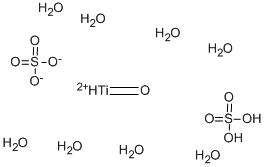
Titanium sulfate (Ti(SO4)2)

(13693-11-3)
Titanium sulfate is made by combining titanium dioxide (TiO2) with sulfuric acid (H2SO4) and is commonly used as a catalyst in various chemical reactions, including the synthesis of organic compounds and the production of polymers. It is also used in the manufacture of pigments, ceramics, and glass, for example, in the textile industry as a reducing agent for stripping or color removal. It is also an important component in the production of titanium-based materials, which are widely used in the aerospace, automotive, and medical industries due to their excellent strength-to-weight ratio and corrosion resistance.

Product List

Request for quotation , get quotes from more suppliers.

Aluminum carbide (Al4C3)

(1299-86-1)
Preparation method of aluminum carbide 1. Carbothermal reduction method: aluminum carbide is generated by the reaction of aluminum powder and carbon powder at high temperature. Reaction process :2Al + 3C→Al4C3. In the reaction process, it is necessary to control the reaction temperature and reaction time to ensure the purity and crystallinity of the product. The advantages of carbothermal reduction method for preparing aluminum carbide are simple reaction conditions and easy control of the preparation process. However, the disadvantage is that the raw material requirements are high, the purity of the product is not easy to control, and the impurities in the product are more. 2. Pyrolysis method: decomposition of nitrogen-containing organic matter to produce aluminum carbide at high temperature. Reaction process: Si3N4 + C→SiC + 2N2. During the reaction process, the reaction temperature and reaction time should be controlled to ensure the purity and crystallinity of the product. The advantages of pyrolysis method for preparing aluminum carbide are high purity and good thermal stability. However, the disadvantage is that the preparation process is complicated and the reaction conditions and raw materials are required to be higher. 3. Plasma method: Under the action of plasma, aluminum carbide is prepared by the reaction of carbon ions in the gas with aluminum ions. Its advantage is that it can prepare large-area films, coatings and nanomaterials, and the product purity is high and the quality is uniform. However, the disadvantage is that the preparation equipment and process are complex and the preparation cost is high. Aluminum carbide is a high-quality, high-performance ceramic material suitable for machining industries such as cutting tools, abrasives, bearings, seals, etc. In the gas turbine industry, as a blade, nozzle, combustion chamber and other components, can withstand high temperature, high pressure and other harsh environment; In the photoelectric industry, it is used as LED substrate, solar cell module, optical window, etc. In the chemical industry, undertake chemical corrosion, acid and alkali corrosion, high temperature corrosion and other work.

Product List

Request for quotation , get quotes from more suppliers.

Cobalt iodide (CoI2)

(15238-00-3)
Cobalt iodide, an inorganic compound composed of cobalt and iodine, has shown wide application potential in many scientific and industrial fields due to its unique chemical and physical properties. The properties of this compound, such as its unique color change, ionic conductivity and REDOX capacity, make it an important role in the fields of analytical chemistry, materials science, electrochemistry, medicine and catalysis. In the laboratory of analytical chemistry, cobalt iodide is widely used as a reagent for colorimetric analysis and spectrophotometry. Its color changes significantly and it can form stable complexes with specific ions, which makes it extremely sensitive and selective in the detection and quantitative analysis of certain metal ions and organic compounds. For example, by looking at changes in the color of cobalt iodide solutions, scientists can accurately determine trace amounts of lead or copper ions in a water sample. In the ceramic and glass manufacturing industry, cobalt iodide is favored for its distinctive blue or purple hue. When added as an additive to ceramic glaze or glass melt, it can give the product a kind of artistic and decorative beauty. This color effect is especially valued when making fine tableware, decorative glass and artistic ceramics. The application of cobalt iodide in the field of electrochemistry is mainly reflected in its ability as an electrolyte component and an electrochemical cell component. Its high ionic conductivity and REDOX properties make it potentially valuable in the design of rechargeable batteries, fuel cells and electrochemical sensors. For example, cobalt iodide can improve the electrochemical performance of certain types of fuel cells, thereby increasing their energy conversion efficiency. In the field of medical research, cobalt iodide has attracted attention due to its properties of interacting with the human endocrine system. Research suggests it may have potential for treating certain thyroid diseases. However, due to the toxicity of cobalt iodide, the exploration of its medical application is still in the preliminary stage, and more research is needed to balance its therapeutic effects with potential side effects. In addition, the application of cobalt iodide in the field of catalysis is also becoming increasingly apparent. Its unique REDOX properties and ability to form complex structures make it show good performance as a catalyst or catalyst precursor in chemical reactions such as organic synthesis, environmental protection and energy conversion. For example, cobalt iodide can promote certain green chemical reactions, such as the reduction of carbon dioxide, which can help develop sustainable energy and chemical production strategies. Despite the promising applications of cobalt iodide, its potential toxicity and the challenges of handling and disposal cannot be ignored. Therefore, while using cobalt iodide, scientists and industry must conduct in-depth research and develop appropriate management strategies to ensure that its application in various fields can bring technological progress, while taking into account the safety of the environment and human health.

Product List

Request for quotation , get quotes from more suppliers.

Calcium nitride (Ca3N2)

(12013-82-0)
With the continuous advancement of technology, single crystal materials are playing an increasingly important role in many application areas, especially in high-tech applications such as electronic surveillance and detection. This trend has driven researchers to invest a lot of research effort in the development and enhancement of techniques for growing single crystal materials. The growth process of single crystal materials, in essence, is the precipitation or crystallization of the solute from the molten solution to form the desired crystal. In this process, precise control of temperature and solution composition is a critical factor in ensuring the quality and purity of the crystal. Calcium nitride is an important single crystal material, and its crystallization process also requires strict control of conditions. This includes, but is not limited to, precise temperature control, careful adjustment of solution composition, and other factors that may affect crystal growth. Through these delicate operations, researchers can obtain high-quality calcium nitride single crystals to meet the growing needs of science and technology.

Product List

Request for quotation , get quotes from more suppliers.

Inorganic salts are mineral nutrients that exist in the body and in food. Most inorganic salts in cells exist in the form of ions and are composed of organic and inorganic substances. . At present, the human body has found more than 20 species, of which a large number of elements are calcium Ca, phosphorus P, potassium K, sulfur S, sodium Na, chlorine Cl, magnesium Mg, trace elements are iron Fe, zinc Zn, selenium Se, molybdenum Mo, fluorine F , Chromium Cr, cobalt Co, iodine I, etc.

More Information

Inorganic salts, also known as minerals, encompass both major and trace elements, constituting essential substances in human metabolism. Most often, when referring to inorganic salts, we imply pure substances, such as laboratory-grade sodium chloride. We do not label it as table salt because additional substances are often added to table salt.


The primary distinction between inorganic and organic salts lies in the nature of their anions. Much of their chemical properties are determined by these anions. For instance, inorganic salts typically exhibit strong hydrophilicity, while organic salts may display affinity towards certain nonpolar reagents.


Despite their low concentration in cells and the human body, inorganic salts play significant roles. A diversified diet, with less animal fat consumption and more consumption of coarse grains like brown rice and corn, and limited intake of refined flour, helps maintain the normal levels of inorganic salts within the body.


Common inorganic salts include:
● sodium chloride
● potassium chloride
● calcium carbonate
● magnesium sulfate
● ammonium nitrate

Frequently Asked Questions

What are inorganic salts and how are they used in industrial applications?

Inorganic salts are ionic compounds composed of cations and anions, typically formed through neutralization reactions between acids and bases. They are widely used across industries such as pharmaceuticals, agriculture, food processing, and water treatment. Common examples include sodium chloride, potassium nitrate, and calcium carbonate. Their roles range from pH regulation and nutrient supplementation to acting as catalysts or stabilizers in chemical processes.

How do I choose a reliable supplier for high-purity inorganic salts?

When selecting a supplier for high-purity inorganic salts, consider the following criteria:1. Certifications such as ISO, GMP, or REACH compliance.2. Consistent product quality with detailed certificates of analysis (CoA).3. Transparent sourcing and manufacturing practices.4. Technical support and responsiveness to inquiries.5. Ability to meet volume and delivery requirements reliably.Reputable suppliers often provide batch-specific testing data and adhere to strict quality control protocols.

What are the key differences between technical-grade and reagent-grade inorganic salts?

Technical-grade inorganic salts are suitable for industrial or agricultural uses where ultra-high purity is not critical, while reagent-grade salts meet stringent purity standards required for laboratory, analytical, or pharmaceutical applications. Reagent-grade materials typically have lower levels of impurities (e.g., heavy metals, moisture) and comply with standards such as ACS (American Chemical Society) or EP/USP. Choosing the correct grade ensures performance, safety, and regulatory compliance.

Are inorganic salts safe for use in food and pharmaceutical products?

Yes, certain inorganic salts are approved for use in food and pharmaceuticals when they meet specific regulatory standards. For example, sodium bicarbonate, magnesium sulfate, and calcium phosphate are commonly used as additives, excipients, or electrolyte sources. Their safety depends on purity, dosage, and compliance with guidelines from authorities like the FDA, EFSA, or pharmacopeial standards (e.g., USP-NF, Ph. Eur.). Always verify that the salt is labeled as food-grade or pharma-grade before use.

What factors affect the stability and shelf life of inorganic salts?

The stability and shelf life of inorganic salts depend on several factors, including:1. Hygroscopicity—some salts (e.g., calcium chloride) absorb moisture and may clump or degrade.2. Storage conditions—cool, dry, and sealed environments prevent contamination and decomposition.3. Chemical compatibility—avoid contact with incompatible substances that could trigger reactions.4. Packaging material—airtight containers made of HDPE or glass help maintain integrity.Proper handling and storage ensure consistent performance and extend usable life.

Feedback & Suggestions
Send Message

Thank you for your feedback. If you require further assistance, please contact us by email at info@echemi.com or call us at +86-532-55729510.