China Launches Nationwide Carbon Trading System
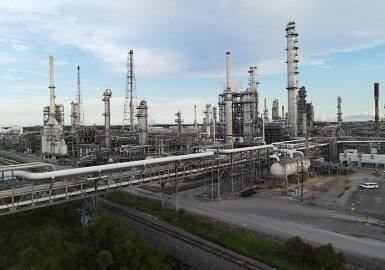
China unveiled a nationwide carbon emission trading system on Tuesday in a step toward establishing a national carbon market that will rank as the world's biggest.
The trading system will first go into operation in the power generation industry, according to the National Development and Reform Commission (NDRC), the country's top economic planner.
Under the scheme, enterprises are assigned emission quotas and those producing more than their share of emissions are allowed to buy unused quotas on the market from those that cause less pollution.
Since 2013, China has tested carbon trading in seven pilot cities, including Beijing. Now the practice will be expanded nationwide.
The power generation industry was chosen as the first sector to implement the trading system as it is the best prepared and has the most complete data on emissions among all industries, said Zhang Yong, deputy head of the NDRC, at a press conference.
With more than 1,700 power-generating firms included in the system and their emissions exceeding 3 billion tonnes in total, the national carbon market, even in its first phase, will be bigger than any other market in the world, including the European Union market, Zhang told reporters.
"We will consider including other energy- and emission-intensive industries," said Li Gao, an NDRC official, who noted that the threshold for carbon trading may be reduced further.
Currently only companies with emissions equivalent to 26,000 tonnes of carbon dioxide or more can be involved in the trading system, according to Li.
He said carbon trading in the seven pilot cities saw transaction value reach 4.6 billion yuan (696.8 million U.S. dollars) as of November, with traded emission quotas exceeding 200 million tonnes.
China aims to cut carbon dioxide emissions per unit of GDP by 60 percent to 65 percent from the 2005 level by 2030. This measure fell 6.6 percent last year, surpassing the country's goal of a 3.9-percent reduction, and dropped around 4 percent in the first three quarters.

You May Interested In


High Quality β-Nicotinamide adenine dinucleotide CAS 53-84-9 NADwith ready stock and best price
$3/UNIT FOB


2026-10-20
Trade Alert
Delivering the latest product trends and industry news straight to your inbox.
(We'll never share your email address with a third-party.)

Related News
-
South Korea to Impose Anti-Dumping Duties on Caustic Soda: Chinese Mainland Firms Face Up to 22.21%, Taiwan Region 38.89%
-
EAEU Initiates Review of Anti-Dumping Measures on Chinese Titanium Dioxide, Suspends Duties During Investigation
-
Three Major Indian Chemical Investments Target China's PC Exports
-
Pakistan Launches Successive Anti-dumping Investigations against Chinese Products, Involving Soda Ash, Ibuprofen and Other Raw Materials
-
South Korea Initiates Anti-Dumping Probe on Chinese PVC Suspension Resin, Involving Tianjin Bohua and Wanhua Chemical
-
China Keeps Registering Pesticides
-
India Launches Anti-Dumping Probe into PET Film from China, Singapore, Thailand and the UAE
-
INEOS Warns Chinese Chemical “Dumping” Is Hitting Europe’s Industry
-
Covestro Builds New 660,000-ton MDI Plant in China: Global Supply Gap Meets Chinese Overcapacity Head-On
-
India Imposes Final Anti‑Dumping Duties on Ethylenediamine from China, EU, Saudi Arabia, and Taiwan, China, with Top Rate of $575/tonne
Recommend Reading
-
![What Can $3.4 Billion Buy? Shin-Etsu Chemical’s Answer: Upstream Control of PVC]()
What Can $3.4 Billion Buy? Shin-Etsu Chemical’s Answer: Upstream Control of PVC
-
![India Launches Concentrated Anti-Dumping Actions Against Eight Categories of Chinese Chemicals, Covering APIs/Intermediates, Polyurethanes, and Refrigerants]()
India Launches Concentrated Anti-Dumping Actions Against Eight Categories of Chinese Chemicals, Covering APIs/Intermediates, Polyurethanes, and Refrigerants
-
![Iran Closes Strait of Hormuz to All Vessels: Global Chemical Trade Gets Choked]()
Iran Closes Strait of Hormuz to All Vessels: Global Chemical Trade Gets Choked
-
![Saudi Aramco Suspends Next-Month Crude Supply to Some European Refineries]()
Saudi Aramco Suspends Next-Month Crude Supply to Some European Refineries
-
![Drone Strike Hits Moscow Oil Refinery, Sparking Fire at Key Fuel Facility]()
Drone Strike Hits Moscow Oil Refinery, Sparking Fire at Key Fuel Facility
-
![Business Society, September 24, 2026: Propylene Oxide Trend Analysis – Weak Rebound (Bearish)]()
Business Society, September 24, 2026: Propylene Oxide Trend Analysis – Weak Rebound (Bearish)
-
![Dual Production Areas Have Maintenance Plans, Formic Acid Prices Rise Strongly]()
Dual Production Areas Have Maintenance Plans, Formic Acid Prices Rise Strongly
-
![Business Society, September 24, 2026: Epichlorohydrin Trend Analysis — Decline Confirmed]()
Business Society, September 24, 2026: Epichlorohydrin Trend Analysis — Decline Confirmed
-
![This week, the domestic acetic acid market has seen a slight increase]()
This week, the domestic acetic acid market has seen a slight increase
-
![Business Society September 24, 2026 Hydrofluoric Acid Trend Analysis: Strong Consolidation (Bullish)]()
Business Society September 24, 2026 Hydrofluoric Acid Trend Analysis: Strong Consolidation (Bullish)