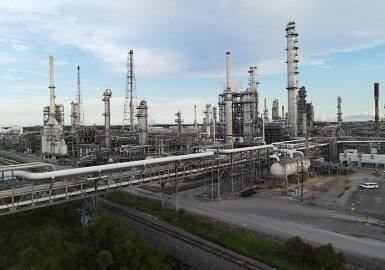
A large-scale drone attack struck Moscow and the surrounding region early on September 20, with a facility at the Moscow Oil Refinery in the capital’s southeastern Kapotnya district damaged and a fire reported at the site. Moscow Mayor Sergei Sobyanin confirmed that the refinery had been hit, while videos from the area showed explosions and smoke rising above the complex. Russian authorities said at least two people were killed elsewhere in the Moscow region during the wider attack. Ukraine had not separately commented on the refinery strike at the time of reporting.
The Moscow Oil Refinery is operated by Gazprom Neft and is one of the most important suppliers of gasoline and diesel to the Russian capital and surrounding region.
The plant processed approximately 11.6 million metric tons of crude oil in 2024.
Previously reported output figures show production of roughly 2.9 million tons of gasoline and 3.2 million tons of diesel, along with other refined products.
The refinery has already been targeted several times this year.
A drone strike on June 16 damaged a major primary refining unit. Two days later, another attack hit the site again, damaging the Euro+ integrated refining unit and other equipment and triggering several fires.
The Euro+ complex, commissioned in 2020 as part of the refinery’s modernization program, includes crude distillation, catalytic reforming and diesel hydrotreating capacity.
Following the June attacks, industry sources said key processing units had suffered extensive damage and that repairs could take at least six months.
That meant parts of the refinery were still undergoing repair and recovery work before the September 20 attack.
Russian officials said the latest assault involved a very large number of drones.
Sobyanin said approximately 450 drones had been directed toward Moscow, describing the wider operation as one of the largest drone attacks on the capital region.
Damage was also reported at residential and infrastructure sites outside the refinery.
In the Ramenskoye district, around 400 people, including approximately 70 children, were evacuated after a 21-storey residential building was damaged.
Russian refining infrastructure has faced repeated drone strikes throughout 2026.
Facilities in Yaroslavl, Volgograd, Nizhny Novgorod and other regions have reported shutdowns, reduced operating rates or damage at different points during the year.
On September 17, the YANOS refinery in Yaroslavl halted crude processing after another drone strike damaged key equipment. That refinery has annual processing capacity of about 15 million tons.
Russian authorities have previously responded to tightening domestic fuel supplies with restrictions on gasoline and diesel exports, adjustments to fuel-quality requirements and additional imports of refined products.
As of September 20, Gazprom Neft had not publicly detailed which units at the Moscow refinery were affected in the latest strike or provided an updated timetable for restoring processing capacity.