What Is D glucose And L Glucose Structure
When it comes to talk about the D glucose and L glucose structure, we must mention that it is about the structural level of the molecules that form the compound, if we observe well the D is an indicative that refers to the right side, while L refers to the left side, the structural analysis of glucose in these two forms is carried out by known methods, notably the so-called Fischer, and another widely used method called the Haworth method.
To delve deeper into the information of the D glucose and L glucose structure, we will start by exploring the necessary data on glucose, for this we will see the characteristics in the constitution, the proportions that have the molecules of each forming element, and in what areas this substance has applications.
What is Glucose known as?
Having clear the information of the glucose, it will be possible to establish with certainty the main peculiarities to describe the D glucose and L glucose structure, for this we must clarify some behaviors of the substance, being one of the compounds that have a peculiarity of not decomposing in simpler compounds, due to this property they are called monosaccharides.
This characteristic that we have mentioned this compound occurs through a splitting of molecules, generated by water, another appreciation to highlight is the formation of the glucose by 6 carbon atoms, reason why it is considered a hexose, and also for having C = O, in other words a carbonyl, which is located towards the edge in the molecule giving rise to the belonging of the glucose to the group of aldoses.
Fundamental Properties of Glucose
To continue investigating the D glucose and L glucose structure, it is worth mentioning the most outstanding peculiarities of this compound.
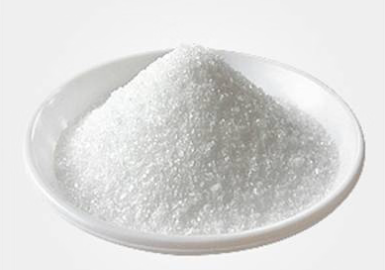
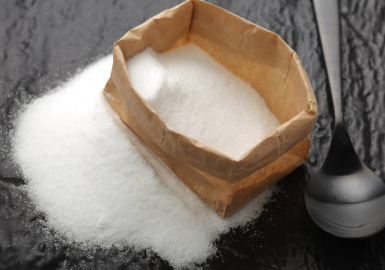
This compound at sight is seen as a material in the form of powder, whose color tends to white, and that the taste is sweet, among the qualities that it has highlights the behavior in water, presenting a very high solubility, it can also be said that the dipole moment that presents reaches 8.68 debye, the molar mass that registers is 180, 16 gr/mol, and 1540 kilograms per cubic meter is the density that it has.
At the level of chemistry the glucose has a known formula that is represented by C6H12O6 which means that within each molecule there are the element carbon in a proportion of 6 atoms, the subscript 12 in the H indicates the 12 atoms of this element present in the molecule, and the 6 in the O appears indicating the 6 of oxygen.
What is Glucose used for?
The great majority of the species of living beings in the universe use glucose to carry out the metabolisms that their organisms require, thus acting as the main energy supplier so that the molecules of these organisms can transform it into ATP and take advantage of the high energy benefits of this substance.
Echemi is a company that is characterized by supplying all markets with the requirements in terms of chemicals, providing products such as:
Acetyl D Glucosamine
https://www.echemi.com/searchGoods.html?keywords=glucosa%2520d
Glucose is maintained in plants as an energy reserve, they process the light coming from the sun and make a synthesis of glucose in order to store it inside the walls of their cells forming cellulose, while animal species store this substance in the liver and the muscular system as glycogen.
D glucose and L glucose structure
The D- and L-glucose types are identical in their conformation in terms of the proportion of elements in each molecule, but differ structurally in the way these elements are arranged along the carbon chain.
In the structure of the D-type glucose, it can be observed through a method such as Fischer projection, that there are four -OH-type groups in this chain, three of them located on the right side of this chain, and the remaining fourth is located on the third carbon seen from the top to the bottom of the chain.
While the structure of the L-type glucose in the same method, it can be seen that three of the -OH groups are located on the left side of the chain, the remaining fourth being on the third carbon on the right side.
These structures of both types of glucose can be seen as a mirror image of each other, so they are known as enantiomers.
Looking for chemical products? Let suppliers reach out to you!
You May Interested In


SS-31 Cosmetic peptides, discounted price improving cognitive impairment factory supply
$8E+1/UNIT FOB


2026-09-21
Trade Alert
Delivering the latest product trends and industry news straight to your inbox.
(We'll never share your email address with a third-party.)

Related News
-
Is Glucose a Reducing Sugar? | How it is different from other Sugar Forms?
-
On Treatment: Write The Reduction Reaction Of Glucose To Form Sorbitol
-
What is the Best Chemical Test for Glucose
-
Paraffin Wax vs. Beeswax: Candles, Cosmetics, and Industrial Applications
-
Lanolin: Benefits for Skin, Cosmetic Uses, and Allergy Risks
-
Hexane in Food and Industry: Safety and Applications
-
Dodecyl Acid: Industrial Uses and Chemical Characteristics
-
Sulfuric Acid (H2SO4): Properties, Battery Uses, and Extreme Safety Hazards
-
Sodium Hydroxide (Caustic Soda): Soap Making, Cleaning, and pH Control Guide
-
What is Trametenolic Acid? (Structure, Sources & Research)
Recommend Reading
-
![SiO2: Properties, Uses, and Applications]()
SiO2: Properties, Uses, and Applications
-
![Chemical Properties and Uses of Caesium Fluoride]()
Chemical Properties and Uses of Caesium Fluoride
-
![Uses and Properties of Chromium Oxide]()
Uses and Properties of Chromium Oxide
-
![Uses of Sodium Citrate Dihydrate in Food Industry]()
Uses of Sodium Citrate Dihydrate in Food Industry
-
![Sodium Nitrate: Fertilizer, Food Curing, and Explosive History]()
Sodium Nitrate: Fertilizer, Food Curing, and Explosive History
-
![Raw Materials Strong, Demand Weak—ABS Prices Rise in July and Then Stabilize]()
Raw Materials Strong, Demand Weak—ABS Prices Rise in July and Then Stabilize
-
![Business Society’s September 1, 2026 Gasoline Market Outlook: Expected to Trend Stronger]()
Business Society’s September 1, 2026 Gasoline Market Outlook: Expected to Trend Stronger
-
![Recent Chinese Fuel Oil 180CST Prices Continue to Rise]()
Recent Chinese Fuel Oil 180CST Prices Continue to Rise
-
![Supply Contraction Drives Dichloromethane Prices to Remain Stable with a Steady Uptrend]()
Supply Contraction Drives Dichloromethane Prices to Remain Stable with a Steady Uptrend
-
![Business Society’s Market Outlook for Petroleum Coke on September 1, 2026: Volatile]()
Business Society’s Market Outlook for Petroleum Coke on September 1, 2026: Volatile