Evonik Corporation Enters into Sales Agency Contract with Seher Consulting Ltd.
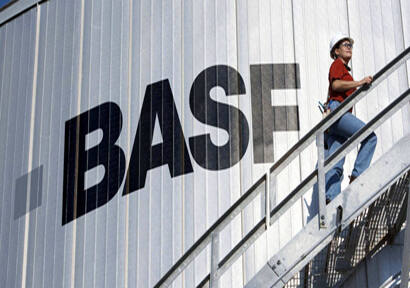
German chemicals giant, BASF, has announced its decision to stop Toluene diisocyanate (TDI) production at its Ludwigshafen production facility, due to fall in Water levels in the Rhine river to an “all-time low”.
In a press statement, the company said the despite efforts to shift to alternative means of transport such as pipeline, trucks and rail, “not all raw materials can be supplied” to the site. “Therefore, BASF will have to stop the TDI production in Ludwigshafen,” it said. The restart of production will depend on improved Rhine water level, said BASF, adding it will be in “close contact” with customers.
TDI is a key chemical for production of polyurethane flexible foams and non-foam urethanes.
BASF had announced in August that it had to cut back part of its production due to low Rhine levels, but did not specify which products were affected.
Covestro, another key German chemicals player, had also that its operations were interrupted by the low water levels in Rhine. The company had lowered earnings (EBITDA) to “slightly below” the level of 2017 due to stronger-than-expected competition and the low water level of the Rhine river, which has resulted in production losses and higher logistics costs. The River rhine is a key transport route for the European chemical industry. This is because many of the industry’s plants are located on the river. Low water levels reduce the number of chemical barges that can navigate the river. This means lower production for plants on the river, such as Leverkusen, Dormagen and Ludwigshafen.

Jiaxing PC Shuts PTA Unit for Turnaround
You May Interested In


Glow70/KLOW80 99% China Peptides Warehouse Direct Delivery Lyophilized Powder in Stock
$169/UNIT FOB


2026-10-18
Trade Alert
Delivering the latest product trends and industry news straight to your inbox.
(We'll never share your email address with a third-party.)

Related News
-
BASF and Evonik Rumored Potential Acquisition or Merger
-
Evonik Expands Slovakian Fermas Site with €80 Million Investment to Boost Pharmaceutical CDMO Capacity
-
Evonik to Close Two German Plants, Further Cutting Europe’s High-Purity Silicon Tetrachloride Capacity
-
Multiple Chemical Industry Leaders Post Strong H1 Earnings Growth as Sector Profitability Revives
-
Evonik Inaugurates New Speciality Alumina Plant in Japan, Bolstering Regional Growth Strategy
-
Evonik and AMSilk Expand Collaboration to Develop Sustainable Biotech Silk Materials
-
Evonik Launches Asia’s First Alkoxide Plant in Jurong Island
-
Evonik Converts Epoxy Hardener Production to 100% Renewable Electricity
-
Breakup! Vland Biotech and Evonik Part Ways as GHS Joint Venture Falls Short of Expectations
-
Evonik Completes Shift to Green Electricity for Polybutadiene Production at its Marl, Germany, Plant
Recommend Reading
-
![BASF Raises BA and 2-EHA Prices as Acrylic Ester Costs Continue to Move Higher in Asia-Pacific]()
BASF Raises BA and 2-EHA Prices as Acrylic Ester Costs Continue to Move Higher in Asia-Pacific
-
![BorsodChem Raises MDI Prices by €500 as Cost Pressure in Europe’s Polyurethane Chain Continues to Escalate]()
BorsodChem Raises MDI Prices by €500 as Cost Pressure in Europe’s Polyurethane Chain Continues to Escalate
-
![Hormuz Crisis Exposes India’s Agrochemical “First Mile”]()
Hormuz Crisis Exposes India’s Agrochemical “First Mile”
-
![Sinochem International Acquires Nantong Xingchen for 2.11 Billion Yuan, Rike Chemical Plans Genyuan New Materials Acquisition – The Changing Landscape of Chemical M&A]()
Sinochem International Acquires Nantong Xingchen for 2.11 Billion Yuan, Rike Chemical Plans Genyuan New Materials Acquisition – The Changing Landscape of Chemical M&A
-
![LANXESS Raises Global 1,6-Hexanediol Prices by 20% as Cost Pressure Begins to Pass Downstream]()
LANXESS Raises Global 1,6-Hexanediol Prices by 20% as Cost Pressure Begins to Pass Downstream
-
![Business Society, October 15, 2026: Cyclohexane Market Outlook—Bullish]()
Business Society, October 15, 2026: Cyclohexane Market Outlook—Bullish
-
![February 10 Isopropanol Market Remains Stable in China]()
February 10 Isopropanol Market Remains Stable in China
-
![Supply Reduction Leads to Rapid Increase in n-Butanol Market]()
Supply Reduction Leads to Rapid Increase in n-Butanol Market
-
![A Chart to Understand Lithium Carbonate VS Lithium Hydroxide, the Divergence of the Two Lithium Salts in China's Lithium Battery Industry]()
A Chart to Understand Lithium Carbonate VS Lithium Hydroxide, the Divergence of the Two Lithium Salts in China's Lithium Battery Industry
-
![Business Society October 16, 2026 Phenol Trend Analysis: Weakly Tending]()
Business Society October 16, 2026 Phenol Trend Analysis: Weakly Tending