The first child to receive commercial Libmeldy gene therapy was no longer symptomatic
In recent years, although gene therapy for genetic diseases has made breakthroughs one after another, it is bound to withstand the test of reality from clinical trials to the market. Libmeldy is the world's first lentiviral vector-based gene therapy for the treatment of a rare inherited disease caused by mutations in the Arylsulfatase A (ARSA) gene, parachromatic leukodystrophy (MLD). Teddi, a 19-month-old child with MLD, was the first person in the UK to be treated with Libmeldy outside of clinical trials. Teddi, who started treatment at 12 months of age and retrieved the stem cells at the end of June last year and then before undergoing transplantation in August, was discharged in October without any signs of congenital disease.
Unfortunate family, lucky sister
Ally Shaw and Jake of Northumberland, England, have two lovely daughters: 3-year-old Nala and 19-month-old Teddi. However, both Nala and Teddi were diagnosed with MLD in April last year. To the parents' heartbreak, the eldest daughter Nala's MLD was discovered at an advanced stage. Unable to walk or talk, Nala must undergo tube feeding, cannot receive any treatment, and will continue to lose all functions of her body and die prematurely. Fortunately, the youngest daughter, Teddi, is not yet ill and can be treated with the latest gene therapy.
Nala looked healthy at birth and behaved no different from a normal person at the age of 2, laughing, singing and dancing. However, more than a year ago, Nala's walking posture gradually became uneven, she fell more and more, and showed signs of trembling. Nala's unusual presentation caught the attention of her parents and suspected she had a brain tumor. The parents then took Nala to the hospital for an MRI scan to confirm suspicion. However, doctors informed the couple that the cause of Nala was not a brain tumor, but MLD. At first, parents who learned that the cause was not a brain tumor and did not know about MLD were very happy. However, after the doctor explained MLD in detail, it was difficult for the parents to accept.
MLD is an autosomal recessive genetic disease caused by defective genes, and gene mutations lead to ARSA enzyme defects, which hinder the hydrolysis of brain thioesters in lysosomes and are deposited in the white matter, peripheral nervous system and visceral tissues of the central nervous system, which in turn leads to demyelinating of the nervous system and progressive neurological regression. Clinically, patients are divided into late infant type, adolescent type and adult type according to the age of onset and severity of the disease. Late-baby MLD, which usually occurs in infants under 30 months of age, can cause severe damage to the affected child's nervous system and organs, leading to loss of vision, speech, and hearing, as well as difficulty with mobility, brain damage, seizures, and ultimately death. The life expectancy of children with late-infancy MLD is only five to eight years.
Through genetic testing, doctors found that both Ally and Jake were carriers of the MLD gene, meaning there was a one-in-four chance that Nala's sister Teddi also had MLD. At the doctor's suggestion, the parents tested their youngest daughter, Teddi, on the same test, and the test showed that Teddi also had MLD. After learning of this result, the parents fell into infinite guilt and remorse, thinking that they should not be so unlucky, and there was a 25% probability that it would happen to two children in succession. If Nala's condition had been detected early and MLD genetic testing performed during Teddi's prenatal checkup, this tragedy could have been avoided.
How did Libmeldy who saved Teddi work?
In February 2022, the UK's National Health Service (NHS) entered into an agreement with Orchard Therapeutics to allow Libmeldy® (atidarsagene autotemcel) to apply to all children with MLD in England and Wales who fall within the scope of European marketing authorization. As a result, Libmeldy became the only disposable gene therapy designed to treat MLD. However, children treated with Libmeldy should meet the following conditions: i) late infant type, without clinical manifestations of the disease; ii) is in infancy, has early clinical manifestations of the disease, still has the ability to walk independently, and is at the beginning of cognitive decline. That's why Nala doesn't apply and Teddi has a chance.
Libmeldy is a one-time infusion therapy designed to correct the underlying genetic cause of MLD. When using Libmeldy, the patient's own hematopoietic stem cells (HSCs) are selected, and the patient's missing copy of the ARSA gene is inserted into the genome of the HSC using a self-inactivating (SIN) lentiviral vector, and then the defective HSC in the bone marrow is killed and the transgenic HSC is transfused back into the patient. Genetically corrected HSCs cross the blood-brain barrier into the brain, implant and express functional enzymes. Libmeldy can consistently correct MLD with a single treatment.
In June 2022, Teddi performed blood filtration at the Royal Manchester Children's Hospital in the UK and collected a bag of stem cells. The process is similar to dialysis; The cells were then sent to Milan, where the scientists used a harmless lentivirus to reinsert the gene that Teddy lacked into the stem cells; The genetically corrected stem cells were then sent to Manchester to be reinfused into Teddy; Before the infusion, Teddi must undergo chemotherapy to kill the remaining defective stem cells in the bone marrow.
Libmeldy's infusion took less than an hour. Over the next few days, the genetically altered cells migrated into Teddi's bone marrow and began producing enzymes that she had been missing since birth. At present, Ally said: "Teddi has no MLD symptoms and daily performance is no different from ordinary people. Hopefully, one day, Libmeldy will be applicable to all stages of MLD. There is a strong urge that hospitals should add MLD to newborn screening tests to save more families from experiencing this pain. ”
After 20 years of research and development, is Libmeldy's efficacy stable?
Produced by Orchard Therapeutics, a UK-based biotech company, Libmeldy is a one-time treatment that corrects the root cause of MLD. Libmeldy spent nearly 20 years in research and development, conducting its first human trial in 2010, EU approval in December 2020, a partnership agreement with the NHS in February 12, and recognition from the National Institute for Health and Care Excellence (NICE) for its clinical impact and economic benefits, which is now available through the NHS.
In January 2022, The lancet published long-term clinical results for the safety and efficacy of Libmeldy. In this report, 1 children with MLD aged 29.7-6.139 months (9 late infants, 16 early juveniles) were treated with Libmeldy. They compared 13 children with untreated MLD (31 late infants, 19 early juveniles). The median follow-up was 12.3 years (range 16.0 to 64.7 years).
It was found that the overall survival rate of 29 patients treated with Libmeldy was 90% (n=26/29). Of these, two patients died from disease progression and one from an emergency deemed unlikely to be associated with treatment; In addition, the patient's overall motor function was significantly improved and normal cognitive development was exhibited; Most patients showed normal cognitive development throughout the follow-up period, as well as prevention or delay of central and peripheral demyelinating and cerebral atrophy; The benefits are particularly pronounced in patients treated prior to symptom onset; In all treated patients, ARSA activity of peripheral blood mononuclear cells (PBMCs) was within or above normal range from 3 months after treatment, and levels were significantly higher than baseline 2 years after treatment.
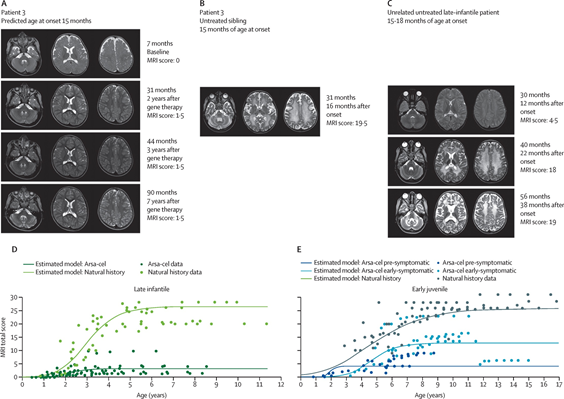
In terms of adverse effects, Libmeldy treatment was well tolerated with no treatment-related serious adverse events. Most adverse events were associated with busulfan pretreatment or background disease; The most commonly reported grade ≥3 adverse events were febrile neutropenia (n = 23, 79%), gait disturbance (n = 15, 52%), and stomatitis (n = 12, 41%); Five treatment-related events with anti-ARSA antibodies were reported in 4 patients (14%) that occurred spontaneously or disappeared after B-cell depletion therapy with no significant impact on clinical outcomes or safety. Antibody titers were generally low in all cases, and no negative effects were observed in terms of ARSA activity after implantation or treatment of gene-corrected cells.
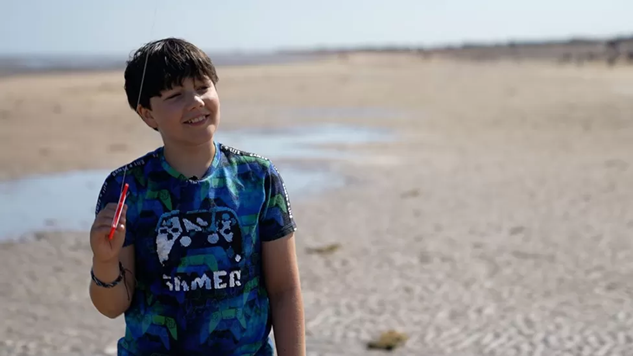
Before Libmeldy became a licensed treatment, several children from the UK participated in the Libmeldy clinical trial in Milan. Joe Elson, 12, received Libmeldy gene therapy in Italy in 2014. Nine years on, he is completely healthy and doing well in school. Watching Joe fly a kite on a beach in Kent, it's hard to imagine that he was born with a devastating disease.
Bobby Gaspar, CEO and co-founder of Orchard, said: "The development of Libmeldy has been a very long journey. For decades, we could barely help families with MLD. We need to screen children for these devastating diseases before they are born, and if they can be identified before birth, then they can be prevented. ”
Health assessment body NICE said: "Libmeldy is one of the clinically effective drugs we have evaluated. Despite its list price of £287.5 million, the NHS has received a confidential discount. One of the reasons the price is so high is to cover the cost of developing and producing drugs. The cost paid by the NHS for this lump sum treatment must be offset against the cost of treating children with MLD with conventional treatment. ”
NHS chief executive Amanda Pritchard described Libmeldy as a revolutionary treatment that offers "great hope" for parents and children affected by MLD 。 Although MLD is not currently screened at birth in the UK, small pilot studies of screening newborns have been initiated in five countries, including Germany, where testing has identified the first patient with the condition. Later this year, Genomics England will launch a pilot project to provide whole genome sequencing to 100,000 newborns. This will screen for about 200 treatable conditions and may include MLD.
So, can other genetic diseases also refer to Libmeldy's method? The answer is yes. The Royal Manchester Children's Hospital is trialling two other gene therapies for the rare diseases Sanfilippo and Hunter syndrome. Professor Rob Wynn, director of the Paediatric Bone Marrow Transplant Programme, said many young transplant patients had genetic conditions and the approach to correcting these conditions using genetically modified stem cells would be "transformative".

You May Interested In


High Quality β-Nicotinamide adenine dinucleotide CAS 53-84-9 NADwith ready stock and best price
$3/UNIT FOB


2026-10-16
Trade Alert
Delivering the latest product trends and industry news straight to your inbox.
(We'll never share your email address with a third-party.)

Related News
-
Urea Prices Surge as India Faces Critical Shortages: Will China’s Export Quotas Provide Relief?
-
When the Skin of Ships Gets More Expensive: A 30% Price Shock Is Quietly Rewriting the Cost Floor of Global Shipping
-
Japanese Plastics Market Accelerates its Shifts to Recycled Materials and Bioplastics
-
Honeywell Acquires Johnson Matthey Catalyst Business at a Discount, Cutting £475 Million from the Price
-
China Methanol Futures Hit Limit-Up as More Than 60% of Middle East Capacity Remains Offline
-
Saudi Energy Facilities Hit as Middle East Feedstock Risk Spreads Toward the Red Sea
-
Echoes of Overcapacity: The Structural Anxiety of China’s EVA Industry Chain
-
The Cold Cycle: PVC Market’s Chill and Faint Light Ahead
-
Obesity Drugs Become Pharma’s Most Powerful Growth Engine
-
Global Bunker Fuel Deficit Widens, Raising the Risk of a Second Cost Shock for Chemical Shipping
Recommend Reading
-
![Indian Immunologicals Pushes Back on “Fake Vaccine” Claims Amid Global Supply Chain Scrutiny]()
Indian Immunologicals Pushes Back on “Fake Vaccine” Claims Amid Global Supply Chain Scrutiny
-
![Minoxidil Safety Under Global Review as Infant Exposure Risks Surface]()
Minoxidil Safety Under Global Review as Infant Exposure Risks Surface
-
![Substandard Drug Findings Expose Deep Structural Gaps in Medicine Quality Control]()
Substandard Drug Findings Expose Deep Structural Gaps in Medicine Quality Control
-
![Alipay, Baidu, and iFlytek Win Big—As the Government Spends $1.1 Billion on AI Healthcare, Is This a Lifeline or a Feeding Frenzy for Tech Giants?]()
Alipay, Baidu, and iFlytek Win Big—As the Government Spends $1.1 Billion on AI Healthcare, Is This a Lifeline or a Feeding Frenzy for Tech Giants?
-
![$530 Million Lawsuit Unheard, $76 Million Counterclaim Filed: Is Qicai Chemical’s ‘Reputation Defense’ a Desperate Last Stand or a Calculated PR Gambit?]()
$530 Million Lawsuit Unheard, $76 Million Counterclaim Filed: Is Qicai Chemical’s ‘Reputation Defense’ a Desperate Last Stand or a Calculated PR Gambit?
-
![Weak Supply and Demand Weighs on Butadiene Market in May]()
Weak Supply and Demand Weighs on Butadiene Market in May
-
![Flexible trading in China's titanium dioxide market in May]()
Flexible trading in China's titanium dioxide market in May
-
![Low Levels Across the Entire Cycle + Widening Negative Deviation—Melamine Short-Term Market Weakens]()
Low Levels Across the Entire Cycle + Widening Negative Deviation—Melamine Short-Term Market Weakens
-
![After Reaching a High, Polyester Chip Prices in May Showed Wide Fluctuations at High Levels in China]()
After Reaching a High, Polyester Chip Prices in May Showed Wide Fluctuations at High Levels in China
-
![Both Supply and Demand Weak, TDI Market Slumps in May]()
Both Supply and Demand Weak, TDI Market Slumps in May