K3PO4 Soluble or Insoluble? Everything You Should Know About It
K3PO4 soluble or insoluble? In this blog post, we will explore its physical properties, chemical properties, answer whether K3PO4 is soluble, and introduce its main uses.
Physical & Chemical Properties:
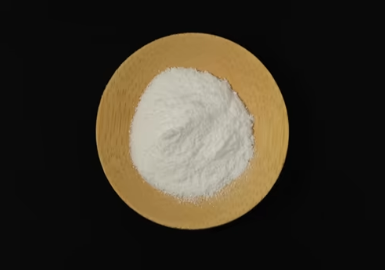
K3PO4 soluble or insoluble? K3PO4 is an anhydrous compound or a hydrate with one molecule of water. It has a melting point of 1340°C. It is a white, odorless, hygroscopic crystal or granule. Its relative density is 2.564. The pH of a 1% aqueous solution is approximately 11.5. ADI range: 0-0.70 (total phosphorus content, calculated as phosphorus; FAO/WHO, 1985).
How to produce potassium phosphate(K3PO4)?
There are 3 main methods of producing potassium phosphate:
- Neutralization Method: In this method, a 50% phosphoric acid solution is added to a reaction vessel. A 30% potassium hydroxide solution is then added in a molar ratio of 1:2 (phosphoric acid to potassium hydroxide). The pH is controlled around 8.5 to 9 during stirring to form potassium dihydrogen phosphate solution. This solution is transferred to a secondary vessel, where additional 30% potassium hydroxide solution is added to continue the neutralization reaction. The endpoint is pH 14, resulting in a solution of tripotassium phosphate. The solution is then evaporated and concentrated, and the final product is obtained through cooling crystallization and centrifugal separation.
- Arsenic Removal and Heavy Metal Removal: This method involves using phosphoric acid and caustic potash solution for neutralization. In addition to the neutralization process, agents for arsenic removal and heavy metal removal are added to purify the solution. Filtration is carried out to remove impurities like arsenic and heavy metals, resulting in the production of potassium phosphate.
- High-Temperature Conversion: This way starts with food-grade phosphoric acid reacting with a KOH solution. The resulting solution is then evaporated and concentrated. Crystallization occurs, forming a monohydrate, which can be further heated to temperatures ranging from 300 to 500°C to obtain anhydrous potassium phosphate salt.
K3PO4 soluble or insoluble? Why?
K3PO4 soluble or insoluble?The simple answer is, K3PO4 is soluble in water.
The solubility of salts depends on the interactions between the ions and the solvent molecules. In the case of K3PO4, it dissociates into potassium ions (K+) and phosphate ions (PO4^3-) when it is dissolved in water.
Potassium ions (K+) are small and carry a single positive charge. They have a strong affinity for water molecules due to their small size and high charge density. This attraction allows the potassium ions to be hydrated and surrounded by water molecules, resulting in the dissolution of K3PO4.
Phosphate ions (PO4^3-), on the other hand, are larger and carry a higher charge. While phosphate ions can form hydrogen bonds with water molecules, they are not as strongly hydrated as potassium ions. However, the presence of multiple charged sites on the phosphate ion allows it to form ion-dipole interactions with water, aiding in its solubility.
Overall, the combination of the hydration of potassium ions and the ion-dipole interactions involving phosphate ions allows K3PO4 to dissolve readily in water, making it a soluble compound.
The main uses of K3PO4 (or potassium phosphate) include:
- Fertilizer: Potassium phosphate is a popular fertilizer in agriculture. It contains potassium and phosphorus, which are essential nutrients for plant growth and development.
- Food additive: Potassium phosphate is an indispensable food additive. It is used as a buffering agent, pH regulator, and emulsifier in various food and beverage products. By adjusting and maintaining the acidity or alkalinity of food, effectively ensures the stability and texture of processed foods.
- Water treatment: Adding potassium phosphate to water systems can control and prevent the formation of scale deposits and corrosion. It helps stabilize the pH of water, enabling efficient water treatment and maintaining the integrity of plumbing systems.
- Pharmaceutical applications: Potassium phosphate is used in the production of various medications and supplements and serves as a source of essential minerals and acts as a buffering agent in pharmaceutical formulations.
- Industrial applications: Potassium phosphate has diverse industrial uses, such as in the production of detergents, cleaning agents, and metal treatment products. It can function as a corrosion inhibitor and a source of phosphorus in industrial processes.
Summary:
K3PO4 has a wide range of applications. It is a strong acid and weak base salt, soluble in water, glycerin and alcohol, but insoluble in acetone, chloroform, ether, benzene, carbon tetrachloride. It has stable physical and chemical properties and is an important industrial chemical substance.
Looking for chemical products? Let suppliers reach out to you!
You May Interested In


SS-31 Cosmetic peptides, discounted price improving cognitive impairment factory supply
$8E+1/UNIT FOB


2026-09-24
Trade Alert
Delivering the latest product trends and industry news straight to your inbox.
(We'll never share your email address with a third-party.)

Related News
-
France’s Vineyards Find a New Shield: Eden’s Mevalone Enters the Frontline of a Changing Fungicide Era
-
India Unleashes a Triple-Action Defender: Parijat Introduces NILANIX SC into the Rice Battlefront
-
Potassium Sorbate in Food: Safety, Uses, and Alternatives
-
What is Serine? (Amino Acid Function & Sources)
-
Sulfuric Acid Reactions: With Sugar (Dehydration), Water, and Metals
-
Etilen Vinil Acetato: Properties, Uses, and Applications
-
Polyvinyl Alcohol (PVA): Properties, Uses, and Industrial Applications
-
Hydrogen Peroxide Formula: H2O2 Concentration & Safety
-
Imidazole: Heterocyclic Chemistry, Antifungal Drugs, and Buffer Systems
-
ADAMA Targets Sucking Pests with Ateka
Recommend Reading
-
![EFSA Reviews Clodinafop Risk]()
EFSA Reviews Clodinafop Risk
-
![Melamine: Toxicity, Industrial Resin Uses, and Food Safety Scandals]()
Melamine: Toxicity, Industrial Resin Uses, and Food Safety Scandals
-
![Methylamine: Chemical Properties, Synthesis, and Industrial Applications]()
Methylamine: Chemical Properties, Synthesis, and Industrial Applications
-
![Lanolin: Benefits for Skin, Cosmetic Uses, and Allergy Risks]()
Lanolin: Benefits for Skin, Cosmetic Uses, and Allergy Risks
-
![Paraffin Wax vs. Beeswax: Candles, Cosmetics, and Industrial Applications]()
Paraffin Wax vs. Beeswax: Candles, Cosmetics, and Industrial Applications
-
![South Korea and Japan Launch Energy Supply Chain Cooperation as Hormuz Risks Grow]()
South Korea and Japan Launch Energy Supply Chain Cooperation as Hormuz Risks Grow
-
![In the first half of January, the Chinese propylene oxide market showed an upward trend]()
In the first half of January, the Chinese propylene oxide market showed an upward trend
-
![Early January Cyclohexanone Market in Shandong Fluctuates]()
Early January Cyclohexanone Market in Shandong Fluctuates
-
![Premium Global Chemical Sourcing Requests (10-14 Jan, 2026)]()
Premium Global Chemical Sourcing Requests (10-14 Jan, 2026)
-
![Geopolitical Premium Fades and Inventory Pressures Weigh on Oil Prices, Ending Five-Day Rally]()
Geopolitical Premium Fades and Inventory Pressures Weigh on Oil Prices, Ending Five-Day Rally