Iron (III) Hexacyanoferrate (II) and Its Production Process
In this post, we will introduce what is Iron iii hexacyanoferrate ii and this compound’s production process. At last we also talk about the production of iron iii hexacyanoferrate ii thin film, which is a new technology.
What is iron iii hexacyanoferrate ii?
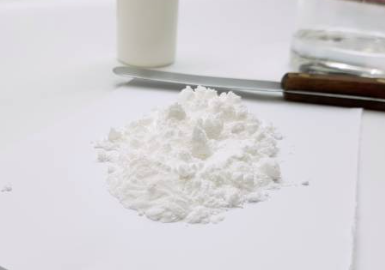
Iron iii hexacyanoferrate ii, the chemical formula is Fe4[Fe(CN)6]3, is known as “Prussian blue”, or “Berlin blue”. In the industrial field, it’s also known as “Iron blue” or “Chinese blue”. Iron iii hexacyanoferrate ii is a powder, which is dark blue, fine, highly dispersed, and insoluble in water and alcohol. Without chemical change occurs in weak acids. Decompose will happen when it concentrates sulfuric acid boiling or alkali. Prussian blue is mainly used as coloring pigments in enamel, oily thick paint, Nitrocellulose paint, number paint, trademark paint and ink, cultural and educational supplies, and so on.
How to manufacture iron iii hexacyanoferrate ii?
Before introducing how to manufacture iron iii hexacyanoferrate ii, we will introduce its production principle firstly.
A double salt of ferrous ferrocyanide can be generated from the reaction of sodium ferrocyanide with ferrous sulfate in a slightly acidic solution. Then Sulfuric acid and ammonium sulfate are added and oxidized with potassium chlorate. After this process, a double salt of ferrous chloride and ammonium hydride can be generated.
Engineering operation of iron iii hexacyanoferrate ii
1. Preliminary preparation work
1.1 Put iron sheet and sulfuric acid into the ferrous sulfate reactor. When the PH is 5, 20-30% of ferrous sulfate solution is formed. At that time, need to remove impurities and unreacted iron slag. Then dilute the liquor into 10% concentration, and add sulfuric acid to adjust PH=3 for a spare.
1.2 The temperature of water is heated to 70-75℃, and quantitative sodium ferrocyanide is added with the condition of stirring continuously, then the sodium ferrocyanide solution is made.
1.3 Add a certain amount of potassium chlorate into a certain amount of hot water to make 10% potassium chlorate solution, setting aside for a spare.
2. Synthesis of iron iii hexacyanoferrate ii
Pump the sodium ferrocyanide solution into the reaction kettle, fully stirring, maintain the temperature at 70-75 ℃, and add the ferrous sulfate solution. Add the quantitative ferrous sulfate solution into the above solution within 20 minutes. The temperature is needed to heat up to about 95℃, hot cooking for 50 minutes, then it becomes a white pulp. The sodium in the white pulp is replaced by ammonium by adding a quantitative amount of ammonium sulfate. Add sulfuric acid to the white pulp and keep the temperature at 95℃ for 2.5 hours.
Then cool down the temperature to about 70℃ with cold water. Add potassium chloride and stir for 2 hours, so that ferrous iron is oxidized to high-valent iron blue pulp. After the reaction of the blue pulp and the temperature is dropped to about 50℃, the zinc naphthenate solution is slowly added and stirred for 2.5 hours. Then filter the seriflux by pumping the plate and frame, and wash away the water-soluble salt such as sulfur salt with water. The filter cake can be released, and dry in a drying oven below 85℃. The dried iron blue block is screened by 60 mesh, so the finished product of iron iii hexacyanoferrate ii is made.
Step deposition method of iron iii hexacyanoferrate ii thin film
Recently new techniques about how to manufacture the iron iii hexacyanoferrate ii thin film is studied. The invention adopted a step-by-step deposition preparation method of iron ferrocyanide thin film. The steps are as follows: the disposition of precursor solution, pre-deposition preparation, and sedimentary process. The invention provides an electrochemical deposition method to make iron iii hexacyanoferrate ii thin film. A Prussian Blue thin film is produced with uniform thickness, smooth surface and relatively thick. The deposition operation is simple, cheap test equipment, and the coating cost is reduced.
Conclusion:
Now we want to make a summary on the topic of “Iron iii hexacyanoferrate ii”. Cyanide is unstable when is heating, and iron iii hexacyanoferrate ii is no exception, so if we want to manufacture this product, the entire production process needs to be carried on with strict parameters. There are many ways to produce Prussian blue films. But in this paper, we introduced the step deposition method to get Iron iii hexacyanoferrate ii films with uniform thickness, smooth surface and low cost.
Looking for chemical products? Let suppliers reach out to you!
You May Interested In


2026-10-03
Trade Alert
Delivering the latest product trends and industry news straight to your inbox.
(We'll never share your email address with a third-party.)

Related News
-
Key Reactions of Cobalt Chloride
-
Chemical Properties and Applications of Cyclopropen
-
Applications and Safety of Sodium Dichromate
-
Uses and Benefits of Sodium Selenite
-
Cocamidopropyl Betaine: Uses, Benefits, and Safety
-
Dimethyl Carbonate: Properties and Industrial Applications
-
Hydrobromic Acid: Properties, Uses, and Safety
-
Potassium Carbonate: Properties, Uses, and Applications
-
Sodium Metabisulfite: Properties, Uses, and Safety
-
Phosphoric Acid: Uses in Cola, Rust Removal, and Fertilizers Explained
Recommend Reading
-
![Silver Nitrate: Medical Uses, Photography History, and Staining Properties]()
Silver Nitrate: Medical Uses, Photography History, and Staining Properties
-
![Sulfuric Acid (H2SO4): Properties, Battery Uses, and Extreme Safety Hazards]()
Sulfuric Acid (H2SO4): Properties, Battery Uses, and Extreme Safety Hazards
-
![What is Trametenolic Acid? (Structure, Sources & Research)]()
What is Trametenolic Acid? (Structure, Sources & Research)
-
![Potassium Hydroxide (KOH): Soap Making, Batteries, and Safety]()
Potassium Hydroxide (KOH): Soap Making, Batteries, and Safety
-
![Calcium Acetate: Medical and Industrial Applications]()
Calcium Acetate: Medical and Industrial Applications
-
![Business Society’s MTBE Market Outlook on August 19, 2026: Clearly Upward Trend]()
Business Society’s MTBE Market Outlook on August 19, 2026: Clearly Upward Trend
-
![Coke market remains stable with a strengthening trend, many regions in China initiate price increases]()
Coke market remains stable with a strengthening trend, many regions in China initiate price increases
-
![Business Society’s Diesel Market Outlook on August 19, 2026: Volatile Rise]()
Business Society’s Diesel Market Outlook on August 19, 2026: Volatile Rise
-
![Business Society’s Market Outlook for Petroleum Coke on August 19, 2026: Decline]()
Business Society’s Market Outlook for Petroleum Coke on August 19, 2026: Decline
-
![Business Society’s Crude Oil Market Outlook on August 20, 2026: Upside Momentum Fades]()
Business Society’s Crude Oil Market Outlook on August 20, 2026: Upside Momentum Fades