




Shanghai Takes the Lead in Curbing Sugary Beverage Consumption with Innovative Health Warning Labels
Shanghai, China - October 19, 2023 - Shanghai has embarked on a groundbreaking initiative to tackle the rising health risks associated with excessive sugary beverage consumption. On September 27, 2023, the Shanghai Municipal Health Commission unveiled the Guidelines for the Making and Placement of Health Warning Labels for Sugary Beverages (Consultation Draft). The primary objective of this pioneering project is to heighten public awareness about the adverse effects of sugary drinks and encourage healthier lifestyle choices. Members of the public are invited to submit their opinions on this draft before October 31, which can be done via email at shspc@wsjkw.sh.gov.cn.
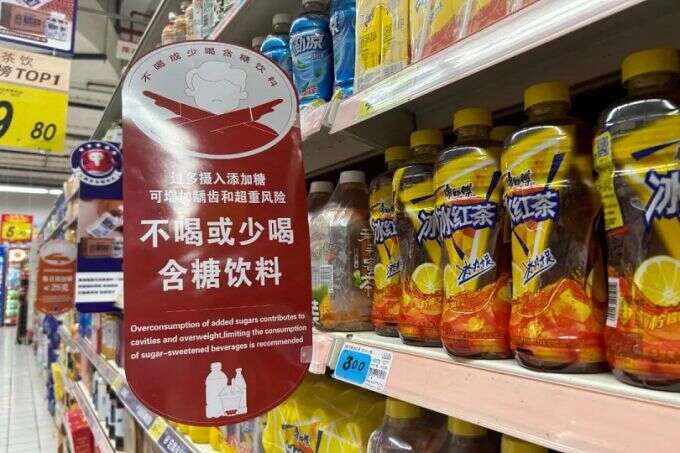
Shanghai has become the first city in China to pilot the health warning labels of sugary beverages.
Key Points of the Draft
1. Defining Sugary Beverages
As per the 2022 Dietary Guidelines for Chinese Residents, sugary beverages are classified as those artificially infused with sugar during production and containing sugar content exceeding 5%.
2. Innovative Label Designs
The proposed health warning labels feature a distinctive three-dimensional cylindrical shape, resembling a beverage can. They are adorned with clear symbols, text, and illustrative imagery against distinct colored backgrounds. The red label cautions consumers to "Limit or eliminate sugary beverages" while highlighting the associated risks of dental problems and excessive weight gain. The orange label conveys, "The Chinese Dietary Guidelines recommend consuming less than 25 grams of sugar per day." The green label encourages consumers to review the nutritional composition table. While the labels do not directly display the sugar content, they guide consumers toward healthier choices.
3. Application Scenarios and Requirements
The health warning labels will be applied in both offline and online sales venues, rather than directly on the beverage containers themselves. Offline locations encompass the sale points for prepackaged and freshly prepared sugary beverages.
(1) Offline Sales Venues
Retail outlets selling prepackaged sugary beverages, such as supermarkets, convenience stores, restaurants, and vending machines, are required to exhibit all three varieties of health warning labels. Large and medium-sized supermarkets should employ large labels for sugary beverage sections and open freezers. Convenience stores and restaurants will utilize medium-sized labels, while refrigerators and vending machines will display smaller labels.
Venues serving freshly made sugary beverages, such as milk tea shops, coffee shops, and restaurants, will feature both red and orange health warning labels on order counters and dispensing machines. Medium-sized labels will be used for milk tea shops, coffee shops, and restaurants, while automatic dispensers will display small-sized labels.
(2) Online Sales Venues
Online venues will adopt electronic signage displaying the three sugary beverage health warning labels prominently on their digital menus.

The labeling of beverage grading in China
Domestic and International Context
In August, the Shanghai Center for Disease Control and Prevention conducted a pilot program introducing health reminder labels for sugary beverages, showcasing the "red, orange, and green" labels in supermarkets. This initiative yielded alarming results, as random inspections in ten supermarkets and convenience stores revealed that nearly 70% of beverages exceeded recommended sugar content levels. These findings underscore the urgency of addressing the issue of excessive sugary beverage consumption in China.
Numerous countries have instituted regulations regarding beverage grading. For instance, Singapore has implemented a four-tier nutritional grading system for bottled beverages since the previous year, with grades A, B, C, and D signifying decreasing healthiness levels. Singapore has also banned advertising for D-grade beverages, considered the "least healthy." Starting in December 2023, freshly made beverages in specific Singapore locations will also require nutritional grading labels. This move aims to combat the high prevalence of diabetes in the population.

The labeling of beverage grading in Singapore
Singapore's beverage grading system falls under Front-of-Pack (FOP) labeling, which China currently lacks mandatory regulations for. For more details, please refer to Front-of-Pack (FOP) Nutrition Labeling on Food Products in the Asia Pacific.
Impact and Significance of the Pilot Project
The pilot project and the public opinion solicitation for the draft have drawn significant attention to the risks associated with sugary beverages. Many voices have commended Shanghai's pioneering efforts and the role of health warning labels. There are growing calls to mitigate the harm of sugary beverages at the source, urging manufacturers and businesses to produce and promote sugar-free and reduced-sugar alternatives.
If the pilot project proves successful, it may pave the way for nationwide implementation. China may even consider adopting Singapore's practice of printing beverage grading labels directly on product packaging. This initiative underscores the government's endorsement of low-sugar beverage consumption, which can guide product development for businesses.

You May Interested In


High Quality β-Nicotinamide adenine dinucleotide CAS 53-84-9 NADwith ready stock and best price
$3/UNIT FOB


2026-09-30
Trade Alert
Delivering the latest product trends and industry news straight to your inbox.
(We'll never share your email address with a third-party.)

Related News
-
From Feedmill to Food System: VIV Europe 2026 Addresses the Industry's Most Critical Challenges
-
Do You Know the Food Zero Additives?
-
In 2023, the international food price index fell nearly 14% YoY , and only the price index of sugar and rice rose
-
Acrylamide Alert: 59 Coffees in Fuzhou Show Trace Amounts, Sparks Consumer Concern
-
Colombia introduces tax on ultra-processed foods
-
Warnings Raised About 'Eco' Cups Containing Toxic Resin
-
Australian Health Bodies Call for Removal of 'Low Sugar' Labels on Alcohol
-
Exploring the Promise of a New Animal-Free Fat for Plant-Based Meats: Does It Deliver the Real Taste of Chicken?
-
Nutritional Psychiatry Researcher Felice Jacka Addresses the Impact of Ultra-Processed Foods on Brain Health
-
Updates to Maximum Residue Limits for Agricultural and Veterinary Chemicals in Australia and New Zealand
Recommend Reading
-
![Sekisui Specialty Chemicals Has Announced a Global Price Increase]()
Sekisui Specialty Chemicals Has Announced a Global Price Increase
-
![Cracking Europe: When the Chemical Empire Loses Its Heat]()
Cracking Europe: When the Chemical Empire Loses Its Heat
-
![Syngenta’s VIRESTINA Targets Resistant Weeds as Herbicide Innovation Regains Urgency]()
Syngenta’s VIRESTINA Targets Resistant Weeds as Herbicide Innovation Regains Urgency
-
![Dietary Supplement Listing Debate Puts Nutrition Ingredients Under a Brighter Spotlight]()
Dietary Supplement Listing Debate Puts Nutrition Ingredients Under a Brighter Spotlight
-
![EU Low-Value Parcel Rules Could Disrupt Chemical Sample Flows]()
EU Low-Value Parcel Rules Could Disrupt Chemical Sample Flows
-
![Business Society September 22, 2026 PTA Trend Analysis: Clear Downtrend]()
Business Society September 22, 2026 PTA Trend Analysis: Clear Downtrend
-
![Business Society’s Market Outlook for Acrylic Acid on September 4, 2026: Fluctuating Trend]()
Business Society’s Market Outlook for Acrylic Acid on September 4, 2026: Fluctuating Trend
-
![Both Costs and Supply-Demand Weaken, PTA Prices Edge Lower]()
Both Costs and Supply-Demand Weaken, PTA Prices Edge Lower
-
![Business Society’s September 4, 2026 Acetone Market Outlook: Operating at High Levels]()
Business Society’s September 4, 2026 Acetone Market Outlook: Operating at High Levels
-
![Costs vs. Demand: Polyester Staple Fiber Prices Fluctuate at High Levels]()
Costs vs. Demand: Polyester Staple Fiber Prices Fluctuate at High Levels







- Hot Searches
- sigmoid vovulus
- bulk sodium hyaluronate reseller
- methylene b
- n-isopropylbenzylamine for sale
- pyrazinamide
- ahtanum fuel stop gas prices
- dimethiconol vs dimethicone
- propylene price
- polypropylene price per ton in nigeria 2026
- phosphoric acid price
- fumed silica manufacturers
- flour treatment agent