PbS Soluble or Insoluble? | A Solubility Guide to Lead Sulfide
The question of whether PbS soluble or insoluble and its associated applications hits our mailbox every single day. Hence, we explain it in this article.
What is PbS?
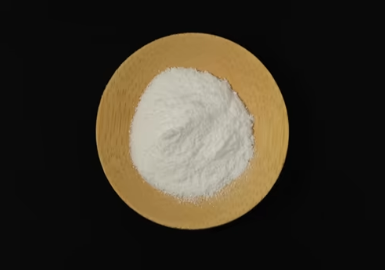
Before we get into the question of whether PbS soluble or insoluble, let's go through the basics first, Lead Sulphide is an inorganic substance with the chemical formula PbS. The primary ore and significant component of lead is also known as galena. Due to its tendency to crystallize in sodium chloride, it is one of the earliest materials to be employed as a semiconductor. When heated to the point of breakdown, which produces lead and sulfur oxides, lead sulfide becomes poisonous. One of the most significant biodegradable polyesters, PbS is produced by polycondensation of succinic acid and butanediol.
Solubility of PbS
To answer the question of whether PbS soluble or insoluble, it can be stated directly that like other sulfides in its neighboring spots in the periodic table, Lead sulfide is also only sparingly soluble in water. This property means that it somehow dissolves to a very small extent in water. This property of being dissolved in a small proportion is not very significant, it is regarded as quite low. But this does mean that it doesn't hold any significance in the modern industry.
To put its solubility in scale, the solubility of lead sulfide in water is typically less than 0.1 milligrams per liter at room temperature. It can also be described by its solubility product constant, also termed as Ksp which is again very low in this case. Since PbS is soluble in very small quantities, the concentrations of Pb²⁺ and S²⁻ ions in the solution are very low.
But this small proportion of dissolved lead sulfide releases sulfide ions into the solution, in this case, the water. These sulfide ions can react with other ions in the water solution to form different precipitates or complexes. This process can be influenced by the pH of the solution; at lower pH values which makes the solution acidic, PbS shows an increasing trend in its solubility. This is due to the formation of soluble lead (II) complexes in such a solution.
If dissolved in a solution with higher pH values i.e. alkaline conditions, the solubility of PbS may decrease due to the formation of less soluble lead (II) hydroxide compounds, conversely.
Other solubility properties of Lead sulfide is that it can be precipitated from solutions containing lead ions and sulfide ions. PbS has many industrial applications as well especially when it comes to its solubility. The precipitation explained in the last solubility property is often used in analytical chemistry for detecting the presence of lead ions in a sample substance.
PbS solubility properties make it an important material when it comes to semiconductors. It is frequently used during the production of infrared sensors and detectors. These applications benefit from its solubility and its crystalline structure. Moreover, PbS is also used in the production of thin films and nanoparticles which are later employed in photodetectors and photovoltaics (solar cells). PbS is also used in high-tech equipment including night vision equipment and infrared imaging because they are especially well-suited for sensing infrared light.
Another important aspect of the solubility for PbS and to the question “PbS soluble or insoluble” is its role in art conservation processes in which professionals use it to comprehend the chemical processes that may take place in the lead-based pigments employed in historical artworks. During these processes, it is crucial to know the solubility of lead sulfide to get the best possible results for such historic arts where failures are not affordable at all.
Conclusion:
In conclusion for the question of whether PbS soluble or insoluble, it can be stated that the chemical properties of the solubility of lead sulfide involve its limited solubility in water. But its applications are quite many. It was one of the first substances to be employed as a semiconductor was lead sulfide which also crystallizes in the sodium chloride pattern. It is also involved in precipitation reactions due to its low solubility, making it useful for various analytical applications, including the detection and separation of lead ions.
Looking for chemical products? Let suppliers reach out to you!
You May Interested In


Glow70/KLOW80 99% China Peptides Warehouse Direct Delivery Lyophilized Powder in Stock
$169/UNIT FOB


2026-10-23
Trade Alert
Delivering the latest product trends and industry news straight to your inbox.
(We'll never share your email address with a third-party.)

Related News
-
Chemical Raw Materials: How to Source Quality Suppliers & Understand Grades
-
Sodium Chloride (NaCl): Food Grade vs Industrial Grade Uses & Safety Data
-
Sodium Hydroxide (Caustic Soda): Soap Making, Cleaning, and pH Control Guide
-
Key Properties and Applications of Para-Nitrophenol
-
Understanding Reactions Between Silver and Chloride
-
Lanolin: Benefits for Skin, Cosmetic Uses, and Allergy Risks
-
Paraffin Wax vs. Beeswax: Candles, Cosmetics, and Industrial Applications
-
ADAMA Targets Sucking Pests with Ateka
-
Aluminum Oxide (Al2O3): Abrasive Uses, Ceramic Applications, and Safety
-
EFSA Reviews Clodinafop Risk
Recommend Reading
-
![Sodium Nitrate: Fertilizer, Food Curing, and Explosive History]()
Sodium Nitrate: Fertilizer, Food Curing, and Explosive History
-
![Melamine: Toxicity, Industrial Resin Uses, and Food Safety Scandals]()
Melamine: Toxicity, Industrial Resin Uses, and Food Safety Scandals
-
![Methylamine: Chemical Properties, Synthesis, and Industrial Applications]()
Methylamine: Chemical Properties, Synthesis, and Industrial Applications
-
![What is Serine? (Amino Acid Function & Sources)]()
What is Serine? (Amino Acid Function & Sources)
-
![Sulfuric Acid Reactions: With Sugar (Dehydration), Water, and Metals]()
Sulfuric Acid Reactions: With Sugar (Dehydration), Water, and Metals
-
![This Week's Epichlorohydrin Market Prices Remain Stable in China (1.12-1.16)]()
This Week's Epichlorohydrin Market Prices Remain Stable in China (1.12-1.16)
-
![Business Society’s Market Outlook for Phthalic Anhydride on September 4, 2026: Stagnant Growth]()
Business Society’s Market Outlook for Phthalic Anhydride on September 4, 2026: Stagnant Growth
-
![Business Society’s Market Outlook for MIBK on September 4, 2026: Fluctuating Trend]()
Business Society’s Market Outlook for MIBK on September 4, 2026: Fluctuating Trend
-
![MTBE Market Trends Show Weak Fluctuations in China]()
MTBE Market Trends Show Weak Fluctuations in China
-
![Raw Material Prices Rise While Finished Product Prices Fall! Melamine Caught in a Bull-Bear Tug-of-War, When Will the Bottom Turning Point Appear]()
Raw Material Prices Rise While Finished Product Prices Fall! Melamine Caught in a Bull-Bear Tug-of-War, When Will the Bottom Turning Point Appear