Covestro focuses on producing plastics based on plant biomass
Covestro is moving ahead with the implementation of a unique process to produce the important chemical aniline based entirely on plant biomass rather than petroleum for the first time. For this purpose, the plastics manufacturer has now commissioned a special pilot plant at its Leverkusen site.
Initially, the plant will produce bio-based aniline in large quantities so that the new technology can be further developed and converted to industrial scale. In the plastics industry, aniline is used in the production of MDI, etc. This can in turn be used for insulating foam, thus saving energy in buildings and reducing their CO2 footprint. Covestro believes that this will help promote the circular economy, with which the company aims to be fully aligned.
Mona Neubaur, Deputy Minister of the State of North Rhine-Westphalia, and Professor Walter Leitner, Director of the Max Planck Institute for Chemical Energy Conversion in Mulheim an der Ruhr, attended the opening ceremony. Together with Dr. Thorsten Dreier, CTO of Covestro, they discussed the importance of bio-based raw materials for the future of a sustainable chemical industry.
"Among other things, aniline is a key raw material for foams used in the insulation of buildings and refrigerators," Dreier explains of the importance of this basic chemical. "Until now, aniline has been produced from fossil feedstocks such as petroleum, which releases carbon dioxide and contributes to climate change. With our new process, we are contributing to building a circular, bioeconomy and I am very proud that now we have successfully jumped to the next level of technology."
Covestro developed the process together with partners from the scientific community and has already won several awards. The process significantly improves the CO2 footprint of aniline compared to conventional technologies. Covestro has made a seven-figure investment in a pilot plant at the Leverkusen Chemical Park.
Professor Leitner also emphasized the importance of partnerships. "This project exemplifies cooperation between research-based industry and application-oriented science. There are many cross-partnerships like this, especially in NRW. Germany needs more of this to maintain its status as a center for research and technology. "
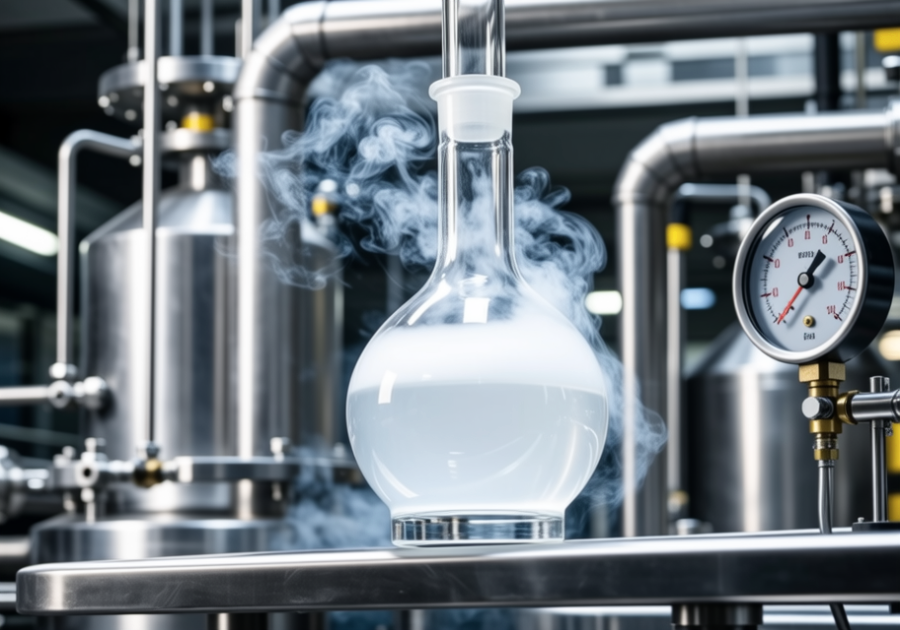
The project also clearly demonstrates the potential contribution of industrial (white) biotechnology to plastic production: in the new process, customized microorganisms help convert industrial sugars extracted from plants into intermediate products through fermentation. This is carried out under gentler and therefore more environmentally friendly conditions than traditional processes. In the second step, chemical catalysis of the intermediate product produces aniline containing 100% plant carbon.
Research on bio-based anilines will also continue to be funded by the German government. The German Ministry of Food and Agriculture is funding a follow-up project (Bio4PURDemo) from Covestro and its partners, which started in March 2022 and run until 2025.

You May Interested In


Glow70/KLOW80 99% China Peptides Warehouse Direct Delivery Lyophilized Powder in Stock
$169/UNIT FOB


2026-10-18
Trade Alert
Delivering the latest product trends and industry news straight to your inbox.
(We'll never share your email address with a third-party.)

Related News
-
Covestro Introduces Desmodur® ClimateValue to Cut pMDI Carbon Footprint by 25%
-
Multiple Chemical Industry Leaders Post Strong H1 Earnings Growth as Sector Profitability Revives
-
Covestro CEO: The EU Must Decide Which Industries to Protect, or Energy-Intensive Sectors Will Move Out
-
Covestro Builds New 660,000-ton MDI Plant in China: Global Supply Gap Meets Chinese Overcapacity Head-On
-
BASF, Covestro, Huntsman Raise MDI Prices in North America Amid Global Supply Crunch
-
Covestro Unveils TPU Application Development Hub in Guangzhou, Strengthening Regional Innovation Network
-
Three-Phase Plan for 120,000 Tons! “TPU King” Zhuhai Makes Its Move—Covestro’s New Plant Signals Not Just Capacity Expansion but a Full-Scale Upgrade in the Asia-Pacific Market Battle
-
India Extends Anti-Dumping Duties on Aniline Imports from China for Five More Years
-
Covestro India and CSIR-NCL Collaborate to Transform Polyurethane Waste
-
Covestro Acquires Adhesive Manufacturer Pontacol
Recommend Reading
-
![Soybeans Tread Water Amid Trade Whispers and Biofuel Hopes]()
Soybeans Tread Water Amid Trade Whispers and Biofuel Hopes
-
![$12 Billion Merger! A New North American Chemical Giant Is About to Be Born]()
$12 Billion Merger! A New North American Chemical Giant Is About to Be Born
-
![“Falling Revenue, Soaring Profits”: Is AkzoNobel’s Financial Alchemy Real Muscle—or Just Smoke and Mirrors?]()
“Falling Revenue, Soaring Profits”: Is AkzoNobel’s Financial Alchemy Real Muscle—or Just Smoke and Mirrors?
-
![Givaudan to Build New Fragrance Compounding Facility in Pedro Escobedo, Mexico]()
Givaudan to Build New Fragrance Compounding Facility in Pedro Escobedo, Mexico
-
![Nouryon Opens New Customer Experience and Innovation Center in Brazil]()
Nouryon Opens New Customer Experience and Innovation Center in Brazil
-
![Cost support strong, anhydrous hydrogen fluoride market remains firm and tends to strengthen (12.22-12.26)]()
Cost support strong, anhydrous hydrogen fluoride market remains firm and tends to strengthen (12.22-12.26)
-
![Business Society’s Market Outlook for Acrylic Acid on August 26, 2026: Clearly Upward Trend]()
Business Society’s Market Outlook for Acrylic Acid on August 26, 2026: Clearly Upward Trend
-
![This Week's Styrene Market Slightly Increased (12.22-12.26)]()
This Week's Styrene Market Slightly Increased (12.22-12.26)
-
![Four Chinese Industrial Giants Compete for Wodgina Lithium Mine]()
Four Chinese Industrial Giants Compete for Wodgina Lithium Mine
-
![This Week's Isopropanol Market Prices Remain Stable (12.22-12.26)]()
This Week's Isopropanol Market Prices Remain Stable (12.22-12.26)