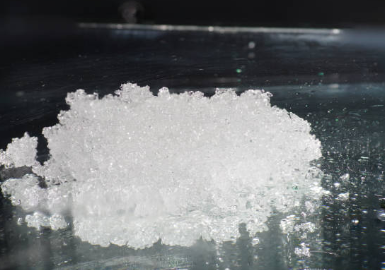
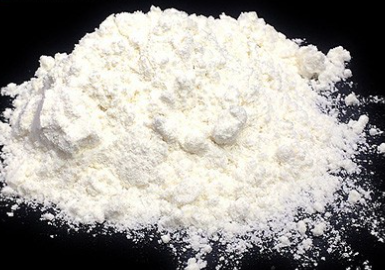
What is anhydrous sodium sulfate drying agent? | Detailed Explanation
Anhydrous sodium sulfate drying agent can absorb moisture from its surroundings, and turn into hydrate crystals in its interior. Because it does not react with other matters, it has perfect water absorption ability, and is very cheap, researchers prefer to apply it in various experiments to ensure stable and accurate experimental results. People apply it to remove moisture from food so that the food can be kept for a longer period of time.
Besides, it is also applied to maintain environmental detection equipment. In order to avoid moisture from disturbing the detection results, it is often applied to adsorb moisture from the detecting air. People also utilize it to take moisture away from environmental detection equipment to ensure its normal operation.
How to use it to dry gases and liquids?
Below are the processes for anhydrous sodium sulfate drying agent to dry gases and liquids.
-Process to dry gases
Put it into a dry tube and pass the gas which carries water vapor through the dry tube. It can easily absorb moisture and become a hydration state, and finally transform into a powder state covering the surface. At last, the water vapor in the gas is removed.
-Process to dry liquids
Add it to the organic test solution, it will absorb the moisture in the test solution and generate a solid. Then filter out the solid that has absorbed water to obtain an anhydrous test solution.
How to judge whether it absorbs water?
We can tell whether the anhydrous sodium sulfate drying agent absorbs water through the following two methods.
-Appearance judgment method
Observe the color and appearance of anhydrous sodium sulfate. If it is a white crystal, dry without clumping, and there is no obvious moisture absorption on the surface, you can tell that it does not absorb moisture.
-Weighing method
Take a certain amount of anhydrous sodium sulfate, place it in a closed container, and then reweigh it after a certain period of time. If the weight increases, you can tell that it has absorbed moisture from the air.
How to deal with the anhydrous sodium sulfate drying agent after absorbing water?
If the water absorption is not severe, place it in an oven and let it dry at 105℃ for a period of time. Besides, if water is present in the form of crystalline, it needs to be heated at around 205℃ to remove the crystalline water.
Other applications
Besides being used as a drying agent, anhydrous sodium sulfate also has other applications.
-Used in detergents.
It can reduce the surface tension of the solution and the critical concentration of micelles. It can improve the adsorption rate and amount of detergent on fibers and increase the solubilization in surfactants. Therefore, it can improve the cleaning effect of detergents.
What’s more, it has the function of forming laundry detergent and preventing clumping. Because it is an electrolyte, it can coagulate and shake colloids, so it can increase the density of the slurry and improve its fluidity. Therefore, it helps to shape laundry detergent and can prevent the formation of light powder and fine powder.
-Used as a feed additive
Sulfur is an important mineral element in animal bodies. Adding it into chicken feed can not only improve the utilization and absorption of nitrogen but also stimulate chickens’ metabolism and improve egg-laying performance. What’s more, it can also promote the biosynthesis of fallopian tube tissue and improve eggshell quality.
Storage and shipment
Anhydrous sodium sulfate drying agent does not have a shelf life. As long as it is isolated from the air and stored properly, it will not expire. Then, what are the precautions during its storage and shipment?
Firstly, the warehouse should be airy and cool. Stay away from other flammable and explosive materials. The warehouse should be equipped with appropriate materials to contain leaked materials.
The packaging should be complete during shipment and the loading has to be secure. It is necessary to ensure that the packaging has no leak or fall during shipment. What’s more, it is necessary to avoid exposure to sunlight, rain, and high temperatures. The vehicle is better to be thoroughly cleaned after transportation.
Conclusion
This article mainly talks about the usage, applications, storage, and shipment of anhydrous sodium sulfate drying agent. It is often applied by lab researchers because of its amazing water-absorbing ability and reasonable price. You can also find it in other places such as detergents and animal feed.
Looking for chemical products? Let suppliers reach out to you!
Can Anhydrous Ammonia Used In Drugs?
You May Interested In


Glow70/KLOW80 99% China Peptides Warehouse Direct Delivery Lyophilized Powder in Stock
$169/UNIT FOB


2026-10-23
Trade Alert
Delivering the latest product trends and industry news straight to your inbox.
(We'll never share your email address with a third-party.)

Related News
-
Applications of Anhydrous Sodium Sulfate
-
Understanding Titanium Oxide: Properties and Uses
-
Sodium Hydroxide Reactions: With Aluminum, Acids, and Metals
-
Gellan Gum (E418): Vegan Thickener vs. Xanthan Gum in Food
-
What is HCO3? (Bicarbonate Ion Function & Normal Levels)
-
PEG (Polyethylene Glycol): Uses in Pharma, Cosmetics, and PEGylation
-
What is Element Stibium? (Antimony Facts & Uses)
-
What is Amylum Starch? (Old Terminology & Modern Equivalent)
-
Silver Nitrate: Medical Uses, Photography History, and Staining Properties
-
Phosphoric Acid: Uses in Cola, Rust Removal, and Fertilizers Explained
Recommend Reading
-
![Key Reactions and Uses of Lithium Aluminum Hydride]()
Key Reactions and Uses of Lithium Aluminum Hydride
-
![Uses and Properties of 3-Methyl-1-Butanol]()
Uses and Properties of 3-Methyl-1-Butanol
-
![Chemical Properties and Uses of Tetraetil]()
Chemical Properties and Uses of Tetraetil
-
![Applications of Caesium Iodide]()
Applications of Caesium Iodide
-
![Iohexol: Properties, Uses, and Safety]()
Iohexol: Properties, Uses, and Safety
-
![South Korea and Japan Launch Energy Supply Chain Cooperation as Hormuz Risks Grow]()
South Korea and Japan Launch Energy Supply Chain Cooperation as Hormuz Risks Grow
-
![Crude oil remains in negative territory, another round of retail fuel price cuts in China]()
Crude oil remains in negative territory, another round of retail fuel price cuts in China
-
![February Ammonium Sulfate Market Continues to Rise in China]()
February Ammonium Sulfate Market Continues to Rise in China
-
![Cyclohexane market prices mainly remain stable in China]()
Cyclohexane market prices mainly remain stable in China
-
![Formic Acid Prices Sideways; Future Plant Maintenance Plans Scheduled]()
Formic Acid Prices Sideways; Future Plant Maintenance Plans Scheduled