Total Corbion JV starts-up bioplastics plant in Thailand

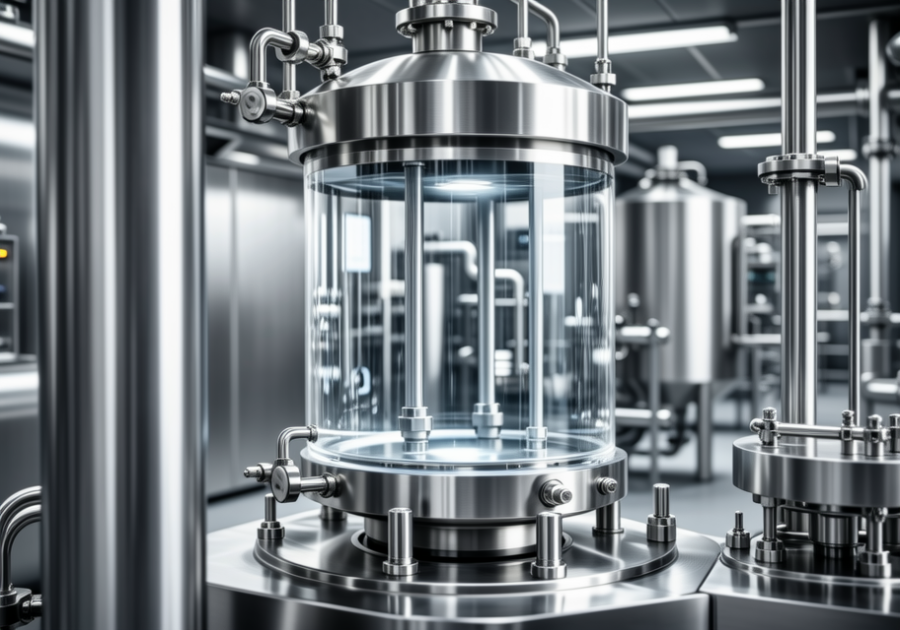
Total Corbion PLA, the 50:50 joint venture between France’s Total and Dutch food & chemicals firm, Corbion, has announced the start-up of its 75,0000-tpa polylactic acid (PLA) bioplastics plant in Rayong, Thailand. The plant has successfully produced Luminy brand of bio-based and biodegradable PLA resins.
The facility will produce a broad range of the resins from renewable, non-GMO sugarcane sourced locally in Thailand and will be supplied to a wide range of markets notably packaging, consumer goods, 3D printing, fibres and automotive. These are specifically optimised for extrusion, thermoforming, injection moulding and fibre spinning processes, the company said.
At the end of their useful life, PLA products can be mechanically or chemically recycled, or in some cases composted and returned to the soil as fertiliser.
“I’m very pleased that the joint venture has started-up the second-largest PLA bioplastics plant in the world. Bioplastics are a great complement to our more traditional petrochemicals products to meet the rising demand for polymers while contributing towards reducing end-of-life concerns,” commented Mr. Bernard Pinatel, President Refining & Chemicals at Total.
Integration benefits
The Total-Corbion JV will leverage on the integration with its lactide plant, the monomer required for the production of PLA, which has simultaneously been expanded to 100,000-tpa production capacity. Furthermore, the 1,000-tpa PLA pilot plant, which has been operational since the end of 2017, is located on the same site and will be used for product development.
The start-up marks a major milestone for both the JV and the bioplastics market. With this additional 75,000-tpa facility, the global capacity for PLA bioplastics will increase by almost 50%, to 240,000-tpa. PLA is a fast-growing polymer with an estimated annual growth rate of 10% to 15%.
“The start-up of this state-of-the-art plant establishes Total Corbion PLA as a world-scale PLA bioplastic producer, ideally located to serve growing markets from Asia Pacific to Europe and the Americas,” said Ms. Stephane Dion, CEO of the company. “The subsequent increase in global PLA capacity will enable manufacturers and brand owners to move into the circular economy and produce bio-based products with lower carbon footprints and multiple end-of-life options,” she added.

You May Interested In


Glow70/KLOW80 99% China Peptides Warehouse Direct Delivery Lyophilized Powder in Stock
$169/UNIT FOB


2026-10-12
Trade Alert
Delivering the latest product trends and industry news straight to your inbox.
(We'll never share your email address with a third-party.)

Related News
-
Japanese Plastics Market Accelerates its Shifts to Recycled Materials and Bioplastics
-
TotalEnergies Corbion and Sulapac drive sustainability in the cosmetics industry
-
$362 Million! Corbion Spins off Emulsifier Business to Kingswood
-
Corbion Expanding Production Line for Sour Candy Powders
-
Total expected to embark on $27 billion energy projects
-
Total acquires CEPSA's upstream assets in UAE
-
Total announces year-round price caps for some fuel at its gas stations
-
Total signs power purchase agreements with Sasol and Air Liquide
-
Air Liquide and Total Energy jointly build more than 100 hydrogen refueling stations
-
Total Energy builds new recycled PP production line
Recommend Reading
-
![Wanhua Chemical Announces MDI Price Hike Across South and Southeast Asia]()
Wanhua Chemical Announces MDI Price Hike Across South and Southeast Asia
-
![Sika Strengthens Gulf Foothold with Strategic Acquisition of Gulf Seal]()
Sika Strengthens Gulf Foothold with Strategic Acquisition of Gulf Seal
-
![Syngenta Bee Pesticide Protest Shows the Pressure Building Around Crop Protection Giants]()
Syngenta Bee Pesticide Protest Shows the Pressure Building Around Crop Protection Giants
-
![South Korea Moves Urgently to Control Petrochemical Feedstock Hoarding as Supply Chain Risk Escalates to the National Security Level]()
South Korea Moves Urgently to Control Petrochemical Feedstock Hoarding as Supply Chain Risk Escalates to the National Security Level
-
![Dow Chemical Weighs Exit from $20 Billion Chemical Joint Venture with Saudi Aramco]()
Dow Chemical Weighs Exit from $20 Billion Chemical Joint Venture with Saudi Aramco
-
![Business Society’s Market Outlook for Acetic Acid on August 14, 2026: Volatile Rebound]()
Business Society’s Market Outlook for Acetic Acid on August 14, 2026: Volatile Rebound
-
![Syngenta Bee Pesticide Protest Shows the Pressure Building Around Crop Protection Giants]()
Syngenta Bee Pesticide Protest Shows the Pressure Building Around Crop Protection Giants
-
![This Week's Isopropanol Market Prices Slightly Increased in China (8.10-8.14)]()
This Week's Isopropanol Market Prices Slightly Increased in China (8.10-8.14)
-
![Fundamentals Weakened, Polyester Staple Fiber Price Center of Gravity Shifts Lower]()
Fundamentals Weakened, Polyester Staple Fiber Price Center of Gravity Shifts Lower
-
![BDO Market Conditions Consolidating and in a Wait-and-See Mode]()
BDO Market Conditions Consolidating and in a Wait-and-See Mode